US Midterm Elections 2026: Voters Head to the Polls on Tuesday After Record Early Voting
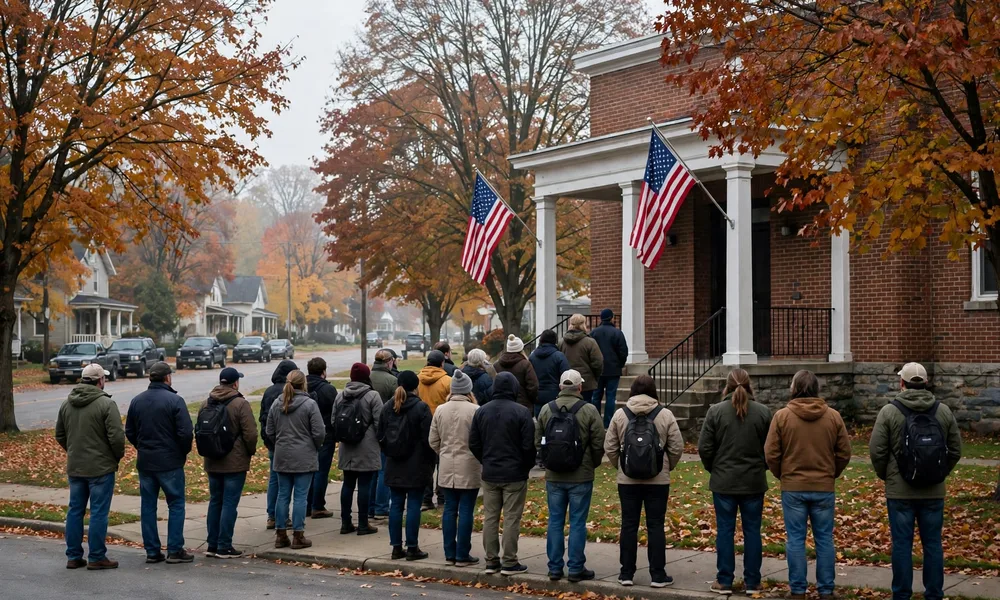
Voters across the United States are heading to the polls on Tuesday, November 3, 2026, for the midterm elections, one of the most watched political events in the American calendar. The vote comes after weeks of early voting in which millions of Americans have already cast their ballots, and after a campaign season dominated by everyday concerns about prices, jobs, and the direction of the economy.
Reports say at least 50 million people had already voted early before election day. That figure underlines how much voting habits have changed in recent years. For many voters, election day is no longer a single day at all. It is the final day of a voting period that begins weeks earlier, through mail ballots and in-person early voting centers.
As polling places open on Tuesday, the mood reported by analysts is mixed. On one hand, the job market has remained stable and many workers have seen fatter salaries. On the other hand, frustration over the cost of living remains strong, and many voters say they are still feeling squeezed by everyday expenses. That tension between steady work and rising costs is likely to shape how people vote.
Quick Facts
| Detail | What we know |
|---|---|
| Election day | Tuesday, November 3, 2026 |
| Early votes reported | At least 50 million before election day |
| Key voter concern | Cost of living and handling of the economy |
| Job market backdrop | Stable, with higher salaries for many workers |
| Market signal on Monday | Stock futures rose in early trading on November 2 |
What Are the Midterms?
Midterm elections take place in the middle of a presidential term, about two years into a four-year presidency. They are called midterms because they fall halfway between presidential elections. Unlike a presidential election year, no presidential candidate is on the ballot in a midterm year, but the stakes are still very high.
In a typical midterm cycle, voters choose members of Congress and a wide range of state and local officials. Control of the House and Senate can shift, which can change what laws can pass and how the rest of a presidency unfolds. Governors, state legislators, mayors, and local measures are also often on the ballot, depending on the state.
For ordinary voters, midterms can feel less dramatic than a presidential race, but they often have a more direct effect on daily life. State and local offices decide questions about schools, roads, taxes, housing, and public services. Congress decides federal spending, taxes, and major national policy. That is why turnout, while usually lower than in presidential years, still matters a great deal.
What Is at Stake in General Terms
The broad question in any midterm is about balance and direction. Voters are asked, in effect, whether they want to keep the current direction of government or push it in a different direction. That choice is expressed through hundreds of separate races rather than a single national vote, but the combined result sends a clear signal.
Control of Congress is often the headline outcome. If one party gains control of the House or Senate, it gains power over which bills reach a vote, which investigations move forward, and how much of a president’s agenda can become law. If control stays divided, compromise becomes necessary for almost anything to pass.
Beyond Washington, state races matter just as much. Governors shape state budgets and policies on health care, education, and infrastructure. State legislatures draw maps, set voting rules, and decide how state money is spent. Local races decide who runs cities and counties. Taken together, a midterm is not one election but thousands of elections happening on the same day.
Early Voting on a Large Scale
The reported figure of at least 50 million early votes is a reminder of how normal early voting has become. In many states, voters can cast a ballot in person days or weeks before election day, or return a mail ballot at a drop box or by post. Supporters say this makes voting easier for people who work long hours, care for family members, or live far from a polling place.
Early voting also changes how election night looks. In some states, early ballots are counted first and reported early in the evening. In others, they are counted after election day ballots, which can mean results take longer to become clear. That is normal, and it does not mean anything is wrong with the count. It simply reflects different state rules for handling mail and early ballots.
Election officials have repeatedly urged voters to check their local rules before heading out. Polling place hours, identification requirements, and ballot drop-off deadlines vary by state and sometimes by county. Voters who are unsure about their registration status or polling location are advised to check with their local election office or official state election website before Tuesday.
Cost of Living at the Center of the Conversation
If one theme has run through this election season, it is the cost of living. Even as the job market has stayed stable and many workers have seen pay increases, prices for housing, food, transport, and everyday services remain a source of frustration for many households. Voters often judge the economy not by national statistics alone, but by what they pay at the grocery store, at the gas station, and in rent or mortgage payments.
That frustration helps explain why economic handling has featured so heavily in campaign messages. Candidates from all sides have talked about affordability, wages, and household budgets, even when they disagree sharply about solutions. For voters, the question is often practical rather than abstract: does daily life feel more affordable than it did a year or two ago?
Economists note that a stable job market and rising salaries are real positives, but they do not automatically erase cost pressures. If prices rise faster than pay, or if housing costs stay high, households can feel worse off even when employment figures look strong. That gap between headline numbers and household experience is a familiar pattern in election years, and it appears to be present again in 2026.
Markets Watch the Vote Too
Stock futures rose in early trading on Monday, November 2, with the midterms looming. Market watchers often treat elections as a source of uncertainty, and investors tend to prefer clarity about who will control Congress and what policies might follow. A rise in futures before the vote does not predict the result, but it does show that traders are paying close attention.
Markets react to elections in different ways. Sometimes investors welcome a divided government because it makes sweeping policy changes less likely. Sometimes they welcome a clear result of any kind simply because it removes uncertainty. What markets dislike most is prolonged uncertainty, especially when results take days to settle in close races.
For most voters, however, the stock market is not the main measure of the economy. Jobs, wages, prices, and public services matter more in daily life. Still, the market movement on Monday is a useful reminder that the midterms are watched far beyond polling places, by businesses, investors, and governments around the world.
What to Watch on Election Night
Election night in a midterm year is usually a long evening. Early results come in from states in the East first, then the count moves westward through the night. Close races may not be called on the night itself, and that is normal when margins are tight and mail ballots are still being counted.
Viewers should watch for a few broad signals rather than focusing on any single race. The first is the overall balance in Congress: which party is gaining or holding seats, and by how much. The second is turnout: whether early voting strength carried through to election day. The third is the pattern in state and local races, which can reveal regional differences that national headlines miss.
It is also worth remembering that exit polls and early returns can be misleading. A candidate who leads early in the evening can fall behind as more votes are counted, and vice versa. Election officials and news organizations urge patience, and say accuracy matters more than speed when races are close.
FAQs
When are the 2026 US midterm elections?
The midterm elections take place on Tuesday, November 3, 2026. Many voters have already voted early, with reports saying at least 50 million early votes had been cast before election day.
What is a midterm election?
A midterm election happens halfway through a presidential term. Voters choose members of Congress along with state and local officials. It does not include a presidential race, but it can reshape control of Congress and state governments.
Why is the cost of living such a big issue this year?
Many voters say everyday costs remain high even though the job market is stable and salaries have risen for many workers. That mix of steady work and persistent price pressure has made affordability a central theme of the campaign.
When will we know the results?
Some results will be clear on election night, but close races may take days to call, especially where mail and early ballots are counted after election day ballots. Officials ask voters to be patient while every valid ballot is counted.
Final Thoughts
The 2026 midterms arrive at a moment of mixed economic feelings: stable jobs and higher pay for many, but real frustration over costs that have not eased enough. With at least 50 million early votes already cast, Tuesday is the final chapter of a voting period that has been under way for weeks, not just a single day at the ballot box.
Whatever the outcome, the result will shape the second half of the presidential term and set the tone for the next national election cycle. For voters still to cast a ballot, the practical steps are simple: check your polling place and hours, bring any required identification, and allow extra time if lines are long. Democracy works best when participation is broad, and this midterm, like every midterm, will be decided by the people who show up.