Milyom: Meaning Origins and the Truth Behind the Online Mystery
Milyom is one of those words that sends people to a search engine. It looks like it should mean something clear. It resembles real words in more than one language. Yet the harder you search, the more different answers you find, and the less sure any of them sound.
This guide separates the story into its real parts. One part is a modern internet mystery with no confirmed definition. The other part is a serious farming story about olive trees, where a similar name is used online for a devastating disease. Keeping those two parts apart is the key to understanding the word.
Quick Facts
| Item | Detail |
|---|---|
| Word | Milyom, sometimes written mil-yom or mil’yom online |
| Dictionary status | No standard English dictionary definition found |
| Closest real word | Milyon, the Turkish word for million, is a near match in spelling |
| Online mystery status | No company, product or public figure by this exact name was verified in research |
| Farming use reported online | Used in some online explainers as a name for olive tree damage linked to Xylella fastidiosa, described as meaning thousand holes. This naming link is not confirmed in the scientific sources checked |
| The confirmed disease | Xylella fastidiosa infection in olive trees, first identified in the Puglia region of Italy in 2013, spread mainly by the meadow spittlebug |
| Honest summary | A ghost word online, plus a reported farming nickname that needs care |
The Online Mystery: A Word Without a Fixed Meaning
Start with the search itself. People meet the word milyom in a comment, a username, a tag or a random page, and they ask what it means. The pages that answer them do not agree. Some call it a symbol of growth and innovation. Some call it a wellness idea about calm and simple living. Some call it a spiritual idea about abundance. A word that means technology, calm and wealth all at once, depending on which page you open, is a word whose meaning is being invented as the pages are written.
No solid anchor was found behind the online version of the word. Research for this article found no established company, no known product, no public figure and no long standing cultural term that carries this exact name and can be checked in reliable records. That absence is the most important fact in the whole story. Milyom, as an internet term, behaves like a ghost word: it circulates because people ask about it, and people ask about it because it circulates.
Ghost words are not new. Dictionaries have even printed a few by accident in the past, when a misreading or a typing slip created a word that looked real. The internet speeds the process up. A search suggestion, a copied tag or a single popular post can give a slip of the keyboard a life of its own within weeks, complete with confident explainer pages that it never earned.
Possible Origins: Theories, Not Facts
Because no confirmed origin exists, theories fill the gap. They are worth hearing, as long as they are labelled as theories. The strongest one is the Turkish link. In Turkish, milyon means million. Change one letter and milyon becomes milyom. In fast typing, in a stylised username or in slang spelling, that kind of small change is easy to imagine. Some online writers also suggest the word was used playfully for big numbers or big success, in the spirit of a million followers or a million views, but that use was not verified in strong sources.
A second theory treats milyom as a blend, a made up mix of words such as millennium and momentum, or mind and illumination. Blended words are popular with brands and online communities because they sound fresh and can hold almost any meaning the creator wants. The problem is that different sites blend different source words, which shows that the blends were created after the fact to explain a word that was already circulating.
A third theory is the plainest: a typo that travelled. One wrong spelling in a visible place can be copied by readers, suggested by search tools and repeated by content sites until it looks deliberate. None of the three theories can be proven from the evidence available, and this article does not choose one as fact. The truth behind the online mystery is that the origin is unconfirmed, and anyone who tells you otherwise with total confidence is guessing.
The Farming Story: Olive Trees and a Real Disease
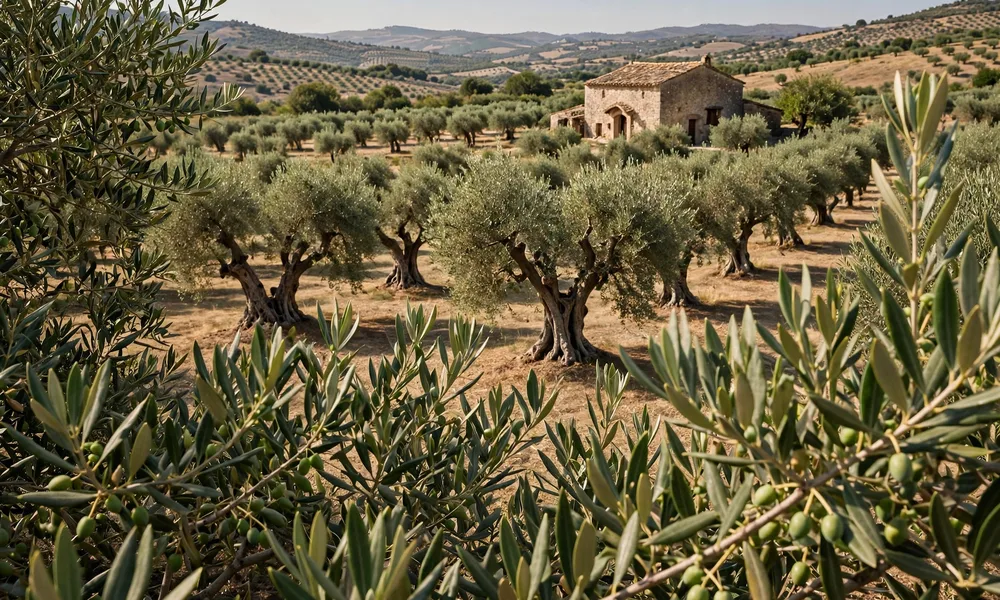
The second track of the milyom story is very different, because the farming facts underneath it are real and well documented, even if the name link itself needs care. Some online explainers use milyom, or mil-yom, as a name for the damage seen in olive trees infected with the bacterium Xylella fastidiosa, and they describe the name as Turkish for thousand holes, pointing to the scorched and dying look of infected trees. That naming claim appears in blog style sources. In the scientific and agricultural sources checked for this article, the disease is discussed under the names Xylella fastidiosa and olive quick decline syndrome, not under the name milyom. Readers should therefore treat milyom as a reported online nickname for the problem, not as its confirmed scientific or official name.
The disease itself needs no nickname to be serious. Xylella fastidiosa was identified in olive trees in the Salento area of Puglia, in southern Italy, in October 2013, in connection with olive quick decline syndrome. The bacterium lives in the xylem, the tissue that carries water from the roots of a plant to its leaves. As it multiplies, it blocks that flow. Leaves scorch, twigs and branches dry back, and the decline can spread through the canopy until the tree dies.
The main carrier identified in the Puglia outbreak is the meadow spittlebug, known in science as Philaenus spumarius. The insect feeds on plant sap, picks up the bacterium from an infected plant, and can carry it to the next plant it feeds on. Research published after the outbreak confirmed the spittlebug as a vector in the Salento olive groves. Because the bacterium can live in a very wide range of plants, and because infected plants may show no clear signs at first, stopping the spread is extremely hard. Agricultural sources are direct on the hardest point: there is no cure for an infected tree, so the work is prevention, monitoring, control of the insect carrier, removal of infected trees where rules require it, and planting of varieties that show resistance or tolerance.
The human cost explains why the story travels. Puglia is one of Italy’s great olive regions, and millions of trees, including very old ones that had stood for generations, have died or been removed in the wider epidemic described by regional and research sources. For farming families, the loss is income, landscape and history at the same time. If the word milyom brought you to this story, that real loss is the part worth remembering, whatever the status of the name itself.
Why the Two Stories Get Mixed Together
Search engines mix the two tracks because they share one spelling. A reader looking for a fun internet word lands on pages about dying olive trees. A farmer or student looking for disease information lands on pages about digital trends. Content sites then merge the tracks into one grand theory, because a single page that claims to explain everything is easier to sell than an honest page that says the evidence splits in two.
Wellness and branding pages add a third layer. A short word with no fixed meaning is attractive to anyone launching an idea. Pages have presented milyom as a lifestyle method and a symbol of abundance, but these are new creations built on the same empty space.
The careful approach is boring but reliable. Ask which milyom a page means. If it means the internet word, ask for a source stronger than another explainer page. If it means the olive disease, check whether the facts match the documented record of Xylella fastidiosa in Puglia from 2013 onward, and remember that the disease has its own established names. That one habit will protect you from most of the confusion around this word.
What to Say When Someone Asks About Milyom
For everyday use, a short and honest answer works best. Milyom has no confirmed standard meaning in English. Online, it behaves like a ghost word whose origin is unconfirmed, possibly a changed spelling of the Turkish word milyon, meaning million, though that is a theory and not a proven fact. Separately, some online sources use the name for olive tree damage linked to Xylella fastidiosa, a real and destructive bacterial disease first identified in Puglia in 2013 and spread by spittlebugs, but that name link is not confirmed in scientific sources.
If you meet the word as a username, a brand or a project name, read it as that name and nothing more, the same rule that applies to any invented name. If you meet it in a farming discussion, follow the science names, Xylella fastidiosa and olive quick decline syndrome, to find information you can trust. And if a page gives milyom a deep ancient history with no sources at all, enjoy it as storytelling and do not repeat it as fact.
You may also read: Çbiri: Everything You Need to Know About This Mystery Word
FAQs
What does milyom mean?
It has no confirmed standard meaning. Online pages offer conflicting definitions, none of them backed by a dictionary or a reliable record. The closest real word is the Turkish milyon, meaning million.
Is milyom a real disease?
The disease behind the farming stories is real. Xylella fastidiosa is a bacterium that blocks the water carrying tissue of olive trees and other plants, causing leaf scorch, branch dieback and tree death. It was identified in Puglia in 2013 and is spread mainly by the meadow spittlebug. The use of the name milyom for it is reported by online explainers but was not confirmed in the scientific sources checked.
Where did the word milyom come from?
Nobody knows for certain. Theories include a changed spelling of milyon, a made up blend of other words, and a simple typo that spread online. All three remain unproven.
Is there a cure for the olive disease linked to milyom stories?
Agricultural sources state that there is no cure for a tree infected with Xylella fastidiosa. The response is prevention, monitoring, control of the insect carrier, removal of infected trees under official rules, and use of resistant or tolerant varieties.
Final Thoughts
Milyom teaches two lessons at once. The first is about the internet: a word with no confirmed meaning can collect a dozen confident definitions if enough pages repeat them. The second is about the real world behind a search term: in Puglia, a genuine bacterial disease has destroyed olive trees on a huge scale since 2013, and that documented story deserves more attention than any invented definition. Hold both lessons together, and you have the truth behind the mystery: an unconfirmed word, a reported nickname, and a very real farming crisis that should not be confused with either.


