Crocolini: The Healthy Green Vegetable You Should Try Today
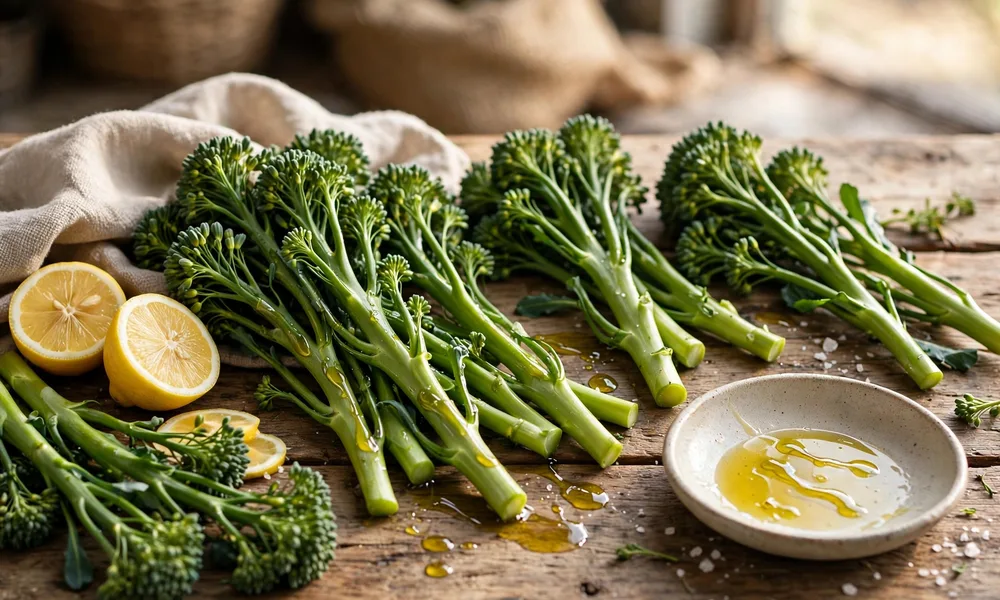
If you like broccoli but wish it was sweeter, softer and quicker to cook, crocolini may be the vegetable you have been looking for. You will also see it sold as broccolini, baby broccoli or tenderstem broccoli, depending on the country and the shop.
Crocolini has long thin green stems, small loose florets and a mild taste that even many broccoli critics enjoy. This guide explains what it is, how it was created, what nutrients it offers in general terms, and the easiest ways to buy, store and cook it at home.
Quick Facts
| Fact | Detail |
|---|---|
| Best known name | Broccolini, also sold as tenderstem broccoli, bimi and baby broccoli in some markets |
| What it is | A hybrid of broccoli and Chinese broccoli, also called gai lan or Chinese kale |
| Developed | In 1993 by the Sakata Seed Company in Yokohama, Japan |
| Plant family | Brassica family, the same family as cabbage, kale and cauliflower |
| Look | Long slender stems, usually about 15 centimetres, with small florets and small leaves |
| Taste | Mild, sweet and slightly peppery, with a hint of asparagus |
| Edible parts | The whole spear is edible, including stems, florets, leaves and small yellow flowers |
| Energy | About 35 calories per 100 grams in general food guides |
What Is Crocolini, and Why the Name Confuses People
Crocolini is best understood as a spelling variant of broccolini that appears often in shops and online articles. The vegetable itself is the same idea in each case. It is not baby broccoli, even though shops sometimes use that label. Baby broccoli is simply normal broccoli picked young. Crocolini is a true cross between two plants, bred on purpose to give a new result.
The two parents are regular broccoli and Chinese broccoli, which is also called gai lan or Chinese kale. From broccoli, the new plant took its small florets and familiar green colour. From gai lan, it took its long tender stems, its leaves and its gentler flavour. The result grows as separate thin spears rather than as one big heavy head.
That shape is the reason cooks like it so much. A head of broccoli needs cutting, and its thick stem often needs peeling because the outer skin can be tough and fibrous. A bunch of crocolini needs almost no prep at all. You rinse it, trim the dry end if it looks tired, and it is ready for the pan. The whole spear is edible, so there is very little waste.
The same vegetable travels under many labels. In the United Kingdom it is widely sold as tenderstem broccoli, in Japan and parts of Europe as bimi, and in some markets as asparation or aspabroc, a nod to its asparagus like stems. Whatever the packet says, look for thin stems, small florets and a fresh sweet smell.
How This Modern Vegetable Was Created
Crocolini is a young vegetable by farming standards. It was developed in 1993 by the Sakata Seed Company of Yokohama, Japan. Plant breeders crossed broccoli with gai lan by hand pollination, the traditional breeding method, and selected the plants that gave tender stems, a sweet taste and good growth in warmer weather.
The goal was practical. Broccoli is loved around the world, but its strong cabbage like taste and bitter edge put some people off, especially children. Breeders wanted a green vegetable with the nutrition people value in broccoli, but with a milder flavour and a stem you could eat without a fight. Years of selection gave them a plant that cooks fast, tastes gentle and still looks elegant on a plate.
The name broccolini was later trademarked, and the seeds are licensed to growers in many countries. That is one reason you see so many other names on packets. Growers and supermarkets in different regions use their own labels for what is, in simple terms, the same style of hybrid green.
Sources on its history describe it as a product of natural cross breeding through hand pollination, the same basic method farmers have used for centuries to improve crops.
Taste and Texture: Milder Than Broccoli
Flavour is where crocolini wins new fans. Regular broccoli can taste earthy and bitter, and that bitterness gets stronger when it is overcooked. Crocolini tastes sweet first, with a light peppery bite and a soft hint of asparagus at the end. The stems stay tender and slightly crisp when cooked well, and the florets are delicate rather than dense.
Texture changes with the cooking method, and each method has its fans. Steamed crocolini stays bright green and fresh, with a clean bite. Roasted crocolini turns sweet at the edges, where the natural sugars caramelise in the hot oven. Stir fried crocolini picks up the flavour of garlic, ginger and soy. Grilled crocolini gains light char marks and a gentle smoke that suits summer meals.
Because the flavour is mild, it pairs with strong partners without a fight. Lemon, garlic, chilli, parmesan style cheese, sesame oil and toasted nuts all sit happily beside it. It also works for people who say they do not like greens. Served with pasta, eggs or rice, it adds colour and freshness rather than a heavy cabbage note, and many home cooks find that children accept it more easily than big broccoli florets.
Nutrition in Plain and Honest Terms
Crocolini is a nutrient dense green vegetable, which means it gives you a good amount of vitamins and minerals for very few calories. General nutrition guides list it as a source of vitamin C, vitamin A, vitamin K and folate, along with smaller amounts of calcium, iron and potassium. It also provides dietary fibre, which helps normal digestion as part of a balanced diet.
Like other vegetables in the brassica family, it contains natural plant compounds called glucosinolates. When the vegetable is chopped or chewed, these compounds can form other substances such as sulforaphane, which researchers continue to study. It is fair to say that eating a variety of green and cruciferous vegetables is a well supported part of a healthy eating pattern. It is not fair to promise that one vegetable will prevent or cure any disease, and this article does not do that.
A simple way to think about its value is this. A normal serving adds fibre, vitamin C and vitamin K to your plate, with about 35 calories per 100 grams, little fat and no need for heavy sauces to make it taste good. If you swap a heavy side dish for crocolini a few times a week, your overall meal becomes lighter while still feeling complete.
Two practical points help you keep more of its goodness. First, do not boil it for a long time in a big pot of water, because some vitamins can move into the water and the colour and taste will fade. Short steaming, quick stir frying and roasting are kinder methods. Second, enjoy it as part of a varied diet with other vegetables, fruits, grains and proteins. No single food does the whole job, but crocolini is an easy and tasty piece of the pattern.
How to Buy, Store and Cook It Well
Buying well is simple. Choose bunches that look bright green, with firm stems and tight small florets. Avoid spears that are yellow, limp or slimy at the cut end, and avoid florets that have opened into many yellow flowers, which can mean the bunch is old, though a few small flowers are fine and edible.
At home, keep crocolini in the fridge in a loose bag or in the salad drawer, ideally with a dry paper towel to take up extra moisture. Use it within a few days for the best taste, though many guides say it can keep for up to a week when stored well. If you buy more than you need, you can blanch it briefly in boiling water, cool it fast in cold water, dry it and freeze it for later use in soups, pasta and stir fries.
Cooking times are short, and that is the main rule. For steaming, three to five minutes is usually enough. For roasting, a hot oven at about 200 to 220 degrees Celsius, a little olive oil and salt, and 12 to 18 minutes gives tender stems and crisp tips. For a pan, heat oil, add garlic for the last minute so it does not burn, and cook the spears for about five minutes until bright and just tender. It should still have a bite. Soft, dull and watery crocolini has simply cooked for too long.
Season at the end with lemon juice, salt or a splash of soy sauce. Taste one spear before you serve, so you learn your own perfect timing.
Easy Ways to Serve Crocolini Any Day of the Week
The simplest serving is also one of the best. Roast or steam the spears, add olive oil, lemon and a little garlic, and serve beside chicken, fish, tofu or eggs. It looks smart enough for guests and takes almost no effort on a busy night.
For pasta, cut the spears into short pieces and cook them with garlic and chilli before tossing with the pasta. For rice and grain bowls, roasted crocolini adds colour and a sweet edge that balances salty sauces.
In Asian style meals, stir fry it with ginger, garlic and sesame oil for noodles or rice. Chop it small for an omelette or frittata. Or blanch it, chill it and serve it with a yoghurt dip or hummus as an easy starter.
FAQs
Is crocolini the same as broccolini?
Yes, in normal use they refer to the same type of vegetable. Broccolini is the best known and trademarked name, while crocolini is a common spelling variant. It is also sold as tenderstem broccoli, bimi and baby broccoli in some shops.
Is crocolini just young broccoli?
No. Young broccoli is the same plant picked early. Crocolini is a hybrid first developed in 1993, made by crossing broccoli with Chinese broccoli or gai lan, which is why its stems are thinner and its taste is sweeter.
Can you eat the whole crocolini spear?
Yes. The stems, florets, leaves and even the small yellow flowers are edible. Just rinse the spears and trim any dry cut end. There is no need to peel the stems, because they are naturally tender.
What is the healthiest way to cook it?
Short steaming, quick stir frying and roasting all work well and help keep its colour and nutrients. Long boiling is the least kind method. Serve it as part of a balanced diet rather than relying on any one vegetable.
You may also read: Kibard: The Surprising Story Behind a Small Typing Mistake
Final Thoughts
Crocolini takes the best parts of broccoli and gai lan and puts them in one easy spear. It is sweet, tender, quick to cook and kind to cooks who do not want waste or hard prep work.
If you have walked past it in the shop because the name looked odd, try one bunch this week. Roast it hot with a little oil and lemon, taste it while it is still bright green, and see how simple a healthy green can be. It may become the vegetable your family asks for by name, even if everyone spells that name a little differently.


