Sages: The Small Accessory That Can Change Your Whole Outfit
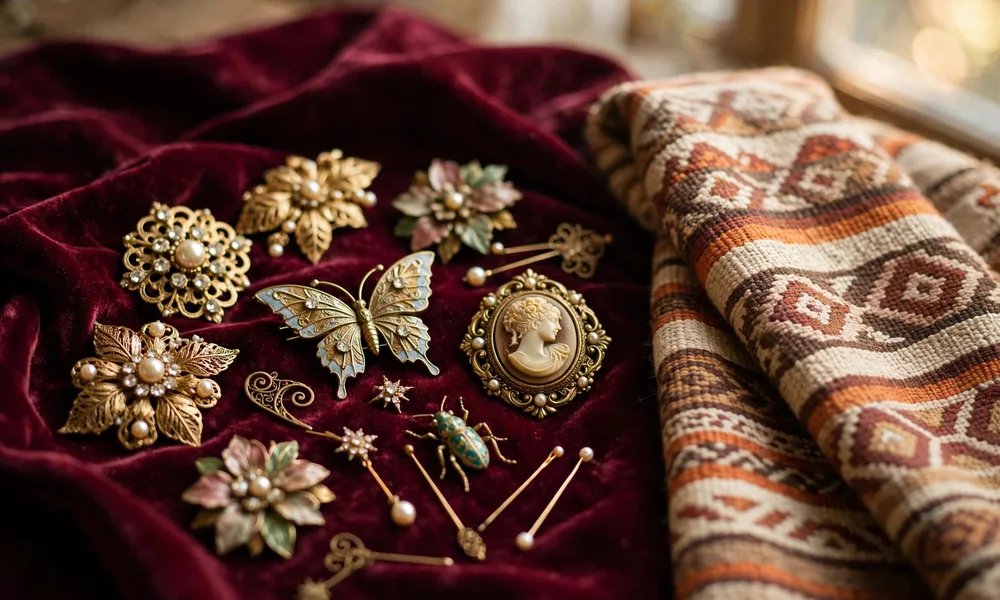
A small pin can do a big job. That is the simple idea behind sages. The word comes from Lithuanian, where a sage is a brooch and sages is the plural form, meaning brooches. A brooch is a decorative piece of jewellery that you attach to your clothes with a pin or clasp on the back.
You may have seen one on a coat lapel, on a scarf, or in the middle of a plain dress, and noticed how the whole outfit suddenly looked finished. This guide explains what sages are, where brooches came from, the main types you can buy, and the easy ways to wear one without looking old fashioned.
Quick Facts
| Fact | Detail |
|---|---|
| Word origin | Sage is the Lithuanian word for a brooch, and sages is the plural form |
| What it is | A decorative jewellery item pinned or clipped to clothing |
| Old English and Latin link | Ancient European brooches are often called fibulae in archaeology |
| Earliest examples | The earliest known brooches date from the Bronze Age |
| Common materials | Metal such as gold, silver or bronze, often with enamel or gemstones |
| Original purpose | To fasten clothes together, as well as to decorate them |
| Famous example | The Tara Brooch, a celebrated early medieval Celtic brooch from Ireland |
| Modern use | A fashion accessory for jackets, dresses, scarves, hats and bags |
What the Word Sages Really Means
The word can confuse English readers at first, because in English the word sage has other meanings. In English, a sage can be a wise person, and sage is also the name of a well known cooking herb with soft green leaves. Those meanings are real, but they are not the meaning used in this article.
In Lithuanian, the language of Lithuania in northern Europe, sage with a special mark over the final letter means a brooch. Translation guides list brooch in Lithuanian as sage, and brooches in the plural as sages. Baltic jewellery has a long tradition, and old Baltic brooches often carried sun and plant designs. In that tradition, a brooch was not only pretty. It held a cloak closed, showed who the wearer was, and in some cases was believed to offer protection.
So when you see sages used as the name for a small outfit changing accessory, think of a brooch. Think of a small, solid piece with a face you can see and a pin you cannot, made to sit on fabric and catch the eye. That one small object can add colour, shine, shape and meaning to clothes that otherwise look plain.
A Short History of the Brooch
Brooches began as tools, not as fashion. Long before buttons and zips were common, people needed a strong way to hold heavy cloth together at the neck or shoulder. A metal pin with a decorated head solved the problem. Wikipedia notes that the earliest known brooches are from the Bronze Age, and that because brooch styles changed quite fast, archaeologists still use them to help date old sites and graves.
In the Roman world and in early medieval Europe, these fasteners were called fibulae. Some were plain and made for daily use or for soldiers. Others were rich pieces in gold and silver, set with crystal or coloured stones, and they showed rank and wealth. Old Irish law even described what kind of brooch the sons of kings should wear, with gold and crystal for the highest rank and silver for lower ranks.
In the Middle Ages, brooches were worn by both men and women. Ring brooches fastened clothing at the neck, and heart shaped brooches were given as gifts between lovers and friends. By the twentieth century, the brooch had mostly become a decorative item for women, while men wore smaller lapel pins. Today designers make brooches from metal, wood, fabric, resin and even 3D printed plastic, and people of all ages wear them. The tool became jewellery, and the jewellery became a personal statement.
The Main Types of Sages You Can Find
Not all brooches look the same, and knowing the main types helps you choose one that fits your clothes. The classic pin brooch has a straight pin and a catch on the back. You push the pin through the fabric and close the catch, so it stays firm on a coat or blazer.
Bar brooches are long and narrow, often with a simple line of stones or a clean metal shape. They sit well on a lapel or across the top of a dress. Cameo brooches carry a carved profile, usually a face in side view, cut into stone or shell. They have a vintage feel and suit formal or romantic outfits.
Enamel brooches use coloured enamel over metal to make flowers, animals, flags and fun shapes. They are often lighter and cheaper than gemstone pieces, so they are a good first brooch. Dress clips are close cousins of the brooch. Instead of a pin, they grip the fabric with a clip, and they were very popular in the 1920s and 1930s. People wore them in pairs on necklines, straps and even shoes.
There are also cultural forms worth knowing. The large round solje brooch in silver filigree is part of traditional Norwegian dress. Celtic penannular brooches, shaped like an open ring with a moving pin, are still worn with kilts and sashes. In Lithuania and the wider Baltic region, round brooches with sun signs remain a proud link to folk dress and old craft skills.
How One Small Pin Changes a Whole Outfit
A brooch works because the eye goes to it first. A plain black blazer is just a blazer until a bright brooch sits on the lapel. Then the blazer has a focal point, a colour story and a hint of the wearer personality. Stylists use this trick often, because it is cheaper and faster than buying a new outfit.
Colour is the first change. A gold brooch warms up navy and brown clothes, a red enamel flower lifts a grey dress, and a clear crystal piece adds light to an evening top. Shape is the second change. A firm circle, star, leaf or animal breaks the soft lines of clothing in a good way. Meaning is the third change. A small bee, a cat, a book or a musical note tells people something about you before you say a word. That is a lot of work for an item that fits in your palm.
Easy Ways to Wear Sages Every Day
The classic place is high on the left side of a jacket or coat, near the collarbone or on the lapel. It is classic for a reason. The brooch sits near the face, catches the light when you talk, and does not get hidden by a bag strap as often as lower spots do.
Beyond the classic spot, the rules are loose and friendly. Pin one at the centre of a collar to close a cardigan. Use one to hold a scarf in place on a windy day, which is a return to the brooch first job as a fastener. Add one to a plain hat, a denim jacket pocket, a tote bag or the strap of a dress. A group of three small brooches in a loose cluster on one side of a sweater can look modern and playful.
Fabric matters. Heavy brooches need strong fabric such as wool, tweed, denim or a lined coat. On thin fabric, a heavy pin can drag or leave a hole. Pin through a doubled layer or a seam, support the weight with felt inside, or use a clip style for very fine clothes.
Size should match the moment. A large, bright brooch suits a plain daytime coat and can be the only jewellery you wear. A small, fine brooch in gold or pearl suits a formal dress, where it should add polish and not shout. When in doubt, wear one brooch well rather than many brooches at random, and let it have space around it.
How to Choose and Care for Your Brooches
Start with what you already own. Look at the colours you wear most, and pick a brooch that either matches that family or gives a clear contrast. If you wear a lot of blue and white, a silver or pearl brooch will fit in daily, while a red or green enamel piece will stand out for special days. Check the back before you buy. The pin should open and close smoothly, and the catch should feel secure, because a weak catch is the main reason brooches get lost.
Weight is worth checking in the shop. Hold the brooch against the kind of fabric you plan to wear. If it pulls the cloth down in your hand, it will do the same on your body. Light enamel and hollow metal pieces are kind to blouses and knits, while solid gemstone pieces belong on coats and jackets.
Care is simple. Wipe metal brooches with a soft dry cloth after wearing them, and keep them in a small box so the pin does not scratch other jewellery. Keep enamel away from perfume and water. A local jeweller can usually fix a loose stone or bent pin for a modest cost.
Second hand shops are great places to start. Old brooches are often well made and cost less than new designer pieces. One good brooch, worn often, is worth more than a drawer full of pieces you never reach for.
FAQs
What does sages mean?
In Lithuanian, a sage is a brooch and sages means brooches. In English the same spelling can also mean wise people or the herb sage, so the context matters. In fashion, sages refers to brooches used as outfit accessories.
Where should I wear a brooch?
The most common place is high on a lapel or near the collarbone. You can also wear one on a scarf, hat, bag, collar or dress strap. Just make sure the fabric is strong enough to hold the weight without stretching.
Can men wear brooches?
Yes. Men have worn brooches and lapel pins for centuries, from Celtic cloak pins to modern lapel pins on suits. A small, simple design on a blazer lapel is an easy and smart way to start.
Will a brooch damage my clothes?
A pin can leave a tiny hole in very fine fabric, so use care with silk and thin knits. Pin through a seam or a doubled layer, support heavy pieces with felt inside, or choose a clip style brooch for delicate clothes.
You may also read: Crocolini: The Healthy Green Vegetable You Should Try Today
Final Thoughts
Sages, the humble brooches, have travelled a long way from Bronze Age cloak fasteners to modern fashion favourites. They fastened clothes, showed rank, carried love notes and memories, and now they do a simpler job. They make plain clothes feel personal.
You do not need a large collection or an expensive piece to get the benefit. One well chosen brooch, placed with care on a jacket, scarf or dress, can change your whole outfit in seconds. That is why this small accessory has survived for thousands of years, and why it still earns its place in a modern wardrobe.


