Priority Infrastructure Plan: The Secret Behind Strong and Modern Cities
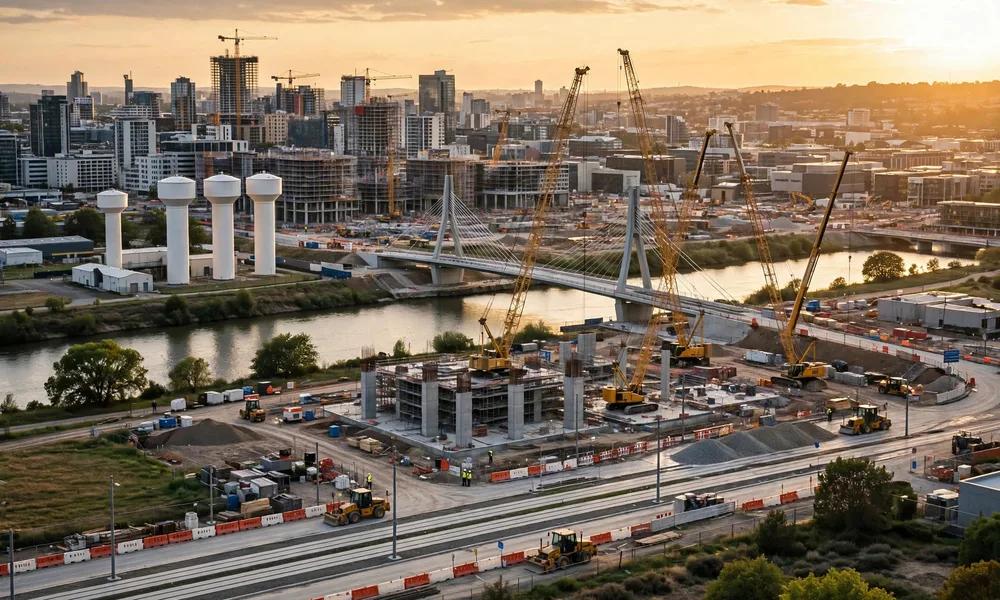
Every strong city rests on things people rarely praise when they work: roads without deep holes, clean water that always flows, power that stays on, buses and trains that arrive, and internet that reaches every home. None of that happens by luck. Behind it sits a simple but powerful tool – a priority infrastructure plan.
A priority infrastructure plan is a ranked plan for building and fixing the basic systems a city or country needs most. This guide explains what it is, what it covers, how priorities are chosen, and why the order of projects matters as much as the projects themselves.
One honest note first: there is no single world plan with this exact name that every city follows. The phrase describes a general planning approach used in many places, in forms such as capital improvement plans and national infrastructure strategies. The details differ by city, but the core idea is shared.
Quick Facts
| Item | Detail |
|---|---|
| Term | Priority infrastructure plan |
| Meaning | A ranked list of infrastructure projects, with order, cost, timing and funding decided in advance |
| Common form | Capital improvement plan, often covering about 3 to 6 years for a town or city |
| Main sectors | Transport, water, energy, digital networks, housing support systems and public buildings |
| Key principle | Fix and protect what exists first, then build new where the need and benefit are greatest |
| Who takes part | City and national governments, engineers, funders, businesses and local residents |
What a Priority Infrastructure Plan Actually Is
Infrastructure means the basic physical systems that daily life depends on. Roads, bridges, rail lines, ports, water pipes, sewers, power grids, flood defences, schools, hospitals and broadband networks are all infrastructure. Each one is costly, slow to build, and expected to serve for decades.
No government can build everything at once. Money, workers, materials and time are all limited, while the wish list is always long. A priority infrastructure plan solves that problem by putting projects in order. It states which projects come first, which wait, what each will cost, when work should start, and where the money will come from.
For towns and cities, a close cousin is the capital improvement plan. Planning guides describe it as a multi year tool, typically covering three to six years, that lists major projects such as road rebuilding, water and sewer work, public buildings and parks, together with cost estimates, funding sources, timelines and reasons. National governments use larger versions of the same idea, ranking major transport, energy and digital projects across a whole country.
The word priority is the heart of the plan. A simple list of dreams is not a plan. A priority plan makes hard choices in public, gives reasons for them, and can be checked later against what was actually built. That openness is what turns spending into strategy.
The Main Building Blocks of a Strong City
Transport is usually the most visible block. Roads, bridges, rail, buses, ports and airports move people to work and goods to shops. When transport fails, the whole economy slows. Good plans balance repair of busy existing routes with new links where growth is real, and they include walking, cycling and public transport, not only cars.
Water and sanitation form the second block, and it is the one most tied to health. Treatment plants, pipes, reservoirs, storm drains and flood protection keep water clean and homes dry. Much of this network hides underground and is easy to forget until a pipe bursts or a street floods. Priority plans protect it by scheduling renewal before failure, not after.
Energy is the third block. Power stations, grid lines, and increasingly solar, wind and storage, keep lights, hospitals, factories and phones running. Modern plans also weigh climate goals, since energy choices shape air quality and emissions for decades. A grid that cannot handle new homes or electric vehicles becomes a brake on growth.
Digital infrastructure is the newest block, and it now stands beside the older ones. Broadband, mobile networks and data systems carry schooling, health services, banking and government into homes and small businesses. Places left off the fast network fall behind in jobs and education. Finally, social infrastructure – schools, clinics, public housing support and community buildings – turns physical growth into a place people actually want to live.
How Priorities Are Chosen
A good plan starts with an honest survey of what exists. Engineers rate the condition of roads, bridges, pipes and buildings, and note what is near the end of its life. Safety risks jump the queue: a weak bridge or a failing dam cannot wait behind a decorative project. Legal duties, such as clean water rules, also force some items to the top.
Next comes need and benefit. Planners study population growth, traffic, business demand and areas that have been left behind. A project that serves many people, unlocks housing, cuts travel time, or protects homes from floods scores higher than one with narrow benefit. Cost matters too, not only the building cost but the full lifetime cost of running and maintaining the asset.
Many real plans use a fix it first rule. The idea, used openly in past United States infrastructure proposals and in many city plans, is that repair and maintenance of existing roads, bridges and transit should take priority before money goes to brand new facilities. Fixing what people already rely on is often cheaper, faster and safer than building new while the old system decays.
Funding then decides what is real. Plans mix taxes, user charges, government grants, loans and private investment through partnerships. Each source has limits and conditions. A project without a funding path stays a wish, so honest plans separate funded first phase work from later ideas. Public consultation is the final check: residents often know which road floods, which bus route fails, and which estate lacks broadband better than any office model, and surveys of city residents in many countries show people want a stronger voice in these choices.
Why the Order of Projects Changes Everything
Sequence can save or waste billions. Build new homes before the water and road capacity exists, and families move into congestion and shortages. Renew a road, then dig it up a year later for new pipes, and the public pays twice for the same street. A priority plan lines up linked work so each project supports the next.
Order also protects fairness. Without a clear ranking, the loudest district or the most connected contractor can capture the budget, while poorer areas wait for decades. Published criteria – safety, condition, need, benefit, readiness – give every district the same test. People may still argue about the result, but they can see the reasoning.
There is an economic side too. Steady, planned work lets local firms hire and train workers, lets suppliers prepare materials, and spreads spending across years instead of boom and bust. Governments in different countries have used large priority programmes in exactly this way, linking road, energy, digital and housing work to jobs and long term growth. The names of those programmes differ, from big national pushes to city capital plans, but the ranking logic underneath is the same.
Finally, order builds trust. When a city publishes a plan, delivers the first items on time, and reports progress openly, residents are more willing to support the next phase, through taxes, patience during construction, or sharing data that helps planning. Trust is slow to earn and quick to lose, and infrastructure, because it takes years, needs more trust than almost any other public task.
Problems That Can Break a Plan
The first enemy is delay in permits, land and approvals. A ranked project that waits years for paperwork loses its place in reality even if it keeps its place on paper. Good plans include approval steps in the timeline and start them early. The second enemy is cost growth. Prices for steel, energy and labour move, so plans need honest estimates, contingency money, and regular updates rather than fixed numbers defended long after they stop being true.
Politics can bend a plan as well. Leaders change, and each new leader may want a signature project. Some change is normal in a democracy, but a plan rewritten at every election gives builders and citizens no stability. The strongest systems protect the core ranking with law, independent review, or multi year budgets, while still allowing updates when facts change.
Maintenance is the quiet risk. New openings win headlines; pipe renewal and bridge painting do not. Yet a plan that favours new builds over upkeep stores up failures. Skilled planners guard a maintenance share of the budget and report the condition of old assets with the same pride as new ones. Climate change adds one more test: drains, defences, materials and designs must suit the heavier rain, heat and storms that many regions now face, not only the weather of the past.
You may also read: Recyclatanteil: The Hidden Number That Can Help Save Our Planet
FAQs
Is a priority infrastructure plan one official world plan?
No. It is a general planning approach, not a single global document. Cities often call their version a capital improvement plan, and countries publish national infrastructure strategies. The name varies, but the ranked order, costs, timing and funding idea is shared.
What is the fix it first principle?
It means repair and maintenance of existing roads, bridges, water systems and transit come before spending on new facilities. It protects what people already use, usually at lower cost and risk than letting assets fail and replacing them in a crisis.
Who pays for priority infrastructure?
Funding is usually mixed: local and national taxes, grants, loans, user charges such as water bills, and private partners for some projects. A serious plan names the funding source for each major project instead of listing projects with no money attached.
How can residents influence the plan?
Through public consultations, council meetings, surveys and feedback on draft plans. Residents give local knowledge about flooding, traffic, safety and missing services, and public pressure helps keep published priorities honest over time.
Final Thoughts
Strong and modern cities are not built by accident or by one grand opening. They are built by ranked choices, made openly and followed for years: fix what is failing, serve the greatest need, fund what is promised, and maintain what is built. That is the quiet secret of the priority infrastructure plan. Once you know it, you can read any city budget or election promise with sharper eyes and ask the only question that matters: what comes first, and why?


