Tech Giants Envision Future Beyond Smartphones
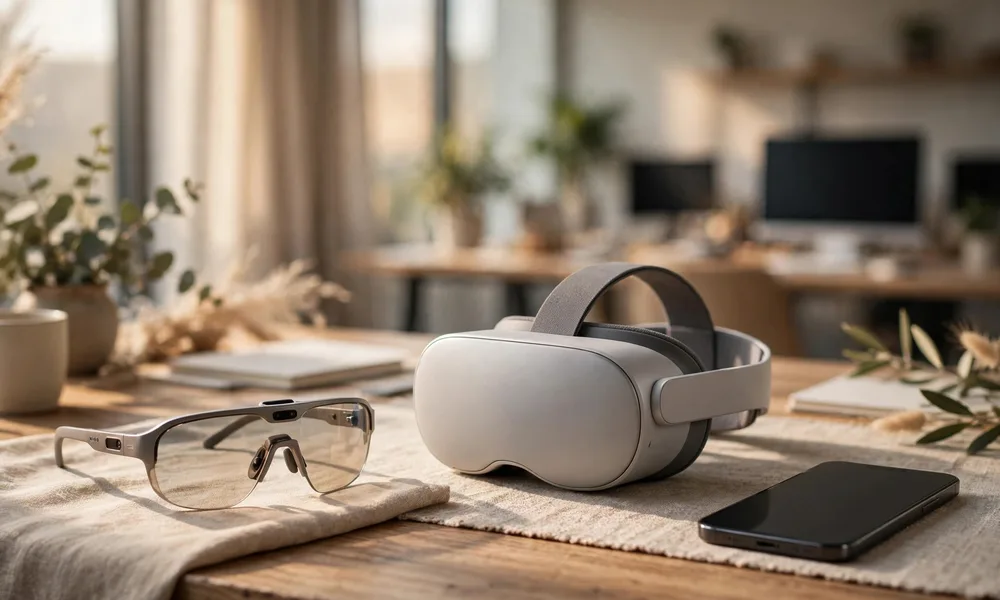
The smartphone has been the centre of daily tech life for more than fifteen years. We message, pay, travel, work, and relax through one glass screen. Now the biggest tech firms are spending huge sums on what might come next, from smart glasses and headsets to AI assistants that live in earbuds, watches, and pins.
This does not mean phones will vanish next year. It means tech giants envision future beyond smartphones, where many small tasks move to devices we wear and to AI that understands context. In this guide, we look at what Apple, Meta, Google, Samsung, Microsoft, and others are building, and what is realistic for everyday users.
Quick Facts
| Item | Detail |
|---|---|
| Topic | Tech giants envision future beyond smartphones |
| Main devices | Smart glasses, mixed reality headsets, watches, earbuds, and AI pins |
| Key firms | Apple, Meta, Google, Samsung, Microsoft, OpenAI, and Qualcomm |
| Apple focus | Vision Pro and spatial computing |
| Meta focus | Ray-Ban Meta glasses and Orion AR prototype |
| Google and Samsung focus | Android XR platform and Galaxy XR headset |
| Likely timeline | Wearables support phones first; full change, if it comes, takes years |
Why Tech Giants Are Looking Beyond the Phone
Phone sales have matured in many markets. New models often bring better cameras and faster chips, but fewer big leaps that make people rush to upgrade. When a market stops growing fast, big firms look for the next platform they can own, just as phones once replaced many cameras, music players, and maps.
Artificial intelligence is the second driver. Modern AI assistants work best when they can see and hear what you see and hear, and answer in the moment. A phone in a pocket cannot do that well. Glasses, earbuds, and watches sit closer to your senses, so firms see them as natural homes for always available AI help.
There is also a habit problem. Many people feel tired of staring down at a screen. Tech leaders such as Meta chief Mark Zuckerberg have said in public that glasses could in time take over many phone tasks, because information can appear in your view while your hands stay free. Apple leaders have been more careful, presenting headsets as a new kind of computing that works alongside the phone.
Investors and news reports add one more point. Whoever wins the next platform may control app stores, services, and payments for a generation. That prize explains why so many giants are moving at once, even though the winning device is not yet clear.
Smart Glasses Lead the Race
Smart glasses are the most talked about phone successor. Meta sells Ray-Ban Meta glasses with cameras, speakers, microphones, and Meta AI, letting wearers take photos, listen to audio, and ask questions hands free. Meta has also shown Orion, a prototype with true augmented reality displays, while making clear that Orion itself is a research step, not a normal shop product.
Google is returning to glasses through partnerships and its Gemini AI. Public announcements have described smart eyewear work with eyewear brands, aiming at directions, messages, translation, and photos without pulling out a phone. Samsung is part of the same push through headsets first, with lighter glasses widely expected as a later step.
The appeal is easy to understand. Glasses can show a walking route on the street in front of you, translate a sign as you look at it, or capture a family moment at once. For many quick tasks, that feels faster and more natural than unlocking a phone and opening an app.
The problems are just as clear. Cameras on faces raise privacy worries for people nearby. Battery life is short when displays, cameras, and AI run together. Styles must look normal enough for daily wear, and prices must fall. Until those points improve, glasses will likely assist phones rather than fully replace them.
Headsets, Spatial Computing, and Ambient AI
Apple calls its approach spatial computing. Its Vision Pro headset places apps and screens in the space around the wearer, controlled by eyes, hands, and voice. Apple presents it as a powerful device for work, media, and design. Its high price and size mean it is not a phone replacement for most people today, but it shows the direction Apple is exploring.
Google and Samsung have built Android XR as a shared platform for headsets and glasses, with Gemini AI placed at the centre. Samsung Galaxy XR was introduced as the first product built on that platform. A shared platform matters because developers need one clear place to build apps if a new device type is to grow.
Microsoft has focused more on work and industry through mixed reality and cloud AI, with HoloLens history in training, repair, and design tasks. In factories and hospitals, overlaying guidance on the real world already has clear value, even if home users move more slowly.
Beyond headsets sits ambient computing. This is the idea that AI help fades into rooms, cars, and everyday objects, adjusting lights, offering reminders, and answering questions without a main screen. OpenAI has also moved toward consumer hardware, including its reported work with designer Jony Ive firm io, which shows that AI firms want a physical home for their assistants too.
The Hard Problems: Privacy, Battery, and Trust
Privacy may be the biggest test. A device that can record audio and video through the day makes bystanders uneasy, and reports about future sensing features have sharpened that debate. Firms will need clear recording lights, simple controls, and strong promises about what is stored, where it goes, and who can see it.
Battery and comfort come next. Phones succeed partly because they last a day and feel familiar. Glasses must stay light for hours, and headsets must avoid heat and strain. Small batteries limit how much AI and display work a wearable can do alone, which is one reason many devices still lean on a phone or the cloud.
Cost is a third barrier. Early headsets have cost far more than phones, and even smart glasses can be a hard sell if they feel like a luxury extra. History suggests prices fall as parts improve and sales grow, but the early years favour keen and higher income buyers, which raises fairness questions about who benefits first.
Finally, there is simple trust and habit. People know how phones work, and phones hold their photos, banking, and identity tools. A new device must earn its place task by task. Most experts quoted in recent coverage expect a long overlap, with wearables handling quick moments and phones keeping complex work, rather than a sudden switch.
What Everyday Users Can Realistically Expect
In the near term, expect addition, not replacement. Watches, earbuds, rings, and glasses will take over small jobs such as checking a direction, replying to a message, logging a workout, or asking AI a quick question. Your phone will remain the hub that connects and powers much of it.
At work, change may arrive faster in some jobs. Technicians can see repair steps in view. Warehouse staff can get picking guidance hands free. Doctors and trainees can practise with overlays. Where hands free information saves time or errors, firms have a clear reason to pay for new devices.
At home, the first wins may feel quiet. Better voice help, live translation on trips, captions for conversations, and photos captured without reaching for a pocket all solve real small pains. If glasses become lighter, cheaper, and more normal in style through the late 2020s and into the 2030s, their role could grow in the way phones grew after the first iPhone.
Bold claims about brain interfaces replacing phones should be read with care. Brain computer work, such as that at Neuralink, is focused mainly on medical uses in public reports, with strict trials and approvals. It is a serious field, but it is not a near term shopping choice for the general public.
FAQs
Will smartphones disappear soon?
No strong evidence suggests phones will disappear soon. Leaders and analysts mostly describe a slow shift where wearables and AI take over some tasks. Phones are likely to stay central for years, even as glasses and headsets grow.
Which company is leading the move beyond smartphones?
Different firms lead in different areas. Meta leads in consumer smart glasses, Apple in high end spatial computing, and Google with Samsung in the Android XR platform. No single winner is clear yet.
What device is most likely to reduce phone use first?
Smart glasses are the most likely first step for many users, because they are light, familiar in shape, and useful for photos, audio, directions, and quick AI help. Watches and earbuds already reduce phone checks for small tasks too.
What is the biggest risk of post smartphone devices?
Privacy is the biggest concern. Always available cameras and microphones affect not only the wearer but everyone nearby. Clear recording signals, strong data controls, and honest company policies will decide how much trust these devices earn.
You may also read: Duaction: How to Turn Simple Learning Into Real-Life Skills
Final Thoughts
When tech giants envision future beyond smartphones, they are really competing to own the next everyday interface. Glasses promise information in your view, headsets promise computing in your space, and AI assistants promise help that arrives before you open an app. The direction is clear, even if the final winning product is not.
For users, the wise view is calm curiosity. Try new wearables when they solve a real problem for you, watch privacy settings with care, and do not rush to replace a phone that still serves you well. The post smartphone era, if it fully arrives, will come step by step, one useful task at a time.


