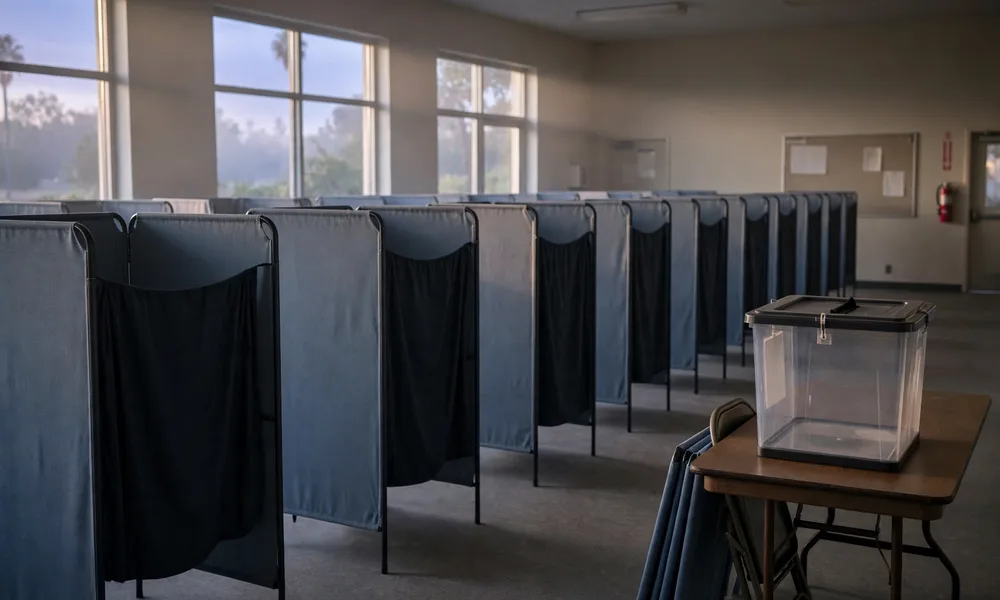
California voters have rejected Proposition 40, a one-time 5 percent tax on billionaires. The Associated Press called the race for the no side on Monday, November 9, 2026, nearly a week after Election Day on November 3. With about 83 percent of ballots counted, no had 52.8 percent and yes had 47.2 percent. That was about 5.91 million votes against the measure and about 5.29 million votes in favor, a margin of about 621,000 votes. The result is unofficial until it is certified by the California Secretary of State on December 11.
Quick Facts
| Item | Detail |
|---|---|
| Measure | Proposition 40, one-time 5 percent billionaire tax |
| Result | Rejected |
| Called by | Associated Press, November 9, 2026 |
| Election Day | November 3, 2026 |
| Votes against | About 5.91 million, 52.8 percent |
| Votes in favor | About 5.29 million, 47.2 percent |
| Vote margin | About 621,000 votes |
| Ballots counted | About 83 percent |
| Who would have paid | People worth over 1 billion dollars, resident in California on January 1, 2026 |
| Estimated payers | About 200 billionaires |
| Tax rate | 5 percent of net worth, one time |
| Payment timing | Due in 2027, payable over five years |
| Estimated revenue | About 100 billion dollars over five years, per supporters |
| Main use | Mostly for Medi-Cal |
| Certification date | December 11, 2026 |
| Notable local result | San Francisco backed it 56 percent to 44 percent |
What Proposition 40 Would Have Done
Proposition 40 asked California voters to approve a one-time tax on very large fortunes. It would have applied to people worth more than 1 billion dollars who lived in California on January 1, 2026, a group supporters estimated at about 200 people. The tax would have been 5 percent of net worth, charged once, with payment due in 2027 and an option to spread payment over five years.
The measure was aimed at a small group at the very top of the wealth scale, and most voters would not have paid anything under it. Supporters said that kept the tax narrow and focused. Critics questioned how net worth would be measured for people whose wealth sits in private companies, stocks, and property.
Supporters, led by the healthcare workers union SEIU-United Healthcare Workers West, estimated that the tax could raise about 100 billion dollars over five years. Most of that money would have gone to Medi-Cal, the state Medicaid program, which provides health coverage to millions of people in California.
How the Vote Turned Out
The vote was close, and the result took time to become clear. Election Day was November 3, 2026. California counts a large number of mail ballots, so full results take days to arrive. The Associated Press did not call the race until Monday, November 9, nearly a week later. By then, about 83 percent of ballots had been counted. The no side had 52.8 percent and the yes side had 47.2 percent, a gap of about 621,000 votes.
A margin of 5.6 percentage points is clear, but it is not a landslide. It shows a state that was divided on the question. The result is still unofficial and will not become final until the California Secretary of State certifies it on December 11. Until then, the numbers can still shift slightly, though the gap was large enough for the Associated Press to say the no side had won.
San Francisco stood out from the statewide pattern. Voters there backed the measure by about 56 percent to 44 percent, showing that support was stronger in some parts of the state than in others.
Why Supporters Backed the Measure
Supporters presented Proposition 40 as a direct way to fund health care. A one-time charge on about 200 billionaires could raise about 100 billion dollars over five years, most of it for Medi-Cal. They said Medi-Cal needs stable funding, and the tax would provide it without asking most Californians to pay more.
The California Democratic Party backed the measure. Senator Bernie Sanders and Representative Ro Khanna campaigned for it. Their support gave the yes campaign a national profile and signaled that the measure was part of a wider debate about wealth, inequality, and how states should pay for public services.
Supporters also argued that the tax was limited in scope: it would have applied only once, only to people worth more than 1 billion dollars, and it would have allowed payment over five years. They called it a targeted charge on extreme wealth, not a broad tax increase. The yes side raised about 33.5 million dollars, far smaller than the amount raised by the no side.
Why Opponents Pushed Back
Opponents argued that the tax would not work as planned. Governor Gavin Newsom opposed the measure, arguing that billionaires would leave California or find ways to avoid the tax, and that a national tax would be better than a state-only tax. His successor, Xavier Becerra, also opposed it. That put two leading Democrats on the opposite side from their own state party, which backed the measure.
Opponents spent about 378 million dollars, roughly 10 times the about 33.5 million dollars raised by the yes side. Google co-founder Sergey Brin led the spending against the measure, with about 102 million dollars, making the race one of the most expensive ballot fights in California history.
The core argument from opponents was about movement and avoidance. They said people with very large fortunes have the means to change where they live, move assets, or use legal planning to reduce what they owe. If enough people did that, the tax would raise far less than the estimated 100 billion dollars, and it could drive away founders, investors, and business leaders who create jobs in the state.
Polling before the vote showed support falling. An October poll by UC Berkeley found 50 percent opposed and 42 percent in favor. A poll by the Public Policy Institute of California found 52 percent opposed and 46 percent in favor. Those numbers lined up with the final result, in which no won with 52.8 percent. Wealth and markets were already on many voters minds, as seen in stories such as SoftBank posts a 7 billion dollar net loss in the second quarter and Bitcoin falls below 75000 dollars to its lowest level since August.
What Happens Next With Propositions 41 and 42
Proposition 40 was not the only wealth tax measure on the ballot. Proposition 42 would ban new taxes on personal property and retroactive wealth taxes. It was leading 51.6 percent to 48.3 percent, but it had not been called at the time Proposition 40 was called. Proposition 41 would also restrict wealth taxes.
If either Proposition 41 or Proposition 42 passes with more votes than Proposition 40, Proposition 40 is nullified. Since Proposition 40 was rejected, that rule is less central to the outcome, but it still shapes the legal picture. If Proposition 42 passes, it would set a new limit on future taxes of this kind.
Backers of Proposition 40 said they could put a similar tax back on the ballot in 2028. A new measure in 2028 would face the same questions about who pays, how much it raises, and whether wealthy residents would leave. For now, no one will pay the Proposition 40 tax. The measure was rejected, so it never took effect. The estimated 100 billion dollars in revenue will not be collected, and Medi-Cal will not receive that money from this measure. Questions about wealth and public funding drew wide attention, as seen in stories such as China trade surplus passes 1 trillion dollars in ten months.
FAQs
What was Proposition 40?
Proposition 40 proposed a one-time 5 percent tax on people worth more than 1 billion dollars who lived in California on January 1, 2026. Supporters estimated that about 200 people would have paid it, with payment due in 2027 and an option to spread it over five years. Most of the estimated 100 billion dollars would have gone to Medi-Cal. Voters rejected it on November 3, 2026, and the Associated Press called the race for the no side on November 9.
How close was the vote on Proposition 40?
With about 83 percent of ballots counted, no had 52.8 percent and yes had 47.2 percent, a margin of about 621,000 votes. San Francisco backed the measure by about 56 percent to 44 percent. The results are unofficial until certified on December 11.
Who supported and who opposed Proposition 40?
Supporters included the healthcare workers union SEIU-United Healthcare Workers West, the California Democratic Party, Senator Bernie Sanders, and Representative Ro Khanna. Opponents included Governor Gavin Newsom and his successor Xavier Becerra. Opponents spent about 378 million dollars, led by Sergey Brin with about 102 million dollars, against about 33.5 million dollars raised by the yes side.
Could a similar billionaire tax come back in California?
Backers said they could put a similar tax back on the ballot in 2028. A future measure would face the same debate, plus limits set by Propositions 41 and 42 if those measures pass. Proposition 42 was leading 51.6 percent to 48.3 percent but had not been called. If either competing measure passes with more votes than Proposition 40, Proposition 40 is nullified.
SOURCES
Final Thoughts
California voters have made a clear choice on Proposition 40, but the debate behind it is not over. The no side won with 52.8 percent, a margin of about 621,000 votes. Many voters were not convinced by a one-time tax on billionaires, even when supporters linked it to funding for Medi-Cal. Polling pointed in the same direction, with opposition at 50 percent in one October poll and 52 percent in another. The large spending gap, the split among Democratic leaders, and the argument that wealthy residents could leave all played a part. Proposition 42 was still leading but had not been called. Backers have already said they could try again in 2028. For now, the tax will not take effect, the estimated revenue will not be collected, and Medi-Cal will not receive money from this measure. The vote settles the question for 2026, but the wider argument about wealth, taxes, and health care funding in California is likely to return.