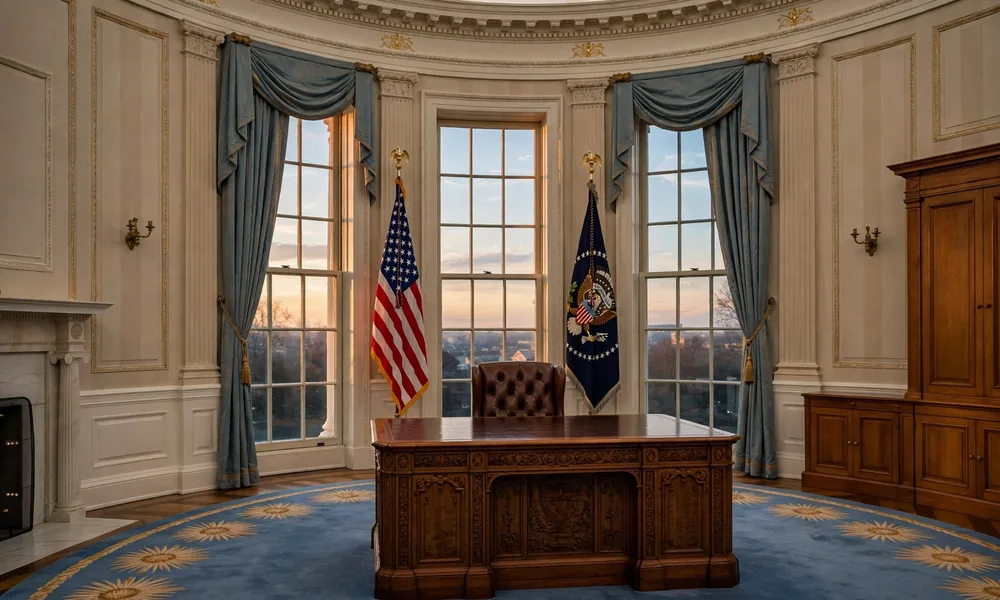
President Donald Trump met Qatar Prime Minister Sheikh Mohammed bin Abdulrahman Al Thani at the White House on Monday, November 9, 2026, to talk about efforts to end the war between the United States and Iran. The meeting took place behind closed doors in the Oval Office and was listed for noon Eastern Time in the White House daily schedule, with no press access. Vice President JD Vance met the Qatari leader separately first. No agreement was announced after the talks, and officials made clear that serious differences remain. The meeting matters because Qatar is the main mediator between Washington and Tehran, and because it was Trump’s first meeting with a foreign leader since the November 3 midterm elections.
Quick Facts
| Item | Detail |
|---|---|
| Meeting date | Monday, November 9, 2026 |
| Location | White House, Oval Office, Washington |
| US leader | President Donald Trump |
| Qatari leader | Prime Minister Sheikh Mohammed bin Abdulrahman Al Thani |
| Meeting format | Closed door, no press access |
| Time listed | Noon Eastern Time |
| Other meeting | Vice President JD Vance met Sheikh Mohammed separately first |
| Main topic | Mediation to end the US Iran war |
| Deal reached | No deal announced |
| War started | February 28, 2026 |
| Oil move on Monday | WTI crude fell to 88.14 dollars a barrel, Brent fell to 94.00 dollars a barrel |
What Happened at the White House
Trump and Sheikh Mohammed sat down in the Oval Office at noon Eastern Time, with reporters kept out of the room. That closed format is common for sensitive mediation talks, where leaders want space to speak plainly without every word becoming a headline within minutes. Vance had already met the Qatari prime minister earlier in the day, which suggests the visit was planned as a careful two step process rather than a single courtesy call.
Sheikh Mohammed is also Qatar’s foreign minister, and he has been the key channel between Washington and Tehran through months of war. The lack of a deal after the meeting should not surprise anyone who has followed this war. Mediation between two sides that have been fighting for nine months does not usually produce a breakthrough in one afternoon. It produces a clearer picture of where the gaps are, and sometimes it produces a next step. In this case, the next step may be a working level technical meeting that Vance has been discussing, where delegates would try to turn a broad political understanding into a written agreement.
The Proposal on the Table
At the center of the mediation is an Iranian proposal discussed through Qatari mediators. The idea is a two day confidence building process. Under the proposal, Tehran would reopen the Strait of Hormuz and halt attacks on Gulf tankers. In return, Washington would lift its naval and economic blockade of Iran and release 8 billion dollars in frozen Iranian funds held in Qatar. Talks on the nuclear program and further sanctions relief would follow after that first step.
The proposal has not been accepted by Washington, and significant differences remain over the terms of any agreement, according to Axios reporting on November 9. Qatar said the report of the 8 billion dollar element was totally inaccurate, according to a senior Qatari official cited by Al Jazeera. The proposal itself is unconfirmed by either government in full, and the disputed figure shows why readers should treat the details with care until officials confirm them.
Trump spoke about the talks on Sunday, in a CBS 60 Minutes interview and a CNN phone interview. He said he was not looking to escalate the war and that renewed strikes were highly unlikely if talks produce a very strong agreement, while keeping the option open. He also said the United States has identified 38 bridges as targets if strikes resume. Readers who want more detail on those Sunday comments can read our earlier report on Trump saying he is not looking to escalate the Iran war.
Why Qatar Is in the Middle
Qatar has become the main bridge between Washington and Tehran for a simple reason. It talks to both sides, and both sides trust it enough to carry messages. Qatar hosts a large American military presence and works closely with Washington on security. At the same time, it has kept open lines to Tehran and has hosted Iranian funds in its financial system. That dual position is rare, and it gives Doha a role that few other capitals can play.
The war itself gives the mediation urgency. The conflict between the United States and Iran began on February 28, 2026, and it is now in its ninth month. A mediator cannot end a war on its own, but it can keep a channel open when direct talks are not possible. Qatar has done that through the worst months of the fighting, and Monday’s meeting was a sign that Washington still sees value in that channel. Gulf states depend on safe shipping through the Strait of Hormuz, and attacks on tankers affect oil prices and trade far beyond the Gulf.
What Rubio and Pezeshkian Said
The public comments around the meeting showed how far apart the two sides still are. Secretary of State Marco Rubio said on Sunday that negotiations had made little progress, that he did not see an imminent breakthrough, and he described Tehran’s terms as outrageous and unrealistic. That is blunt language from America’s top diplomat, and it suggests Washington is not ready to accept the proposal as it stands. Rubio’s words also serve as a warning to anyone expecting a quick deal.
Iranian President Masoud Pezeshkian struck a different tone on Monday. He said Tehran was prepared to negotiate an end to what he described as a prolonged state of neither war nor peace. He said Iran favors dialogue and negotiations with dignity, that Supreme Leader Mojtaba Khamenei had instructed officials to end the uncertainty, and that Iran would not surrender to coercion. Pezeshkian is saying Iran wants talks, but he is also saying Iran will not accept a deal that looks like surrender.
Neither side has walked away, and both sides are still talking through Qatar. That is not a breakthrough, but it is also not a breakdown. Our coverage includes a report on the task force planning around Iran and the Caspian region.
Oil Markets and the Road Ahead
Oil prices fell about 3 percent on Monday on hopes of a deal. WTI crude fell to 88.14 dollars a barrel, and Brent crude fell to 94.00 dollars a barrel. Markets often move on hope as much as on fact, and Monday was a clear example. Traders heard that Trump was meeting the mediator, that a proposal was on the table, and that both sides were still talking. They priced in a slightly better chance of peace, and prices fell. If talks stall or strikes resume, prices could rise just as fast. That is why the oil move should be read as a signal of mood, not as proof that a deal is close.
The likely next step, if Tehran accepts the framework Qatar has presented, is a working level technical meeting that Vance has been discussing. At that meeting, delegates would try to turn a political understanding into a written agreement. That means settling details like timing, verification, and the order in which each side takes its steps. Who moves first matters in a deal like this, and so does how each side checks that the other has kept its word.
Trump met the mediator, Washington has not accepted the proposal, and Qatar disputes one reported detail. Our report on Houthi missiles intercepted over Riyadh with damage to an Aramco building is a reminder of how fast calm can break in this war.
Frequently Asked Questions
Did Trump and the Qatar prime minister reach a deal on Iran?
No. Trump met Sheikh Mohammed at the White House on November 9, 2026, but no agreement was announced. The proposal discussed through Qatar has not been accepted by Washington, and significant differences remain over the terms of any agreement.
What is the Iranian proposal being discussed through Qatar?
It centers on a two day confidence building process. Tehran would reopen the Strait of Hormuz and halt attacks on Gulf tankers, while Washington would lift its blockade and release frozen Iranian funds held in Qatar. The 8 billion dollar figure in some reports is disputed by Qatar, and the full proposal is unconfirmed by either government.
Why is Qatar mediating between the United States and Iran?
Qatar talks to both sides and is trusted to carry messages between them. Sheikh Mohammed is prime minister and foreign minister, and he has been the key channel through the war. Qatar hosts a large American military presence while also keeping open lines to Tehran, which gives it a rare dual role.
What happens next in the talks?
If Tehran accepts the framework Qatar has presented, the likely next step is a working level technical meeting that Vice President JD Vance has been discussing. Delegates would try to turn a political understanding into a written agreement.
Sources
Final Thoughts
Monday’s meeting did not end the war, and it was never likely to do so in one afternoon. What it did was keep the mediation alive at the highest level, with Trump hearing directly from the man who carries messages between Washington and Tehran. The proposal is imperfect and disputed in part, and the gaps described by Rubio are real. Yet both sides are still talking, and both sides have left the door open to a technical meeting that could turn a broad idea into a written deal. The next days will show whether that door leads anywhere, or whether it closes again.