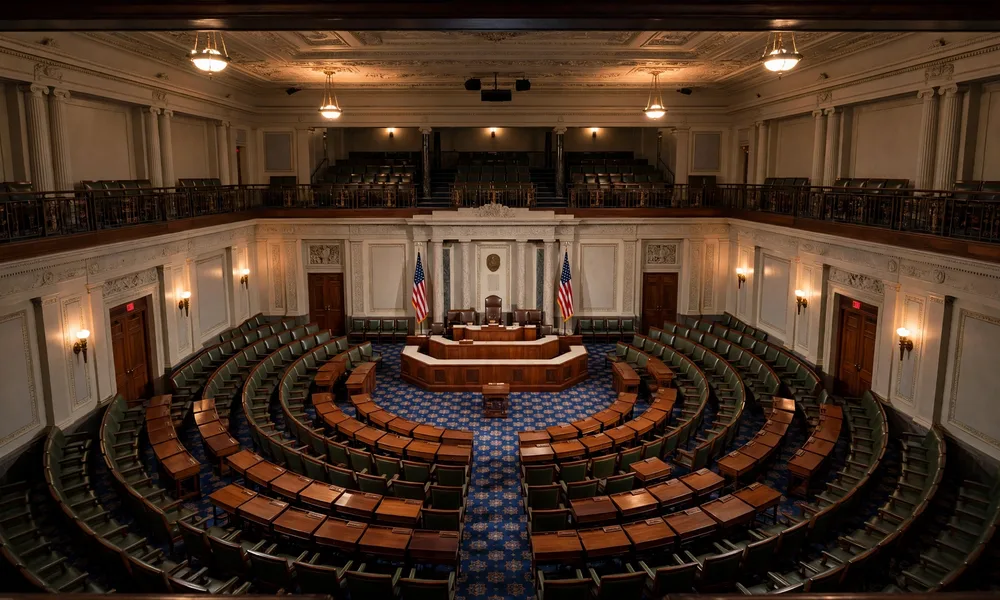
Senator Elissa Slotkin of Michigan declined to rule out a challenge to Senator Chuck Schumer for Senate majority leader on Saturday, November 7, 2026. Speaking at Crooked Con in Washington, DC, she said she was not ruling anything out and made clear that she wants a new generation of leadership in the Senate. She also said she would not vote for Schumer unless he could show a clear plan for the first 100 days and explain how he would lead differently. The moment matters because Democrats won control of the Senate in the November 3 midterm elections, and the party will choose its leader next month.
Quick Facts
| Detail | What We Know |
|---|---|
| Who spoke | Elissa Slotkin, Democrat, Michigan |
| What she said | Not ruling out a challenge to Chuck Schumer |
| When | Saturday, November 7, 2026 |
| Where | Crooked Con, Washington, DC |
| Current leader | Chuck Schumer, Democrat, New York |
| Leader since | 2017, almost a decade |
| Leadership vote | December 2026, closed-door meeting |
| New Congress starts | January 3, 2027 |
| Caucus size | Projected at 54 to 56 members |
| Votes needed | A simple majority |
What Slotkin Said at Crooked Con
Slotkin spoke at Crooked Con, an annual political conference hosted by the progressive media company Crooked Media. The event drew Democratic lawmakers, activists, and media figures to Washington only four days after the midterm elections. The mood was confident after a strong night for Democrats.
When Slotkin was asked about Schumer and the leadership race, she did not give a simple yes or no. She said she was not ruling anything out. She added that she had been very vocal about the need for a new generation of leadership. In her view, the message from Tuesday was clear.
Slotkin also put a direct challenge to Schumer. She said he should present a plan for the first 100 days of the new Congress. If he could not show how he would do things differently, she said she would not vote for him. That set a test rather than offering automatic support.
She went further on tactics and said Democrats should not give Schumer a quorum until he answered their concerns. A quorum is the minimum number of senators needed to conduct business. She said Democrats need to get organized and focus on results. She did not name a campaign team, file papers, or announce a run.
Why Some Democrats Want a Change
The debate over Schumer is not only about one person. It is about direction, style, and age. Schumer is 75 years old. He has led Senate Democrats since 2017. Supporters say that experience is an asset in a difficult Senate. Critics say the party needs new voices at the top.
For Slotkin, the case for change starts with the midterm result. Democrats won the House and the Senate on November 3, 2026. She argued that a victory that large should lead to a clear plan for governing, not a quiet return to business as usual. Her call for a first 100 days plan was meant to force that discussion into the open.
Other Democrats share that impatience for different reasons. Some want a tougher approach to negotiations with Republicans. Some want faster action on the economy, health care, and the cost of living. Slotkin, a former national security official who won a Senate seat in a competitive state, fits the profile of that newer generation.
She did not say Schumer had failed in every way, and she did not claim she had the votes to beat him. Her words kept her options open, but they put real pressure on Schumer.
Where Schumer Stands Right Now
Despite the public criticism, Schumer remains a heavy favorite to stay on as leader. He has said he will be re-elected as majority leader. He has also told reporters that he does not expect to face opposition. His confidence is based on private counts and years of relationships inside the caucus.
On November 7, The New York Times reported that Schumer had secured commitments of support from enough Democratic senators to win the leadership election. That report, published on the same day as Slotkin’s comments, suggested that the race was not as close as the public debate might make it seem. If the report is accurate, Schumer already has the simple majority he needs.
That does not mean the criticism has no effect. A leader can win a vote and still face pressure to change course. His supporters say he knows how to count votes and keep the caucus together. His critics say the party needs a leader who will take more risks. The history also favors Schumer. A Senate Democratic leader election has not been contested since 1994. Still, five newly elected Democratic senators have already said they will vote against him.
Van Hollen, Kelly, and the Rest of the Caucus
Slotkin was not the only senator to speak about Schumer at Crooked Con. Senator Chris Van Hollen of Maryland also declined to back Schumer at the same event. He did not endorse a challenger, and he said running for leader himself was not his focus. At the same time, he is seriously considering a presidential run.
A senator who is thinking about a national campaign is unlikely to take on a Senate leadership fight at the same time, but his refusal to support Schumer added weight to the call for change.
Read Chris Van Hollen Withholds Support for Schumer as Senate Leader.
Senator Mark Kelly of Arizona took a different tone. He said he planned to support Schumer, but he also echoed calls for Senate Democrats to do things differently. Kelly’s position reflects a middle ground in the caucus. He is not calling for a new leader, but he is not offering uncritical support either.
Together, the three senators show the range of opinion inside the party. Slotkin is open to a challenge and wants a test for Schumer. Van Hollen is withholding support without seeking the job himself. Kelly is backing Schumer while asking for change. None of them has declared a campaign against Schumer. That is why the story is best described as pressure, not a race.
How the Leadership Vote Works and What Comes Next
Senate Democrats will hold leadership elections next month, in December 2026. The vote will be held in a closed-door meeting of the Democratic caucus. Only Democratic senators take part. The winner needs a simple majority. With a caucus projected at 54 to 56 members, Schumer would need about 28 to 29 votes to win.
The new Congress begins on January 3, 2027. That is when Schumer, if re-elected, would formally take up the title of majority leader. The majority leader sets the Senate schedule, decides which bills reach the floor, and leads negotiations with the House and the White House.
The midterm results give useful context for the leadership debate. Democrats swept to control of both chambers, a result that surprised many forecasters and gave the party its strongest position in years. For a full look at the results, read Midterm 2026 Historic Firsts as Democrats Sweep.
There is also a separate story from the same day. President Trump posted on Truth Social on November 7 ordering the Justice Department to investigate Democrats. Slotkin was singled out by name in that post. That development is not part of the leadership vote itself, but it shows the heated climate in which Democrats are choosing their next leader. For background on that post, read Trump Orders DOJ to Investigate Democrats on November 7.
In the weeks before the December vote, expect more private meetings and more public comments. Schumer will likely present his plan for the first 100 days. Slotkin and other critics will judge that plan against the test she set. If they find it convincing, the pressure may ease. If they do not, another senator may decide to run.
Frequently Asked Questions
Did Elissa Slotkin announce a run against Chuck Schumer?
No. Slotkin declined to rule out a challenge, but she did not announce a campaign. She said she was not ruling anything out and called for a new generation of leadership. She also said she would not vote for Schumer unless he presented a clear plan for the first 100 days. That is a conditional position, not a declaration.
What did Slotkin ask Schumer to do?
She asked him to present a plan for the first 100 days of the new Congress. She wants to see what Democrats would pass first and how they would use their Senate majority. She also said Democrats should not give Schumer a quorum until he answered their concerns.
Is Schumer likely to stay as Senate majority leader?
Yes, based on current reporting. Schumer says he will be re-elected, and The New York Times reported on November 7 that he had secured commitments from enough Democratic senators to win. He remains a heavy favorite, and no senator has declared opposition as a formal candidate.
When will Senate Democrats choose their leader?
Senate Democrats will hold leadership elections in December 2026, in a closed-door meeting of the caucus. The winner needs a simple majority. The new Congress begins on January 3, 2027, when the elected leader will formally take up the role of majority leader.
Sources
Final Thoughts
Slotkin’s comments at Crooked Con did not start a formal race, but they did start a real conversation. She gave voice to a feeling shared by many Democrats after the midterms, that winning power should lead to a clear plan and a fresh approach. She also set a test that Schumer must now meet in public or in private. If he meets it, he will likely keep his job with a stronger mandate. If he does not, the pressure will grow. For now, the story is simple. Slotkin has not ruled out a challenge. Schumer has not stepped aside. The votes are not yet cast.