Learning how to reduce stress naturally starts with a simple truth: you cannot remove every stressful event from life, but you can change how your body and mind respond to it. The direct answer is to breathe slowly and deeply, move your body every day, sleep well, spend time with people who support you, and protect small pockets of calm in your day. These simple habits lower tension, steady your mood, and help you think more clearly, often within minutes.
This article shares general information only. It is not medical advice, and it does not replace care from a health professional. If stress feels overwhelming, lasts for weeks, or affects your sleep, appetite, work, or relationships, talk to your own doctor or a qualified mental health professional.
| Technique | What it does | How long it takes |
|---|---|---|
| Slow deep breathing | Slows heart rate and calms the body | 2 to 5 minutes |
| Brisk walking | Burns off tension and lifts mood | 10 to 30 minutes |
| Progressive muscle relaxation | Teaches the body the difference between tension and calm | 10 to 15 minutes |
| Time in nature | Lowers stress and clears the mind | 10 to 20 minutes |
| Talking with a friend | Shares the load and brings perspective | As long as a good chat lasts |
| Regular sleep | Restores energy and steadies emotions | 7 or more hours a night |
1. Calm Your Body First With Slow Breathing
When stress hits, your breathing often becomes fast and shallow, and your heart beats faster. Slow breathing reverses that pattern. Breathe in gently through your nose for a count of four, let your belly expand, hold for a moment, and then breathe out slowly through your mouth for a count of six. Repeat this for two to five minutes and notice how your shoulders drop and your mind slows down.
Mayo Clinic experts recommend slow, deep breaths that let your belly expand, because this simple act can help lower both blood pressure and heart rate. You can use this technique anywhere: before a difficult meeting, while sitting in traffic, or when you wake up in the night with worried thoughts. It costs nothing, takes minutes, and works the moment you use it.
Another quick body technique is progressive muscle relaxation. Start at your toes, tense the muscles for about ten seconds, then release for twenty seconds and notice the feeling of letting go. Work your way up through your legs, belly, arms, and face. This practice helps your body learn the difference between tension and relaxation, so you can spot stress earlier and release it sooner.
2. Move Your Body Every Day, Even a Little
Exercise is one of the most reliable natural stress relievers we have. A brisk walk, a bike ride, a swim, or a short workout helps your body use up the energy that stress creates. It also releases feel-good chemicals in the brain, improves sleep, and gives your mind a break from looping worries.
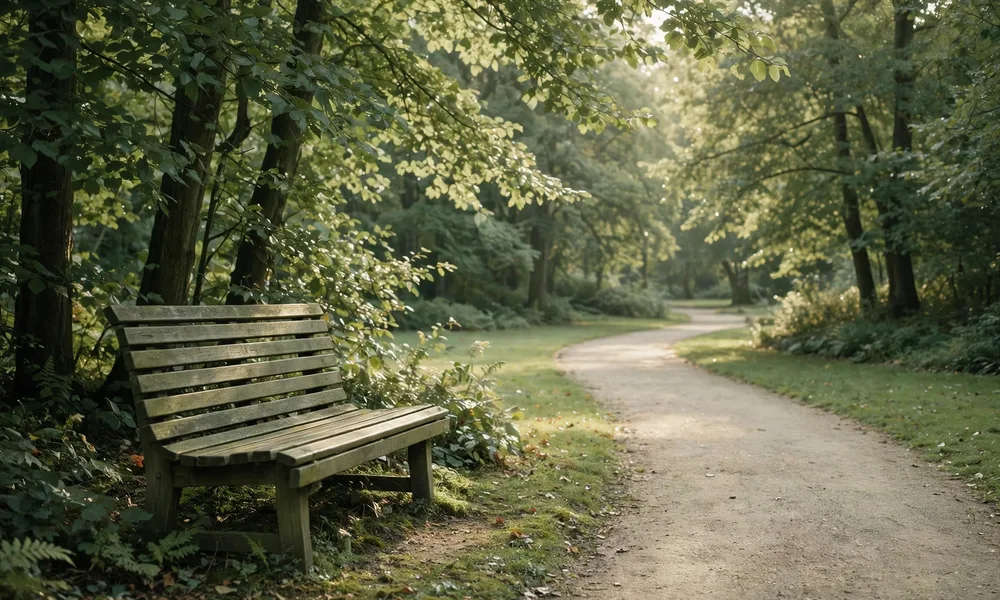
You do not need an hour at the gym to get the benefit. A ten-minute walk outside can lift your mood and clear your head. If you can, walk in a park or near trees, because time in nature adds its own calming effect. Many people find that a short walk after lunch or after work becomes the most peaceful part of their day.
Try to make movement a daily habit rather than a rare event. Pick something you actually enjoy, because the best exercise for stress is the one you will keep doing. If you are new to exercise, start gently and build up slowly. Our guide on how to start running for beginners shows how to begin with short, easy sessions and progress without injury or burnout.
3. Protect Your Sleep and Your Daily Rhythm
Stress and poor sleep feed each other. When you are tired, small problems feel bigger, and when you are stressed, it is harder to fall asleep. Breaking that cycle starts with a steady sleep routine. Adults generally need seven or more hours of sleep a night, according to the Centers for Disease Control and Prevention, and keeping roughly the same bedtime and wake time helps your body settle into a rhythm.
Give yourself a wind-down window before bed. Dim the lights, put screens away for the last half hour, and do something calm such as reading, stretching, or listening to quiet music. Keep your bedroom cool, dark, and quiet, and avoid caffeine late in the day. If worries keep you awake, try writing them down on paper before bed, along with one small step you can take tomorrow. Getting thoughts out of your head and onto paper often makes them feel smaller.
Your daytime rhythm matters too. Eat regular meals, drink enough water, and take short breaks during work instead of pushing through for hours without stopping. For more on building better sleep habits, read our guide on how to improve your sleep, which covers simple changes that help many people rest more deeply.
4. Change How You Respond to Stressful Thoughts
Stress is not only about what happens to you. It is also about how you see what happens. Two people can face the same deadline and feel very different about it, because one sees a challenge and the other sees a threat. Learning to notice your thoughts and gently question them is a powerful stress skill.
Start by naming the stressor clearly. Ask yourself: what exactly is worrying me, what can I control here, and what can I not control? For the part you can control, take one small action, even a tiny one. For the part you cannot control, practice letting it go, at least for now. This simple split keeps your energy focused where it can actually help.
Try the four As that stress experts often teach: avoid, alter, adapt, or accept. Avoid means saying no to an extra commitment when your plate is already full. Alter means changing a situation, such as asking for a clearer deadline. Adapt means changing your view, such as looking for one useful thing in a hard situation. Accept means making peace with what cannot be changed and focusing on what you can do next.
Mindfulness also helps. Spend a few minutes each day paying attention to the present moment, whether through meditation, quiet prayer, or simply noticing the sounds around you. Research shared by the Greater Good Science Center at UC Berkeley links regular mindfulness and gratitude practice with better mood and lower anxiety over time. Even ten minutes of morning mindfulness has been linked in research to less anxiety and better focus during the day.
5. Lean on People, Laughter, and Simple Pleasures
Strong social support helps people handle stress better. Talking with a friend, going for a walk with a partner, or sharing a problem with someone you trust can lighten a heavy day. You do not need to solve everything in one conversation. Sometimes being heard is enough to make a problem feel manageable again.
Make time for things that bring you joy, even when life feels busy. Listen to music, watch something funny, cook a favorite meal, work in the garden, or spend time on a hobby you love. Laughter can lower heart rate and blood pressure and help you feel more relaxed, and Mayo Clinic experts list it among their quick ways to reduce stress now.
It also helps to protect your time. Saying no to one extra task is not selfish. It is how you keep room for rest, family, and the things that keep you well. A cluttered schedule and a cluttered home can both add quiet stress, so clearing a little space can clear a little of your mind too. Our guide on how to declutter your home offers a gentle, room-by-room way to start.
Finally, be careful with quick fixes that make stress worse over time. Alcohol, smoking, and too much caffeine may feel calming in the moment, but they often disturb sleep and raise anxiety later. Health experts advise against using alcohol or drugs to manage stress, and suggest healthier outlets such as movement, rest, and connection instead.
Frequently Asked Questions
What is the fastest way to reduce stress naturally?
Slow deep breathing is one of the fastest tools. Breathe in for four counts and out for six counts for two to five minutes. A short walk outside and a few minutes of muscle relaxation can also help you feel calmer quickly.
Can exercise really help with stress?
Yes. Regular physical activity is one of the best-supported natural stress relievers. It burns off tension, improves sleep, and lifts mood. Even a ten-minute walk counts, and the benefit grows when movement becomes a daily habit.
How can I reduce stress at work?
Start by naming your main stressors and what you can control. Take short breaks, prioritize one task at a time, and say no to extra work when you are already full. A brief walk, some slow breathing, and a quick chat with a supportive colleague can all help during a hard day.
When should I see a doctor about stress?
Talk to your own doctor if stress lasts for weeks, keeps you from sleeping or working, causes chest pain or other physical symptoms, or makes you feel hopeless or unable to cope. A doctor can check for other causes and connect you with support that fits your situation. Do not wait if you feel unsafe or overwhelmed.
Sources
- Mayo Clinic – Stress Relief and Stress Management
- Mayo Clinic – 5 Ways to Reduce Stress Now
- NHS – Tips to Reduce Stress
- Centers for Disease Control and Prevention – About Sleep
Final Thoughts
Reducing stress naturally is not about one magic trick. It is about a small set of habits that work together: breathe slowly, move daily, sleep well, question worried thoughts, and stay close to people who care about you. Start with one habit today, perhaps a ten-minute walk or five minutes of slow breathing, and build from there. Small calm moments, repeated daily, add up to a steadier, healthier life.