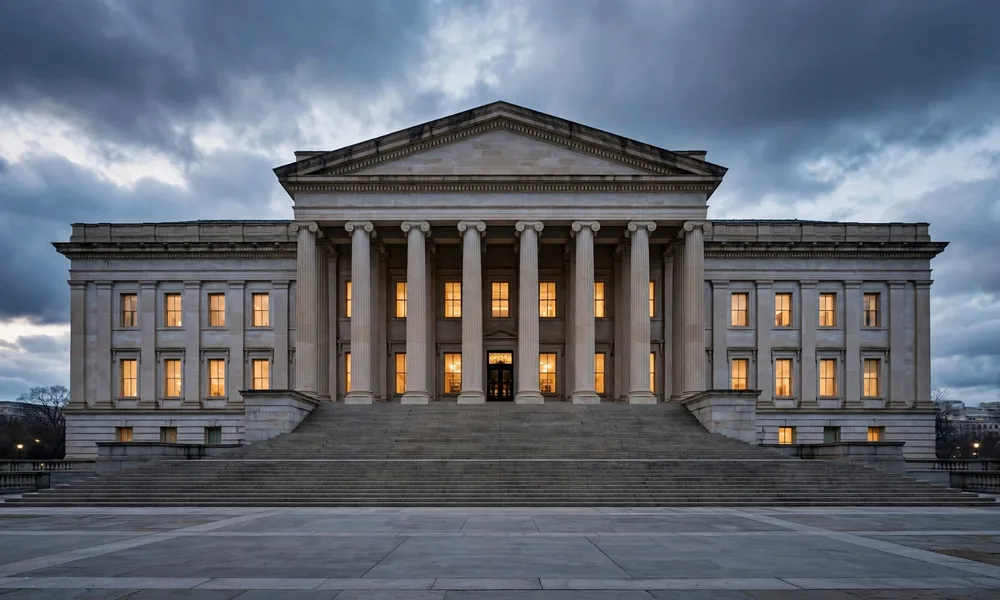
US Secretary of State Marco Rubio has moved to tighten his control over the State Department. In a recent meeting with senior officials, he told them to stay in their lanes, to coordinate their work through the proper channels, and to avoid any effort that could present a conflict of interest. Reuters reported the account of the meeting, citing four people familiar with the matter. Rubio said unethical behavior would result in a firing, no matter how well connected an official might be. Big decisions now require his signoff, or the signoff of Deputy Secretary of State Christopher Landau.
Quick Facts
| Detail | What we know |
|---|---|
| Who acted | US Secretary of State Marco Rubio |
| What happened | Rubio told senior officials to stay in their lanes and coordinate policy through proper channels |
| When | The meeting took place last week, before the Republican midterm losses on Tuesday, November 3 |
| Key rule | Significant decisions require signoff from Rubio or Deputy Secretary Christopher Landau |
| Warning given | Unethical behavior would result in a firing, regardless of connections |
| Recent departures | Policy chief Jeremy Lewin forced out; Ambassador Kimberly Guilfoyle resigned in mid-October; Paolo Zampolli fired in October |
| Travel rule | All political travel by staff now needs approval from Rubio’s office |
| Next trip | Rubio travels to Paris November 8-10 for a meeting of G7 foreign ministers |
| Source | Reuters exclusive, November 7, 2026, citing four people familiar with the matter |
What Rubio Told His Senior Team
The meeting was about order and discipline inside one of the largest departments in the American government. According to the people who spoke to Reuters, Rubio told senior officials that too many of them were making decisions or pushing policy agendas on their own, without coordinating with others. That kind of freelance work creates confusion and mixed messages. A department that speaks with many voices cannot carry out a clear foreign policy.
Rubio drew a clear line. Staff must stay in their lanes. Each official has a defined area of work, and work outside that area needs coordination first, plus approval from the top. Significant decisions require the signoff of Rubio himself, or of Deputy Secretary of State Christopher Landau. Nothing important should move forward without one of them knowing about it.
For readers following the wider shake-up inside the administration, our report on Trump naming Stephen Miller as the new chief of staff covers another major personnel change from the same week.
The Guilfoyle Resignation That Set the Tone
The meeting did not happen in a vacuum. It followed the mid-October resignation of Kimberly Guilfoyle, the US Ambassador to Greece. Guilfoyle stepped down after news reports raised concerns that she sold access to Trump administration officials in exchange for money, gifts, and favors. Those reports created a damaging story for the administration and raised questions about ethics and access inside the government.
An ambassador is a senior representative of the United States abroad. If the public believes that access to American officials can be bought, trust in the whole system suffers. The Guilfoyle case gave Rubio a clear example to point to. The lesson was plain. Conflicts of interest, and even the appearance of them, can do real damage.
Rubio’s instruction to avoid efforts that present conflicts of interest speaks directly to that concern. It is a reminder that officials serve the public, not private interests, and that the line between the two must stay clear. The State Department declined to comment on the meeting when Reuters asked, so the public account rests on the four people familiar with the matter who described it.
Jeremy Lewin Is Forced Out of the Policy Job
Soon after the meeting, the State Department’s policy chief, Jeremy Lewin, was forced out of his job. According to the people who spoke to Reuters, his departure was due in part to concerns that he was working on matters outside his area without proper coordination. That is exactly the kind of behavior Rubio had warned against.
Lewin had been appointed to the senior role just over two months ago, which makes the exit strikingly fast. A policy chief shapes the department’s thinking on major questions, so the role carries real influence. Losing it after such a short time sends a signal to everyone else in the building. The new rules are not just words. They are being enforced.
Lewin himself gave a different account of his exit. He said last month that he stepped down to return to the private sector. He told Reuters that his departure was planned several weeks before it was announced, and he denied that he was fired. That is his version of events, and it stands in contrast to the account given by the sources who described a forced exit.
Travel Crackdown and the Zampolli Firing
Rubio was also frustrated by excessive overseas travel by political staff. Travel is a normal part of work at the State Department, but Rubio believed the amount of travel by political appointees had grown too large. His answer was a new requirement. His office must now approve all political travel. No trip by political staff goes ahead without that approval.
A second departure in October underlined the same theme. Paolo Zampolli, the US Special Representative for Global Partnerships, was fired in October. His firing came after Politico reported on an email thread between him and Deputy Secretary Landau, in which Landau accused Zampolli of working outside his lane. The phrase is the same one at the center of Rubio’s meeting. It has become the shorthand for the problem Rubio is trying to fix.
Taken together, the two departures and the travel rule form a pattern. This is not a single warning in a single meeting. It is a sustained effort to bring the department under tighter central control, with real consequences for officials who ignore the new lines.
The pattern also connects to other parts of the administration. Our article on the promotion of Stephen Miller angering industries that depend on immigrant workers looks at how personnel moves at the top are already rippling through the wider economy.
Rubio Rejects 2028 Talk and Heads to Paris
While Rubio tightens control at home, he is also pushing back against talk about his own future. On Thursday, he rejected reports that he would soon leave the administration to run for president in 2028. In an interview with the New York Times, he said he plans to work for President Trump until the end of Trump’s term. The statement was meant to close down speculation that he is already looking past his current job.
His next test comes abroad. Rubio travels to Paris November 8-10 for a meeting of G7 foreign ministers. The G7 brings together the foreign ministers of seven major economies, and the meeting is a chance to coordinate on the biggest questions in world affairs. For Rubio, it is also a chance to show that the department he is reorganizing can still speak clearly on the world stage.
Why This Matters After the Midterm Losses
The midterm losses on November 3 changed the mood inside the Republican Party. A party that loses ground in a midterm election starts to look ahead, and it starts to ask hard questions about leadership, messaging, and management. In that setting, a Secretary of State who is visibly imposing order can look like a steady hand. A department that looks undisciplined can look like a liability.
There is a risk in the approach too. A department that requires signoff from the top for every significant decision can move slowly. If too much work waits for Rubio or Landau, decisions can pile up. The challenge for Rubio is to keep control without creating a bottleneck. He needs coordination, but he also needs speed, especially on fast-moving foreign policy questions.
Our report on Trump confirming US strikes on the Qeshm Island air defence system covers one of the most serious foreign policy developments of the same period, and a reminder of how fast events can move.
Frequently Asked Questions
Why did Marco Rubio tighten control at the State Department?
Reuters reported, citing four people familiar with the matter, that Rubio believed too many officials were making decisions or pushing policy agendas without coordinating. He told senior officials in a recent meeting to stay in their lanes, avoid conflicts of interest, and get signoff from him or Deputy Secretary Christopher Landau for significant decisions.
Who is Jeremy Lewin and why did he leave his job?
Jeremy Lewin was the State Department’s policy chief, appointed just over two months before his departure. Reuters reported that he was forced out in part due to concerns he worked on matters outside his area without proper coordination. Lewin said he stepped down to return to the private sector, that his departure was planned several weeks before it was announced, and he denied he was fired. None of the sources linked his departure to ethical misconduct.
What happened with Kimberly Guilfoyle?
Kimberly Guilfoyle resigned in mid-October as US Ambassador to Greece. Her resignation followed news reports that raised concerns she sold access to Trump administration officials in exchange for money, gifts, and favors. Rubio’s meeting with senior officials followed her resignation.
Is Marco Rubio leaving to run for president in 2028?
No, according to Rubio himself. On Thursday, he rejected reports that he would soon leave the administration to run for president in 2028. In an interview with the New York Times, he said he plans to work for President Trump until the end of Trump’s term.
Sources
- Reuters, “Rubio seeks to impose order at State as Republicans look ahead to 2028,” November 7, 2026
- Reuters, “Rubio to travel to Paris to meet G7 foreign ministers next week,” November 6, 2026
- The New York Times interview with Marco Rubio, as reported by Reuters on November 7, 2026.
Final Thoughts
Marco Rubio has made his position clear. The State Department will work in an orderly way, through proper channels, with decisions approved at the top. Officials who work outside their lanes, or who cross ethical lines, will face consequences. The departures of Jeremy Lewin and Paolo Zampolli, the resignation of Kimberly Guilfoyle, and the new travel approval rule all point in the same direction.