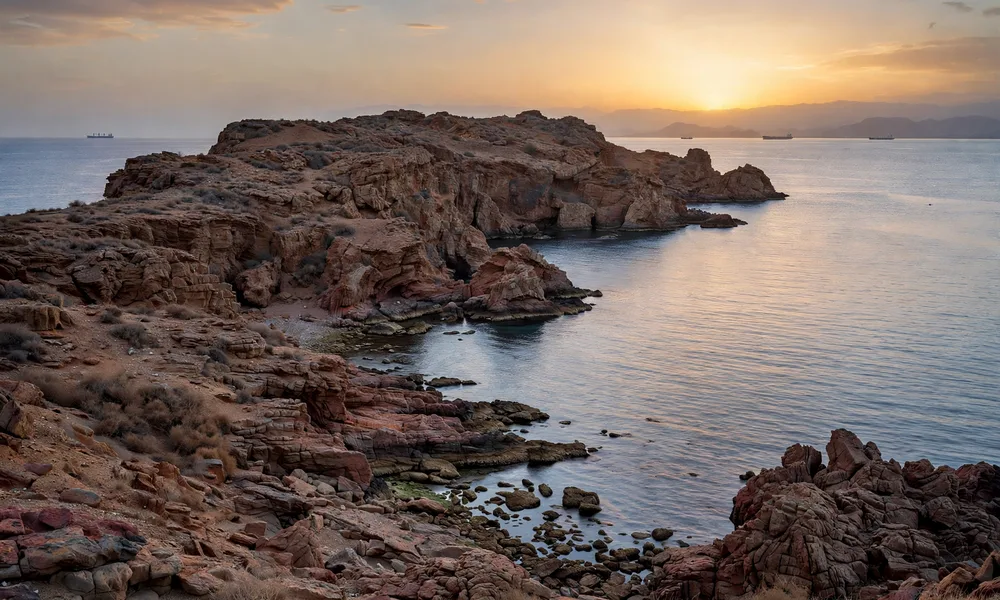
Two missiles were reported to have struck Qeshm Island in southern Iran on Saturday, November 7, 2026. The report came from Iran’s semi-official Tasnim news agency, which said early information pointed to two missiles hitting the island. Tasnim added that there was no official information yet about possible damage and that more details would follow once the relevant authorities confirmed the incident.
What is known so far is limited to what Iranian news agencies have reported. None of the accounts has been independently confirmed. No official damage assessment has been released, and no confirmed casualty figures exist. The United States has not announced any attack on targets inside Iran. For now, the story rests on initial reports from inside Iran, and the key facts remain unverified.
Quick Facts
| Detail | What is reported |
|---|---|
| Date of reports | Saturday, November 7, 2026 |
| Location | Suza area of Qeshm Island, Hormozgan province, southern Iran |
| What was reported | Two missiles or projectiles struck the island, according to Iranian news agencies |
| Sources of the reports | Tasnim news agency, IRNA state news agency, Fars news agency, and Iranian state television |
| Damage reported | No official information on possible damage has been released |
| Casualties reported | State television said there were no casualties, but this has not been independently confirmed |
| Other location mentioned | Explosions were also reported in Bandar Khamir, a port city near Qeshm |
| US position | The United States has not announced any attack on targets inside Iran |
| Confirmation status | None of the accounts has been independently confirmed |
| Why Qeshm matters | It is Iran’s largest island, near the northern approaches to the Strait of Hormuz |
What Tasnim, IRNA, and Fars Actually Reported
The first report that reached international readers came from Tasnim, a semi-official news agency in Iran. Tasnim said initial reports indicated two missiles had struck Qeshm Island. The wording was careful. It described the information as initial, it offered no detail about what was hit, and it said there was no official information on possible damage. Tasnim also said further details would be released once the relevant authorities confirmed the incident.
IRNA, the state news agency, gave a more specific version. Citing local witnesses, IRNA reported that two projectiles had struck the Suza area of Qeshm Island after the sound of an aircraft was heard over the island. That sound is part of the witness account, not proof of who fired anything. State television separately said two explosions were heard in the Suza area late Friday and that there were no casualties. Fars reported explosions in Qeshm and in Bandar Khamir, saying they might be linked to warning shots toward the Strait of Hormuz. That is a theory, not a confirmed explanation, and no agency has named who fired the missiles or what was hit.
Where Qeshm Island Sits and Why the Location Matters
Qeshm is Iran’s largest island. It sits in the southern province of Hormozgan, near the northern approaches to the Strait of Hormuz. The Strait of Hormuz is one of the most closely watched waterways in the world, because a large share of the oil shipped by sea passes through it. Any report of a strike near the strait therefore draws fast attention, even when the facts are still thin.
The Suza area, named by IRNA and state television as the place where the explosions were heard, is on Qeshm Island. Bandar Khamir, the port city named by Fars, sits on the mainland coast near the island. The fact that explosions were reported in both places has led to questions about whether the two reports describe the same incident seen from different spots, or two separate events. Neither agency has answered that question, and without an official damage assessment, any claim about the scale of the incident is guesswork.
The Week That Led Up to Saturday’s Reports
Saturday’s reports did not arrive out of nowhere. They came at the end of a tense week around Qeshm Island and the Strait of Hormuz, and that recent history helps explain why the reports were treated as important even though they were unconfirmed. On November 2, US officials confirmed airstrikes on Qeshm Island, describing them as defensive actions targeting threats to US military assets. That confirmation is a matter of public record and stands apart from Saturday’s reports, which have no such confirmation.
Then, on November 6, Iran’s military said its air defense forces had shot down a US MQ-9 drone over Qeshm Island. That claim has not been independently confirmed. Earlier in the same week, two tankers and a tugboat caught fire in the Strait of Hormuz on November 5. That event is covered in our earlier report on the fire involving two tankers and a tugboat in the Strait of Hormuz on November 5. Qatar’s Prime Minister said on Saturday that Qatar’s mediation efforts between the US and Iran were continuing to prevent the situation from spiraling out of control. Iran has repeatedly said it would respond to new attacks by striking at US and Israeli targets in neighboring countries.
What Is Confirmed, What Is Claimed, and What Is Still Unknown
The most useful way to read Saturday’s story is to sort it into confirmed facts, claims, and open questions. It is confirmed that Tasnim, IRNA, Fars, and state television each carried reports about explosions on Qeshm Island on November 7, 2026, that US officials confirmed airstrikes on Qeshm Island on November 2, and that Qatar’s Prime Minister said on Saturday that mediation efforts were continuing.
Claims from named sources form the middle group. Tasnim claimed two missiles struck the island. IRNA claimed, citing local witnesses, that two projectiles struck the Suza area after an aircraft sound was heard. State television claimed two explosions were heard late Friday and that there were no casualties. Fars claimed explosions in Qeshm and Bandar Khamir and suggested a link to warning shots toward the strait. Iran’s military claimed on November 6 that it shot down a US MQ-9 drone over the island. Each claim has a named source, but none has been independently confirmed. Open questions cover everything else. No one has confirmed who fired the missiles, if missiles were fired at all, what was hit, or how much damage was done. No confirmed casualty figure exists, and no independent photographs or video have verified the reported impacts.
There is one more claim that readers may meet in secondary coverage and should treat with extra care. Some secondary outlets claim President Trump confirmed a limited US strike on Friday evening. Reuters reports the United States has not announced any attack inside Iran, so that claim should not be treated as fact. Until a primary source or an official announcement supports it, the Trump confirmation claim stays unconfirmed. This article does not present it as true.
Why the Strait of Hormuz Makes Every Report Louder, and What to Watch Next
The Strait of Hormuz is narrow, busy, and strategically vital. Ships carrying oil and gas from the Gulf pass through it every day, and any threat to that traffic affects energy prices, shipping insurance, and the calculations of governments far from the region. That is why a report of missiles striking an island at the northern approaches to the strait travels around the world within minutes, even before anyone can confirm it. When Qatar’s Prime Minister says on the same day as the Qeshm reports that mediation is continuing to prevent the situation from spiraling out of control, the message is clear, the risk of escalation is real, and third parties are working hard to contain it.
Inside the United States, the political debate around Iran has also been sharp. Our earlier coverage looked at how JD Vance linked the Iran war debate to the reasons Republicans lost the midterms, a reminder that military action abroad and politics at home are closely tied. Watch for an official Iranian statement confirming the incident and giving a damage assessment, a US statement on whether any action was taken, and independent evidence such as satellite images or verified photographs. Our earlier report on the Iranian view that the US reply on Hormuz was unconvincing, and the earlier Trump Qeshm strikes gives useful background on how Tehran has framed US actions around the strait. Until one of those signals appears, the story remains a set of reports, not a settled event.
Frequently Asked Questions
Did two missiles really strike Qeshm Island on November 7, 2026?
That is what Iranian news agencies reported, but it has not been independently confirmed. Tasnim reported initial reports of two missiles striking the island, IRNA reported two projectiles striking the Suza area citing local witnesses, and state television reported two explosions late Friday with no casualties. No official damage assessment exists, and the United States has not announced any attack on targets inside Iran.
Who fired the missiles, according to the reports?
None of the Iranian reports named who fired the missiles. IRNA mentioned the sound of an aircraft heard over the island, but that is a witness detail, not proof of who launched anything. Fars suggested the explosions might be linked to warning shots toward the Strait of Hormuz, which is a theory, not a confirmed attribution. No official source has blamed a specific country or force.
Were there any casualties or damage from the reported strikes?
State television said there were no casualties, but that claim has not been independently confirmed. Tasnim said there was no official information on possible damage. No official damage assessment has been released. The honest answer is that damage and casualties remain unknown, with only an unconfirmed no-casualty claim from state television on the record so far.
How does this report relate to the earlier US strikes on Qeshm Island?
On November 2, US officials confirmed airstrikes on Qeshm Island, describing them as defensive actions targeting threats to US military assets. That confirmation is separate from Saturday’s reports, which have no US confirmation. On November 6, Iran’s military said it had shot down a US MQ-9 drone over Qeshm Island, a claim that also lacks independent confirmation.
Sources
Facts in this article are drawn from the following sources. All reporting in this article is presented in the writer’s own words, and no sentence has been copied from these sources.
- Reuters: Qatar says its mediation efforts between US and Iran continue to prevent escalation
- 985 The River: Two missiles strike Iran’s Qeshm Island, Tasnim news agency says
- StockBiz: Missiles strike Iran’s strategic Qeshm Island
Final Thoughts
Saturday’s reports about Qeshm Island are a reminder of how quickly an unverified claim can travel when it touches a place as sensitive as the Strait of Hormuz. Two missiles, two explosions, and a handful of early reports are enough to set off headlines around the world, even when no one can yet say who fired, what was hit, or whether anyone was hurt.
The careful path is to hold the line between reporting and proof. Tasnim, IRNA, Fars, and state television each reported something real, the fact that they carried these reports. What they reported, a missile strike on Qeshm Island, remains unconfirmed. The United States has not announced an attack. No damage assessment exists. No casualty figure is confirmed. Those gaps are a reason to describe the story with caution, and to wait for official confirmation and independent evidence before drawing conclusions.