Judge Blocks Trump Arch Construction for 14 Days Hours After Federal Panel Approves 250-Foot Monument
A federal judge blocked construction of President Donald Trump’s proposed 250-foot triumphal arch in Washington for 14 days, just about an hour after a key federal panel approved the project late on Thursday, November 5. The National Capital Planning Commission voted 8-4 to approve the final site and building plans for the arch at Memorial Circle, the traffic circle between the Lincoln Memorial and Arlington National Cemetery, across the Potomac River. Within about an hour of that vote, US District Judge Tanya Chutkan issued a temporary restraining order that bars the government from any construction-related activity near the site. The ruling puts an immediate pause on a project the administration had said could begin excavation right away.
| Quick Facts | Details |
|---|---|
| What was approved | Final site and building plans for a 250-foot triumphal arch at Memorial Circle in Washington |
| Approving body | National Capital Planning Commission, by a vote of 8 to 4, late Thursday, November 5 |
| Location | Memorial Circle, between the Lincoln Memorial and Arlington National Cemetery, across the Potomac River |
| Judge | US District Judge Tanya Chutkan |
| Order | Temporary restraining order blocking construction for 14 days |
| Time between vote and block | About one hour |
| Who sued | The governments of Washington DC and Virginia, plus Vietnam War veterans and an architectural historian in an earlier case |
| Planned work pace | 20 hours a day, year-round, for two to three years, according to the administration |
| Build timeline | 6 to 8 months of excavation and foundation work first, above-ground work from May 2027 at the earliest, total 33 to 39 months |
| Other approval | The National Park Service also approved the project late Thursday |
How the Approval and the Court Order Landed on the Same Night
The National Capital Planning Commission met on Thursday for a marathon hearing that ran about 8 to 9.5 hours. More than 100 witnesses testified in opposition to the arch during the session. The commission then voted 8-4, at around 10:29 PM ET, to approve the final site and building plans. The National Park Service also approved the project late Thursday, clearing another step the administration needed before work could begin.
The administration had said excavation could start immediately after approval. It had also said work would run 20 hours a day, year-round, for two to three years. The Justice Department told the court that 6 to 8 months of excavation and foundation work could start first, with above-ground work beginning from May 2027 at the earliest, and a total build time of 33 to 39 months.
But the approval did not stand unchallenged for long. Within about an hour of the commission vote, Judge Chutkan issued her temporary restraining order. The order bars the government from any construction-related activity near the site for 14 days. Her written opinion ran 33 pages. In it, she said the governments of Washington DC and Virginia are likely to be harmed by construction. She also scrutinised the administration’s shifting justifications for the project, including a sudden emphasis on national security.
What the Arch Would Look Like and Where It Would Stand
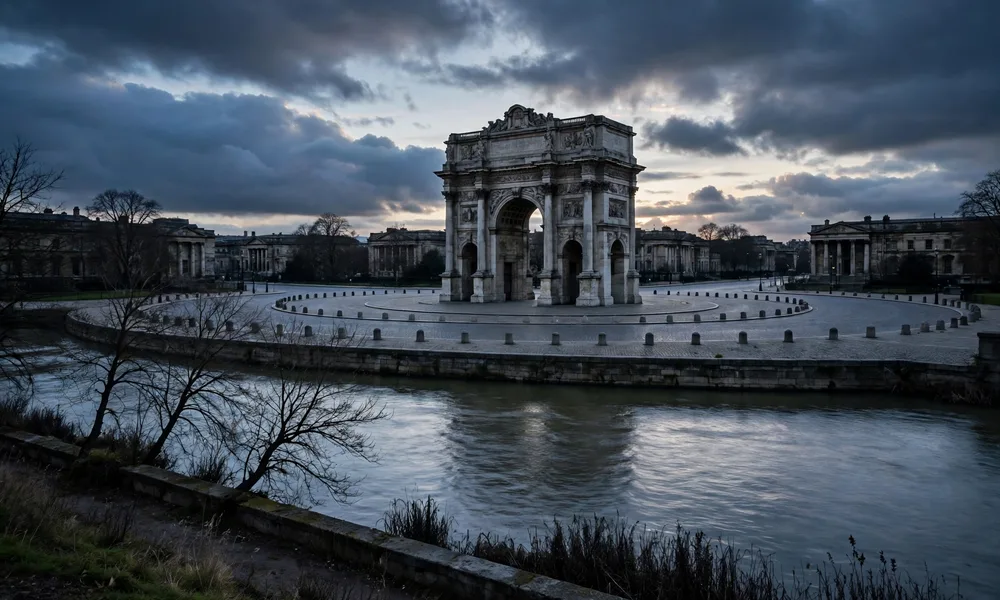
The proposed arch would stand 250 feet tall at Memorial Circle. That height would make it taller than the Arc de Triomphe in Paris, and it would tower over the Lincoln Memorial nearby. The site sits on a traffic circle between the Lincoln Memorial and Arlington National Cemetery, across the Potomac River from Virginia.
That location is part of why the project has drawn so much attention. Memorial Circle is a ceremonial gateway between the capital and the national cemetery. Critics say the arch would block the view between Arlington National Cemetery and the Lincoln Memorial, two of the most visited and most solemn places in the country. Supporters see the arch as a grand national monument in a setting that already carries deep meaning.
In September, Trump teased that the arch could house drones and snipers on its roof and plaza areas. That remark added to the debate, because it raised questions about what the structure would be used for beyond its role as a monument. The judge later noted the administration’s shifting justifications, including the sudden emphasis on national security, as part of her scrutiny of the case.
The Legal Fight Over Whether Congress Approved the Arch
The central legal question is simple to state and hard to settle: did Congress approve this arch? The governments of Washington DC and Virginia sued, saying Congress has not approved it. Vietnam War veterans and an architectural historian sued earlier in 2026 with a similar argument, saying a monument like this needs congressional approval, which the administration has not sought.
The administration takes a very different view. It contends that Congress approved the arch more than 100 years ago, when it authorised a bridge across the Potomac. In that reading, the old authorisation covers the monument as well as the crossing. The challengers reject that reading, and the judge’s opinion shows she is taking their arguments seriously at this early stage.
Judge Chutkan said the governments of Washington DC and Virginia are likely to be harmed by construction. That finding is important, because a temporary restraining order is meant to prevent harm while a case is still being decided. The judge did not decide the full case on Thursday night. She put a 14-day pause in place so the court can weigh the arguments without construction starting in the meantime.
The 33-page opinion also shows the judge looking closely at how the administration has explained the project. She scrutinised the shifting justifications, including the sudden emphasis on national security. When a government changes its reasons for a project during a court case, judges often want to know why, and whether the new reasons match the record.
Why So Many People Opposed the Project at the Hearing
More than 100 witnesses testified in opposition during the marathon hearing. The session lasted about 8 to 9.5 hours, which shows how much public interest the project has drawn. Critics call the arch a vanity project. They say it would block the view between Arlington National Cemetery and the Lincoln Memorial, and that it does not belong in a place meant for remembrance and ceremony.
There is also a political side to the opposition. Democrats have vowed to stop the project when the new Democrat-controlled Congress takes power in January. That promise means the arch faces a political fight as well as a legal one, and the outcome in Congress could matter as much as the outcome in court.
The debate over the arch fits into a wider pattern of news around the Trump administration and the capital. Readers who follow the president’s moves in Washington may also want to read about how Trump declared the Oval Office and Cabinet Room a national monument, a step that also raised questions about presidential power over historic spaces. The administration’s building plans have also been in the news, including the story of the White House ballroom reaching its final beam on midterm day. And the political fallout from the midterms continues, with JD Vance blaming the Iran war for the Republican midterm defeat.
What Happens Next for the Arch
The immediate next step is the 14-day pause. During that period, the government cannot carry out any construction-related activity near the site. The court will use that time to consider the case further, and the parties will likely return to court to argue about whether the pause should be extended or lifted.
Several paths are possible from here. The court could extend the block while the full case is heard. It could lift the block and let construction begin while the legal challenge continues. Or the case could move toward a fuller ruling on whether Congress approved the arch more than 100 years ago, or whether fresh approval is needed.
The administration, for its part, has shown it wants to move quickly. It said excavation could start immediately after approval, and it had a detailed schedule ready: 6 to 8 months of excavation and foundation work, above-ground work from May 2027 at the earliest, and a total of 33 to 39 months. That schedule now waits on the court.
Frequently Asked Questions
Why did the judge block construction of the Trump arch?
US District Judge Tanya Chutkan issued a temporary restraining order for 14 days, barring the government from any construction-related activity near the site. She said the governments of Washington DC and Virginia are likely to be harmed by construction, and she scrutinised the administration’s shifting justifications, including a sudden emphasis on national security.
Who approved the arch before the judge stepped in?
The National Capital Planning Commission voted 8-4 late Thursday, November 5, to approve the final site and building plans. The National Park Service also approved the project late Thursday. The commission vote came at around 10:29 PM ET, after a marathon hearing of about 8 to 9.5 hours in which more than 100 witnesses testified in opposition.
How tall would the arch be and where would it stand?
The arch would stand 250 feet tall at Memorial Circle, between the Lincoln Memorial and Arlington National Cemetery, across the Potomac River. It would be taller than the Arc de Triomphe in Paris and would tower over the Lincoln Memorial. Critics say it would block the view between the cemetery and the memorial.
What is the main legal argument against the arch?
Washington DC and Virginia sued, saying Congress has not approved the arch. Vietnam War veterans and an architectural historian sued earlier in 2026 with a similar argument. The administration contends Congress approved it more than 100 years ago when it authorised a bridge across the Potomac.
Sources
- NPR Illinois: A judge blocks construction of Trump’s arch moments after it won federal approval
- New York Post: Trump’s 250-foot triumphal arch gets greenlight from key federal panel
- African News Agency: US federal judge blocks Trump’s massive arch project
Final Thoughts
Thursday night gave the Trump arch two opposite results within about an hour: a clear approval from the planning commission, and a firm block from a federal judge. The 8-4 vote showed the project has official backing, and the National Park Service approval added to that. The 14-day restraining order showed that the courts are not ready to let construction start before the legal questions are answered.
The case now turns on a question that is more than a century old: did Congress approve this arch when it authorised a bridge across the Potomac, or does a monument of this size need fresh approval today? Judge Chutkan’s 33-page opinion suggests she is taking the challengers’ case seriously, and her note about the administration’s shifting justifications shows the court will look closely at the reasons given for the project.
Whatever happens in the next 14 days, the arch will remain a flashpoint. It is a fight about a monument, a view, a traffic circle, and the limits of presidential power over the capital. The court, Congress, and the public will all have a say in how it ends.