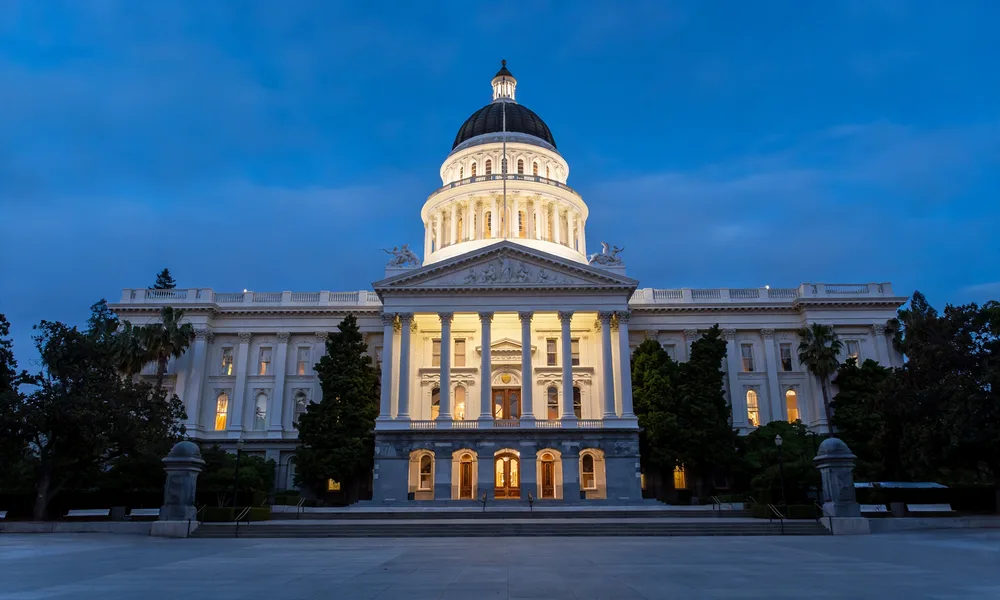
California Governor Gavin Newsom announced on Thursday, November 5, 2026, that he is commuting the death sentences of all 548 people on the state death row to life in prison without the possibility of parole. He made the announcement in an open letter to all Californians. The Death Penalty Information Center calls it the largest mass commutation in US history. The change does not repeal the death penalty in California. Voters kept the penalty in 2012 and 2016, and prosecutors can still seek it in new cases. About one-third of the commutations take effect at once, while the other two-thirds still need approval from the California Supreme Court.
Quick Facts
| Detail | What we know |
|---|---|
| Announcement date | Thursday, November 5, 2026, in an open letter to all Californians |
| Who announced it | California Governor Gavin Newsom |
| Number affected | All 548 people on California death row, 529 men and 19 women |
| New sentence | Life in prison without the possibility of parole |
| Scale | Largest mass commutation in US history, according to the Death Penalty Information Center |
| Immediate effect | About one-third take effect immediately |
| Court review | About two-thirds need California Supreme Court approval, with at least four of the seven justices signing off |
| Why court review is needed | State law requires court review of clemency for anyone convicted of more than one felony, and 382 of the 548 have more than one conviction |
| Death penalty status | Not repealed, voters kept it in 2012 and 2016, prosecutors can still seek it in new cases |
| Last execution in California | 2006, when Clarence Ray Allen, 76, was put to death by lethal injection at San Quentin |
| Executions since 1978 | Only 13 people have been executed since voters reinstated the death penalty in 1978 |
| National effect | Cuts the US death row population by nearly 30 percent, about 1,388 people remain under sentence of death nationwide |
What Newsom Announced and Who It Covers
Newsom is commuting the death sentences of every person now on death row in California. That is 548 people in total, made up of 529 men and 19 women. Each of them will instead serve life in prison without the possibility of parole. That sentence means the person stays in prison for the rest of their life, with no chance of release on parole.
The people affected include some of the most widely known names on California death row. They include serial killers Randy Kraft, Charles Ng and Richard Allen Davis. They are named here only to show the range of cases covered by the order, with no graphic detail. The commutation applies to all 548 people in the same way, without picking out one case for different treatment. That is what makes it a mass commutation, and that is why the Death Penalty Information Center describes it as the largest of its kind in US history. Newsom called it the most difficult decision of his career. His term as governor ends in January 2027 because of term limits, and he is considering a run for president in 2028.
How the Two Part Process Works
Not every commutation in the order takes effect at the same time. About one-third of the 548 commutations take effect immediately. The other two-thirds need approval from the California Supreme Court before they can take effect. The law requires the court to review clemency for anyone convicted of more than one felony. Newsom office said 382 of the 548 people have more than one conviction, which is why so many cases fall into the second group.
For those cases, at least four of the seven justices on the California Supreme Court must sign off. The court is not asked to retry the cases or to decide guilt or innocence again. It is asked to review the clemency decision itself, under the rule that applies when a person has more than one felony conviction. Until that review is complete, those commutations remain pending, even though the governor has announced his intent. The full effect of the order will therefore unfold over time, with the immediate group moving to life without parole at once and the larger group waiting for the court to act.
California Death Row in Context
California has the largest death row in the Western Hemisphere. That fact alone helps explain why this decision carries weight beyond the state. When California moves on this issue, the numbers are large, and the effect on the national total is large as well. The action cuts the US death row population by nearly 30 percent. After the commutations, about 1,388 people remain under sentence of death nationwide, the lowest number since 1984. That drop is not the result of a change in the law across the country. It is the result of one state acting on a very large number of cases at once.
California has not executed anyone since 2006. That year, Clarence Ray Allen, 76, was put to death by lethal injection at San Quentin. Since voters reinstated the death penalty in 1978, only 13 people have been executed in the state. Newsom imposed a moratorium on executions in 2019, two months into his first term. The new commutation goes further than that pause. It changes the sentences themselves, from death to life without parole, rather than simply delaying the day an execution might take place.
Why Newsom Says He Acted
In his letter, Newsom said state sanctioned killing is incompatible with California values. That is a moral claim, and it is the clearest statement of his own position in the announcement. He also cited three practical concerns: racial discrimination, high costs and the risk of human error. Those points cover the concern that race can affect who is sentenced to death, the long legal process that follows a death sentence, and the fear that a mistake could lead to a wrongful sentence.
The announcement came as the death penalty faces renewed scrutiny after Tennessee failed execution of Christa Pike in late September. Newsom did not present the decision as a response to one case or one report. He presented it as a response to the system as a whole, after years of watching how it works in practice. The order is also the eighth time in the modern era that a governor has granted clemency to all death sentenced people in their state, and it more than doubles the total number of capital clemencies granted in the last 50 years.
The Debate Over the Decision
Supporters of the commutation say the death penalty is unjust, error prone and costly. They argue that a system with long delays, high costs and a risk of error should not be used to decide who lives and who dies. They also argue that life without parole still holds people accountable, because the person remains in prison for life with no chance of release.
Critics of the decision take a very different view. They say victims families have been denied justice, because a jury imposed a death sentence and that sentence will now never be carried out. They also point to the democratic votes to keep the penalty. Voters in California kept the death penalty in 2012 and again in 2016, and critics argue that a governor should respect those votes rather than override them through clemency. For critics, the commutation goes against the will of voters, and against the wishes of families who waited years for a sentence to be carried out. For more context on the national political mood this week, see our report on midterm 2026 historic firsts and the Democrats sweep, and our report on the record five Black governors elected in the 2026 midterms. Readers following other state votes this week can also read our coverage of Washington Initiative 638 passing and banning trans girls from girls sports.
What Happens Next
The next step is the court review for the larger group of cases. At least four of the seven justices on the California Supreme Court must sign off on the commutations for people with more than one felony conviction. That group includes 382 of the 548 people, so it is the majority of the cases. The court will consider those cases under the state law that requires review. Until the court acts, those commutations remain announced but not yet final, while the immediate group moves to life without parole at once.
The death penalty itself remains on the books in California. Prosecutors can still seek it in new cases, and voters have kept it in two separate votes. That means future cases could still lead to new death sentences, even as the current death row is cleared by this order. With nearly 30 percent cut from the US death row population, the total will fall to about 1,388 people, the lowest number since 1984. For now, California has made the largest mass commutation in US history, and the courts, the families, and the public will watch closely as the rest of the process unfolds.
How many people are affected by the commutation?
All 548 people on California death row are affected, 529 men and 19 women. Each of them will serve life in prison without the possibility of parole instead of a death sentence.
Why do some commutations need court approval?
State law requires the California Supreme Court to review clemency for anyone convicted of more than one felony. Newsom office said 382 of the 548 people have more than one conviction, so at least four of the seven justices must sign off on those cases.
Does this repeal the death penalty in California?
No. Voters kept the death penalty in 2012 and 2016, and prosecutors can still seek it in new cases. The order changes the sentences of people now on death row, but it does not remove the penalty from state law.
When was the last execution in California?
The last execution was in 2006, when Clarence Ray Allen, 76, was put to death by lethal injection at San Quentin. Only 13 people have been executed since voters reinstated the death penalty in 1978.
Sources
- Reuters: California governor grants clemency to all 548 death row inmates
- USA Today: Newsom commutes 548 California death sentences
- Death Penalty Information Center: Governor Gavin Newsom grants largest mass commutation in US history
Final Thoughts
Newsom decision is historic in scale, and its effect will be felt well beyond California. It clears the largest death row in the Western Hemisphere, cuts the national death row population by nearly 30 percent, and more than doubles the total number of capital clemencies granted in the last 50 years. The court review for most of the cases is still to come, and the death penalty remains part of California law for future cases. What is clear now is that 548 people who were under sentence of death will instead spend the rest of their lives in prison, and that the country has seen the largest mass commutation in its history.