Celebrity Traitors Twist: Richard Osman Predicts a Ruthless Casting Change After Acaster
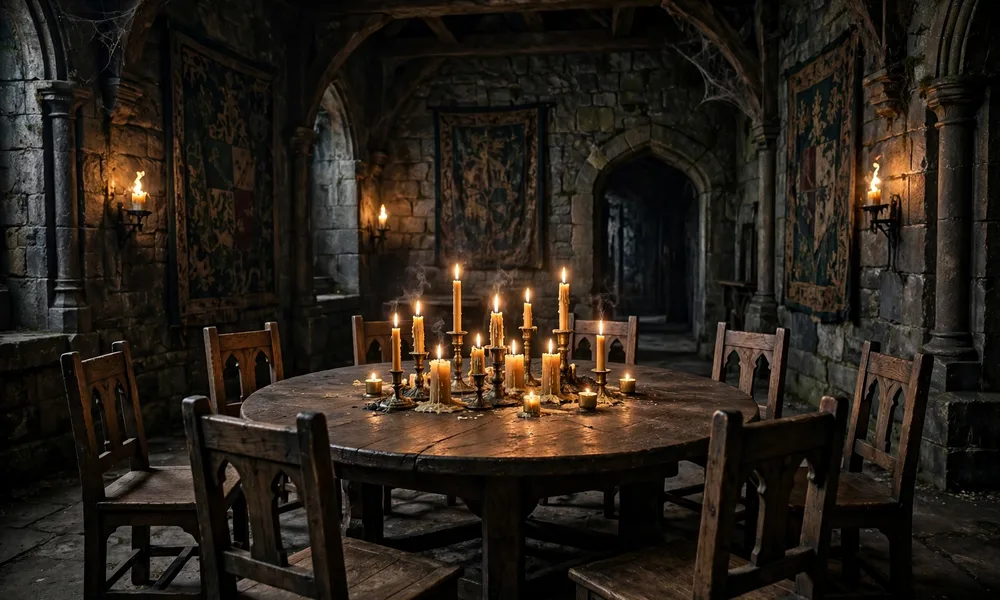
The most talked about moment from Celebrity Traitors did not come from a clever lie that lasted for weeks. It came from a confession. James Acaster, playing as a Traitor, admitted his secret role at a round table after questioning by Michael Sheen, and that admission triggered his own banishment. It was a strange, bold, and unforgettable way to leave a game built on secrecy, and it has now sparked a wider debate about how future celebrity players should be chosen.
Richard Osman, speaking on The Rest Is Entertainment podcast, described the moment as a hand grenade for the game. He also defended Acaster’s right to play in his own way, saying Acaster had been looking for an exit door without quitting. That distinction matters. Acaster did not simply walk away. He found a route out inside the rules of the game, even if that route ended his own chances. For fans of the show, it was both frustrating and fascinating to watch.
Osman also looked ahead. He predicted that producers will hunt for more committed strategic players in future series, possibly from sporting backgrounds. That prediction has caught attention because it suggests the Acaster moment could change casting, not just the memory of one series. For more entertainment coverage in this style, The Akron Magazine follows major reality and celebrity moments as they unfold.
Quick Facts
| Show | Celebrity Traitors |
| Key moment | James Acaster confessed to being a Traitor at a round table |
| Questioning by | Michael Sheen |
| Result | Acaster was banished after his confession |
| Commentator | Richard Osman on The Rest Is Entertainment podcast |
| Osman description | Called the moment a hand grenade for the game |
| Osman view | Defended Acaster’s right to play his way |
| Prediction | Producers may seek more committed strategic players, possibly from sporting backgrounds |
| Series winners | Sebastian Croft and Romesh Ranganathan as Faithfuls |
| Prize split | 83,000 pounds between Choose Love and the Refugee Council |
| Early major player | Bella Ramsey, banished early |
| Where to watch | BBC iPlayer |
What Happened at the Round Table
The round table is the heart of Traitors. Players sit together, argue, accuse, and vote, and the tension comes from not knowing who is telling the truth. When Acaster confessed, he broke the basic rule of his own role. A Traitor is supposed to hide, deflect, and survive. Instead, he told the truth in the one place where truth is most dangerous.
The questioning by Michael Sheen set the scene. Sheen pressed Acaster in a way that made the moment feel like a turning point rather than a casual exchange. Once the confession was out, the outcome was clear. The other players could not ignore it, and Acaster was banished. The game moved on, but the shock of the moment stayed with viewers long after the episode ended.
What makes the moment so unusual is that it was not a mistake caused by pressure alone. Osman suggested Acaster had been looking for an exit door without quitting. In other words, he wanted out, but he did not want to simply leave the show. Confessing gave him a dramatic and honest way to end his game, even though it cost him any chance of winning. That reading makes the moment more complex than a simple error.
Why Osman Called It a Hand Grenade
Osman used a vivid image when he called the confession a hand grenade for the game. A hand grenade does not just affect one person. It changes the whole room. In Traitors, one confession can change how every other player thinks, who they trust, and how they vote in the next round. It can also change the balance between Traitors and Faithfuls, because a lost Traitor shifts the numbers and the strategy.
The phrase also captures the surprise factor. Viewers expect Traitors to lie well or to be caught after careful detective work. They do not expect a Traitor to volunteer the truth. That surprise is part of why the clip traveled so widely and why it became a talking point beyond regular fans of the show. It was a moment that even people who had not watched every episode could understand in seconds.
At the same time, Osman defended Acaster. That defense is important because reality shows often invite harsh judgment of players who do not play in the expected way. Osman argued that Acaster had the right to play his way, even if that way was unusual. That view respects the player as a person, not just as a piece in a game, and it reminds viewers that celebrities on these shows are still making personal choices under pressure.
The Exit Door Without Quitting
The idea of an exit door without quitting helps explain why Acaster may have acted as he did. Quitting a show can feel like letting down the production, the other players, and the audience. It can also bring criticism and awkward questions. Finding a way out inside the game, even a self defeating one, can feel more honest and more in keeping with the spirit of taking part.
For Acaster, a comedian known for sharp and self aware humor, the confession also fit a certain style. He did not pretend to be something he was not. He owned his role, accepted the result, and left in a way that people would remember. Whether viewers liked the move or not, it was clear and direct, and it avoided a long and messy attempt to survive while wanting to leave.
This does not mean the move was good strategy. From a game point of view, it ended his chances at once. But strategy is not the only measure of a reality show moment. Entertainment value, honesty, and the story it creates also matter, and on those measures the confession was a major moment for the series, even if it was a poor move for winning.
What Osman Predicts for Future Casting
Osman predicts that producers will respond by looking for more committed strategic players, possibly from sporting backgrounds. The logic is easy to follow. Sportspeople are used to competition, pressure, teamwork, and long campaigns where patience matters. They may be less likely to seek an early exit, and more likely to treat the game as a contest to be won rather than an experience to be endured.
That prediction does not mean comedians or actors will disappear from the show. Celebrity Traitors works because it mixes personalities, professions, and playing styles. A cast made up only of ruthless strategists could become predictable in a different way. The interest comes from clashes between different approaches, and Acaster himself was part of that mix, even if his approach surprised everyone.
Still, casting teams do learn from each series. If a player leaves early in an unexpected way, producers may ask sharper questions in future casting about commitment, competitive drive, and comfort with deception. They may also look for players who enjoy the game itself, not just the chance to appear on a popular show. Osman prediction, if it proves correct, would mean future casts feel more competitive and perhaps less willing to break character.
How the Series Ended
Despite the Acaster drama, the series reached a clear and satisfying finish for the winners. Sebastian Croft and Romesh Ranganathan won as Faithfuls, the players who must find and banish the Traitors while staying alive themselves. Winning as a Faithful is often seen as a hard path, because Faithfuls start with less information and must rely on observation, discussion, and trust.
The prize of 83,000 pounds was split between Choose Love and the Refugee Council. That detail matters because Celebrity Traitors, like other celebrity charity editions, ties the game to causes chosen by the players. The money is not just a prize for personal gain. It becomes support for organizations doing real work, and that gives the final result a meaning beyond the game itself.
Bella Ramsey was cited as a major game player who was banished early. That early exit is a reminder of how quickly a strong player can become a target. In Traitors, being good at the game can make you seem dangerous, and dangerous players are often removed before they can take control. Ramsey early departure therefore fits the pattern of the show, even though it disappointed viewers who enjoyed her play.
What Viewers Can Learn From This Series
One lesson is that Traitors is as much about personality as it is about logic. Players do not vote only on evidence. They vote on trust, tone, alliances, and gut feeling. A player who seems uncomfortable, tired, or ready to leave can attract suspicion even without strong proof. Acaster case shows how personal feelings can shape a game outcome just as much as clever deduction.
Another lesson is that the show works best when players commit to their roles. Faithfuls need to search hard. Traitors need to deceive well. When one side breaks pattern, the whole game shifts, and that shift can be exciting for viewers even when it is bad for the player. The Acaster moment was exciting precisely because it broke pattern in such a public way.
For future viewers, the key question will be whether the next cast plays harder, longer, and more strategically. If Osman is right, we may see fewer early exits and more long term scheming. If he is wrong, we may see another surprise that no casting plan could predict. Either way, the show has proven that one round table can change the conversation around a whole series. Full series details are available through BBC iPlayer.
FAQs
Why did James Acaster confess on Celebrity Traitors?
Acaster confessed to being a Traitor at a round table after questioning by Michael Sheen. Richard Osman suggested he had been looking for an exit door without quitting, meaning he wanted a way out inside the game rather than simply leaving the show.
What did Richard Osman say about the moment?
Osman called it a hand grenade for the game on The Rest Is Entertainment podcast. He also defended Acaster right to play his way, even though the confession ended Acaster chances.
Who won Celebrity Traitors?
Sebastian Croft and Romesh Ranganathan won as Faithfuls. They split 83,000 pounds between Choose Love and the Refugee Council.
Will future casting change after Acaster?
Osman predicts producers will hunt for more committed strategic players, possibly from sporting backgrounds. That is a prediction, not a confirmed casting decision, and future casts have not been announced in these terms.
Final Thoughts
The Acaster twist will be remembered as one of the defining moments of Celebrity Traitors, not because it was clever in game terms, but because it was honest, sudden, and impossible to ignore. Osman reading of it, as a hand grenade and as a search for an exit without quitting, gives viewers a fair way to understand it without simply calling it a mistake. If his prediction about future casting proves right, the next series may feel tougher and more strategic. If not, the show will still have proven that its greatest strength is surprise, and that sometimes the most memorable player is the one who changes the game by telling the truth.