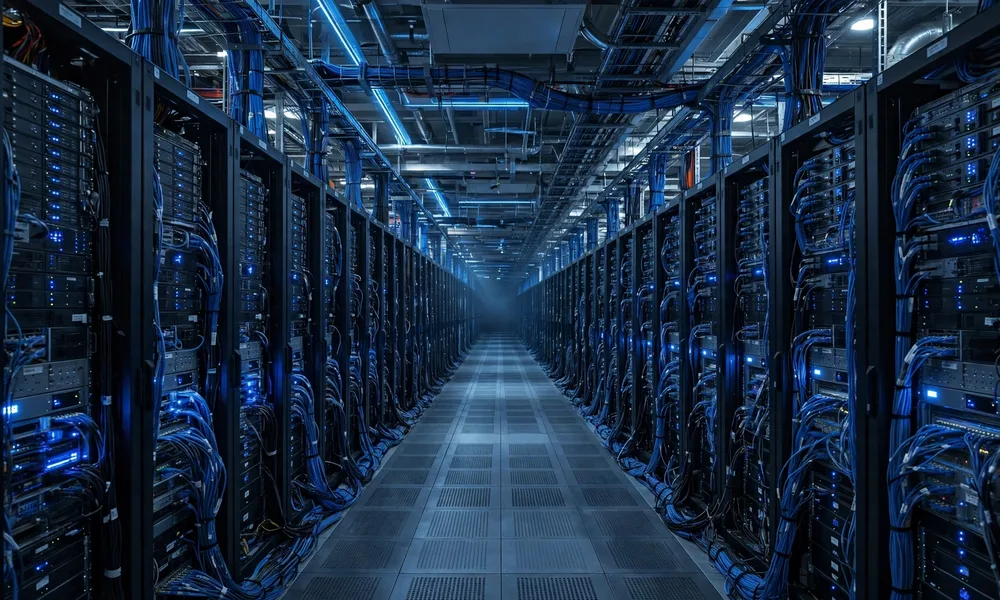
South Korea Switches On Hangang, a Supercomputer Built for AI Research

South Korea has taken a major step in its bid to stay at the front of artificial intelligence and scientific research. On Monday, November 2, 2026, the country held a ceremony to mark the start of operations of its sixth national supercomputer, named Hangang. The machine is expected to rank among the world’s 10 most powerful machines, according to the Ministry of Science and ICT. That ranking alone tells you how much computing power is packed into this one system.
Hangang is built for heavy work. It has 8,496 advanced GPUs and 9,936 CPUs, with 614 petaflops of theoretical computing power. To put that in everyday terms, it is about 24 times as powerful as the previous national supercomputer, which dates from 2018. Official operations are set to begin in mid-December 2026. Once fully running, Hangang will support advanced AI science and conventional research, giving scientists and engineers a shared national tool for problems that are too large for ordinary computers.
This article explains what a supercomputer actually is, what Hangang’s numbers mean in plain English, why a national supercomputer matters, and what kind of research it could support. No technical background is needed. If you have ever waited for a computer to finish a large task, you already have a sense of the problem Hangang is built to solve, only at a vastly larger scale.
Quick Facts
| Topic | Detail |
|---|---|
| Name | Hangang |
| Position | South Korea’s sixth national supercomputer |
| Ceremony date | Monday, November 2, 2026 |
| Expected world ranking | Among the world’s 10 most powerful machines, according to the Ministry of Science and ICT |
| GPUs | 8,496 advanced GPUs |
| CPUs | 9,936 CPUs |
| Theoretical computing power | 614 petaflops |
| Comparison with previous system | About 24 times as powerful as the previous national supercomputer from 2018 |
| Official operations begin | Mid-December 2026 |
| Main uses | Advanced AI science and conventional research |
What Is a Supercomputer, in Plain English?
A supercomputer is not just a very fast laptop. It is a huge system made up of thousands of processors working together on a single problem, or on many problems at once. Think of it like the difference between one person doing a large calculation by hand and a whole stadium of people splitting the work and sharing their answers. By dividing a problem into many small pieces and solving them in parallel, a supercomputer can finish in hours or days what an ordinary computer might take months or years to do.
That power matters for research that involves enormous amounts of data or very complex simulations. Weather forecasting, for example, involves modeling the atmosphere over a whole country or planet. Drug research can involve simulating how molecules interact. AI research involves training large models on huge datasets, which requires repeated calculations on a massive scale. All of these tasks are well suited to supercomputers.
National supercomputers are shared resources. Instead of each university or lab trying to build its own giant machine, a country builds one powerful system and gives researchers access to it. That way, scientists across different fields can run large projects without each needing to own the hardware themselves. Hangang follows that model as South Korea’s sixth national supercomputer, continuing a line of shared national systems.
What Do Hangang’s Numbers Mean?
Hangang’s headline numbers can look confusing at first, so it helps to break them down. The system has 8,496 advanced GPUs and 9,936 CPUs. CPUs are the general processors found in ordinary computers, good at a wide range of tasks. GPUs were originally built for graphics, but they turned out to be excellent at the kind of repeated, parallel calculations used in AI training. Modern supercomputers use large numbers of both, with GPUs doing much of the heavy AI work.
The total theoretical power is given as 614 petaflops. A flop is a basic calculation, and a petaflop means one thousand trillion such calculations per second. In other words, 614 petaflops represents an enormous rate of calculation. Theoretical power is the maximum the system could reach in ideal conditions. Real-world performance on a specific research task will vary depending on the software, the data, and how well the problem can be split across processors. Still, as a headline measure, it shows the scale of the machine.
The comparison with the previous system is perhaps the easiest number to grasp. Hangang is about 24 times as powerful as the previous national supercomputer from 2018. That jump shows how fast computing has advanced in less than a decade. Problems that were too large or too slow to run on the older system may now become practical. Researchers can run larger models, finer simulations, or more experiments in the same amount of time.
Why Ranking Among the World’s Top 10 Matters
Hangang is expected to rank among the world’s 10 most powerful machines, according to the Ministry of Science and ICT. Supercomputer rankings are watched closely because they give a rough picture of which countries have the most advanced computing capacity. Being in the top 10 is a signal of national capability in science and technology.
That signal matters for several reasons. First, it can attract researchers and projects. Scientists who need huge computing power will look for systems that can handle their work. A top-ranked national machine makes South Korea a more attractive place to carry out large-scale AI and science projects. Second, it supports domestic industry. Companies working on AI, advanced manufacturing, and data-heavy research can benefit from access to national computing power, even if they could not build such a machine themselves.
Third, rankings reflect investment over many years. Building a supercomputer of this size requires planning, funding, facilities, cooling, power, and skilled staff to run it. Reaching the top 10 therefore says something about a country’s long-term commitment to research infrastructure, not just a single purchase. It places Hangang in a small group of machines that define what is possible in large-scale computing at this moment.
What Kind of Research Will Hangang Support?
Hangang will support advanced AI science and conventional research. Advanced AI science covers work such as training large AI models, testing new AI methods, and studying how AI systems behave at scale. This kind of work needs huge amounts of computing power, because AI models learn by processing vast datasets many times over. Without a supercomputer, that training would be far too slow to be practical.
Conventional research covers the many other fields that have long used supercomputers. These can include climate and weather modeling, physics simulations, engineering design, materials science, and life sciences. In each case, the supercomputer allows researchers to test ideas in a virtual model before building something in the real world, or to analyze data far too large for a normal computer to handle quickly.
The combination of AI and conventional research is important. Increasingly, AI tools are being used inside traditional science, to spot patterns in data, speed up simulations, or suggest new experiments. A machine built for both kinds of work can therefore support projects that blend the two, such as using AI to improve a weather model or to help design a new material. That flexibility is part of why a modern national supercomputer is designed as a general research tool, not a single-purpose machine.
From Ceremony to Full Operations
The ceremony on Monday, November 2, 2026, marked the start of operations for Hangang. Official operations, however, begin in mid-December 2026. That gap is normal for a system of this size. A supercomputer must be installed, tested, tuned, and checked before researchers rely on it for full-scale work. Engineers need to confirm that cooling, power, networking, and software all work together reliably under heavy load.
Think of it like opening a new hospital or airport. A ceremony can mark the completion of building, but full service begins after testing and staff training are complete. For Hangang, the period between the November ceremony and the mid-December start of official operations is likely to involve final checks and preparation, so that when researchers begin submitting large jobs, the system is ready.
Once official operations begin, the real test will be usage. Which research teams get time on the machine? What projects are run first? How much faster do those projects move compared with the older system? Those answers will emerge over the months after launch, as Hangang moves from a headline about power to a working tool for science.
FAQs
What is Hangang?
Hangang is South Korea’s sixth national supercomputer. It is named Hangang and is expected to rank among the world’s 10 most powerful machines, according to the Ministry of Science and ICT.
How powerful is Hangang?
Hangang has 8,496 advanced GPUs and 9,936 CPUs, with 614 petaflops of theoretical computing power. That makes it about 24 times as powerful as the previous national supercomputer from 2018.
When does Hangang start full operations?
A ceremony on Monday, November 2, 2026, marked the start of operations. Official operations begin in mid-December 2026.
What will Hangang be used for?
Hangang will support advanced AI science and conventional research, giving researchers a shared national system for large-scale calculations, simulations, and AI model training.
Final Thoughts
Hangang is a reminder that behind every AI breakthrough and scientific advance, there is often a very large machine doing the heavy work. South Korea’s sixth national supercomputer, with 8,496 GPUs, 9,936 CPUs, and 614 petaflops of theoretical power, is about 24 times as powerful as its 2018 predecessor and is expected to sit among the world’s top 10 machines.
The November 2 ceremony marked the beginning, and mid-December will mark the start of official operations. From that point on, Hangang’s value will be measured not in petaflops, but in the research it makes possible: better AI science, stronger conventional research, and faster answers to problems that are too large for ordinary computers to solve alone.