Krafton’s Robot AI Rudy 0.2 Learns to Read Human Intent

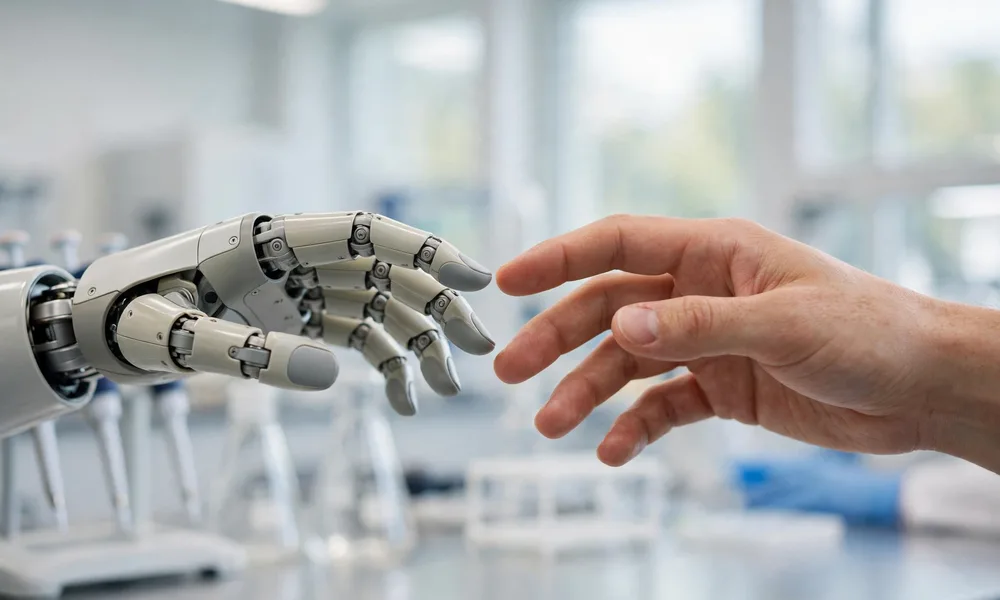
Imagine a robot that does not just follow a fixed command, but tries to understand what you actually mean. If you point, hesitate, change your mind, or ask in a vague way, it still works out what you want and adjusts. That is the idea behind Rudy 0.2, a new AI system for robots unveiled by Krafton’s robotics arm, Ludo Robotics. The system is designed to understand human intent and cooperate based on the situation, rather than simply carrying out a rigid set of steps.
Rudy 0.2 was presented for the first time by CTO Lee Kang-wook at the 2026 Bay Area Robotics Symposium, known as BARS, at UC Berkeley on October 30. It is the successor to Rudy 0.1, which was released in August 2026. Compared with that earlier version, Rudy 0.2 offers better intent understanding and a better response to changing circumstances. A next-generation foundation model, Rudy 1.0, is already in development. Ludo Robotics has also opened a research center in Palo Alto, California, placing its robotics work in the heart of a major tech and research hub.
For readers who do not follow robotics every day, this story is about a shift in how robots are built. Early robots were good at repeating the same task in the same place. Modern robots are being asked to work around people, in homes, workplaces, and public spaces, where situations change all the time. To do that well, a robot needs more than motors and sensors. It needs a kind of common sense about human behavior. Rudy 0.2 is an attempt to move in that direction.
Quick Facts
| Topic | Detail |
|---|---|
| System | Rudy 0.2, an AI system for robots |
| Developer | Ludo Robotics, the robotics arm of Krafton |
| What it does | Understands human intent and cooperates based on the situation |
| Presented by | CTO Lee Kang-wook |
| First presentation | 2026 Bay Area Robotics Symposium (BARS) at UC Berkeley on October 30 |
| Predecessor | Rudy 0.1 from August 2026 |
| Improvements | Better intent understanding and response to changing circumstances |
| Next step | Next-generation foundation model Rudy 1.0 in development |
| New research base | Research center opened in Palo Alto, California |
What Does It Mean to Understand Human Intent?
Human intent is what a person actually wants, even when they do not say it perfectly. In everyday life, we understand intent all the time without thinking about it. If a friend says, “It is cold in here,” we might close a window, even though they never directly asked us to do so. If someone reaches for a cup while looking at a kettle, we guess they want a drink. If someone starts a sentence, stops, and points instead, we still usually get the idea.
For a robot, this is very hard. A robot that only understands exact commands will fail when instructions are vague, incomplete, or change halfway through. It might stop, ask for clarification over and over, or do the wrong thing. A robot that understands intent tries to fill in the gaps sensibly. It uses context, such as what the person is looking at, what they were doing before, and what is happening around them, to make a reasonable judgment about what help is needed.
Rudy 0.2 is presented as a step forward in that ability. The key claim is not just that it can follow instructions, but that it can cooperate based on the situation. Cooperation means working together, not just obeying. A cooperative robot might adjust its plan if the person changes direction, wait if the person is busy, or offer help in a way that fits the moment. That is a very different style of robotics from a machine that simply repeats a programmed routine.
From Rudy 0.1 to Rudy 0.2: What Changed?
Rudy 0.1 was released in August 2026. It was the first version of this line of work from Ludo Robotics. Rudy 0.2 builds on that foundation, with better intent understanding and a better response to changing circumstances. In plain terms, the newer system should be less easily confused when a situation shifts.
Changing circumstances are a normal part of life around people. A person might move an object while the robot is reaching for it. A room might get busier. A task might be interrupted. A plan that made sense a minute ago might no longer make sense now. A robot that cannot adapt will either keep going with an outdated plan or stop completely. A robot that can respond to change will update its understanding and adjust its actions in a sensible way.
The move from 0.1 to 0.2 therefore matters even though the version numbers sound small. In AI development, small version steps often represent meaningful improvements in how a system handles real-world messiness. The fact that Ludo Robotics is already working on Rudy 1.0 as a next-generation foundation model also suggests that 0.2 is seen as a stepping stone, not a final product. A foundation model is a large, general AI system that can be adapted for many tasks, rather than a narrow tool built for one job only.
Why the Symposium Presentation Matters
Rudy 0.2 was presented for the first time at the 2026 Bay Area Robotics Symposium at UC Berkeley on October 30, by CTO Lee Kang-wook. A symposium is a gathering where researchers, engineers, and industry leaders share new work and discuss ideas. Presenting at such an event is a way to put new research in front of peers who can ask questions, compare it with other work, and judge its significance.
The location matters too. UC Berkeley and the wider Bay Area are major centers for robotics, artificial intelligence, and computer science research. Universities, startups, and large tech firms in the area work on related problems, from robot perception to human-robot interaction. Presenting there places Rudy 0.2 in conversation with that wider research community, rather than keeping it as a private company announcement alone.
It also helps explain the Palo Alto research center. Palo Alto is in California, close to major research universities and tech companies. Opening a research center there gives Ludo Robotics a base in a region where robotics talent and research partnerships are concentrated. For a robotics arm trying to build advanced AI for robots, being physically near that ecosystem can help with hiring, collaboration, and staying close to new ideas.
Where Could This Kind of Robot AI Be Useful?
If robots can better understand intent and adapt to changing situations, they become more useful in places where people live and work. In a home, a helpful robot might need to understand a vague request, work around children or pets, and cope with objects that are not always in the same place. In a workplace, it might need to cooperate with staff who are busy, changing tasks, or working in shared spaces.
In care and assistance settings, intent understanding is especially important. A person who needs help might not be able to give a precise command. They might gesture, speak slowly, or change their mind. A robot that can interpret those signals patiently and safely could be more helpful and less frustrating than one that demands exact instructions. The same logic applies in public spaces, where robots may need to work around unpredictable human behavior.
It is important to be realistic, though. Rudy 0.2 is an AI system presented at a research symposium, not a finished consumer product ready for every home. The announcement describes improved intent understanding and cooperation, but it does not by itself prove that robots using this system are ready for all real-world tasks. Safety, reliability, cost, and testing in varied settings all matter before such technology can be widely used. The significance here is the direction of travel: toward robots that understand people better, not just robots that move more precisely.
What Comes Next With Rudy 1.0?
Ludo Robotics says a next-generation foundation model, Rudy 1.0, is in development. That suggests the team sees Rudy 0.2 as part of a longer roadmap. A foundation model approach usually means building a larger, more general system that can later be tuned for different robot types and tasks, rather than building a separate narrow system for each job.
Readers should watch for future announcements about what Rudy 1.0 can do, how it is tested, and where it is used. Key questions for any future version will include how well it handles safety, how it behaves when it is unsure about intent, and how it is evaluated in real settings with real people. Those questions matter more than version numbers alone.
For now, Rudy 0.2 marks a clear moment: Krafton’s robotics arm has publicly shown a system focused on understanding what people mean, not just what they say word for word, and it has set up a research base in Palo Alto to keep pushing that work forward. In a field where many announcements focus on speed or strength, a focus on intent and cooperation is a reminder that the hardest part of robotics is often the human part.
FAQs
What is Rudy 0.2?
Rudy 0.2 is an AI system for robots developed by Ludo Robotics, the robotics arm of Krafton. It is designed to understand human intent and cooperate based on the situation, rather than only following rigid commands.
When and where was Rudy 0.2 first presented?
It was presented for the first time by CTO Lee Kang-wook at the 2026 Bay Area Robotics Symposium at UC Berkeley on October 30.
How is Rudy 0.2 different from Rudy 0.1?
Rudy 0.2 is the successor to Rudy 0.1 from August 2026. It offers better intent understanding and a better response to changing circumstances, meaning it should cope better when a situation shifts during a task.
What is next for the Rudy project?
A next-generation foundation model called Rudy 1.0 is in development. Ludo Robotics has also opened a research center in Palo Alto, California, to support its robotics research.
Final Thoughts
Rudy 0.2 is a small version number with a big idea behind it. Instead of asking people to speak to robots like machines, it tries to help robots understand people like people do, with all the vagueness, changes of mind, and context that real life involves. Presented by CTO Lee Kang-wook at UC Berkeley on October 30, and building on Rudy 0.1 from August 2026, it points toward a future where cooperation matters as much as automation.
Whether that future arrives quickly will depend on testing, safety, and real-world performance, not just symposium presentations. But the direction is clear. As robots move closer to everyday life, understanding intent will become one of the most important skills they can have. Rudy 0.2, and the planned Rudy 1.0 after it, are Krafton’s bet that this skill is worth building now.