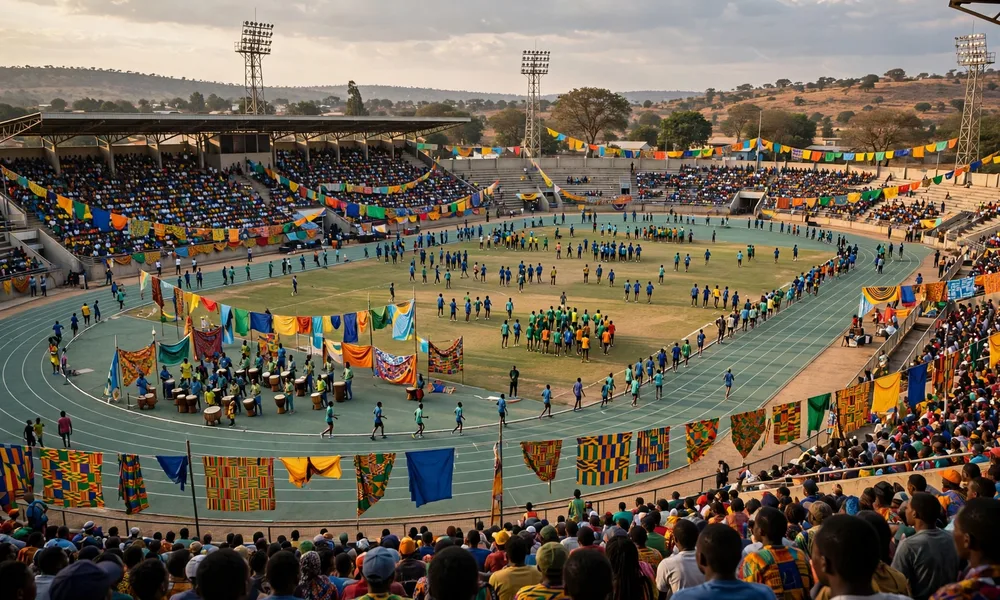
Alibaba Powers the First Youth Olympic Games in Africa With Cloud and AI

The Summer Youth Olympic Games Dakar 2026 are historic for a simple reason: they are the first Youth Olympic Games to be held in Africa. The Games began on October 31 in Senegal, bringing young athletes from around the world to Dakar for sport, culture, and celebration. Behind the scenes, technology is playing a major role. Alibaba Group, working with the International Olympic Committee, known as the IOC, and the Dakar 2026 Organizing Committee, is powering the Games with cloud and AI technology.
That support touches many parts of the event. A private cloud built on Alibaba Cloud’s Apsara Stack hosts ticketing and e-visa processing, and it will serve as Senegal’s national cloud platform after the Games. At the Festival Site, visitors can use a kiosk to generate a short video of themselves playing the Sabar Drum, and an AI agent answers questions about Dakar 2026 and Youth Olympic Games history. Separately, Alibaba Cloud Tech Academy offers free cloud training for Senegalese youth under 35, with more than 10,000 registrations.
This article explains what Alibaba is providing, why a private cloud matters for a major event, how visitors experience the AI features, and what lasting benefit the Games could leave for Senegal. It is written in plain English for readers who may not follow cloud technology closely, but who want to understand how a modern Games is run behind the scenes.
Quick Facts
| Topic | Detail |
|---|---|
| Event | Summer Youth Olympic Games Dakar 2026 |
| Location | Dakar, Senegal |
| Start | October 31 onward |
| Historic note | First Youth Olympic Games in Africa |
| Technology partner | Alibaba Group, with the IOC and Dakar 2026 Organizing Committee |
| Cloud platform | Private cloud built on Alibaba Cloud’s Apsara Stack |
| Cloud uses during Games | Ticketing and e-visa processing |
| After the Games | Cloud will serve as Senegal’s national cloud platform |
| Festival Site features | Kiosk video of visitor playing the Sabar Drum, plus an AI agent answering questions |
| Training program | Alibaba Cloud Tech Academy free cloud training for Senegalese youth under 35, with over 10,000 registrations |
A First for Africa, Powered From Behind the Scenes
The Youth Olympic Games are designed for young athletes, typically in their teens, and they combine sport with learning and cultural exchange. Hosting them in Africa for the first time is a milestone for the Olympic movement and for Senegal. Dakar 2026 puts African youth sport on a global stage and gives Senegal a chance to show its culture, hospitality, and organizational capacity to visitors from many countries.
Large events like this depend on systems that visitors rarely see. Tickets must be sold and checked. Visas must be processed for international visitors. Schedules, results, and information must be shared quickly and reliably. If those systems fail, the experience suffers, even if the sport itself is excellent. That is why cloud technology matters. A cloud platform provides computing power, storage, and software over the internet, rather than relying only on local computers that could be overwhelmed at peak times.
Alibaba’s role is to provide that backbone, in partnership with the IOC and the Dakar 2026 Organizing Committee. The partnership model is important. The IOC brings Olympic experience. The local organizing committee brings knowledge of Dakar, Senegal, and the needs of athletes and visitors. Alibaba brings cloud and AI expertise. Together, they aim to run a Games that feels smooth for athletes and fans, while also leaving something useful behind.
What the Private Cloud Does, in Plain English
The Games use a private cloud built on Alibaba Cloud’s Apsara Stack. In simple terms, a private cloud is a dedicated computing system reserved for one organization or purpose, rather than shared openly with many unrelated users. Building it on Apsara Stack means it uses Alibaba Cloud’s established cloud software as its foundation.
During the Games, this private cloud hosts ticketing and e-visa processing. Ticketing covers the sale and management of tickets for events, which must handle surges when popular sessions go on sale and must work reliably at venue entrances. E-visa processing covers electronic visa applications for visitors who need permission to enter Senegal for the Games. Both are time-sensitive. Delays or failures would directly affect whether people can attend and participate.
By hosting these services on a private cloud, the organizers gain control, security, and capacity that can scale up when demand rises. If thousands of people apply for tickets or visas at once, the system needs to cope without crashing. A well-designed cloud platform is built for that kind of peak load, spreading work across many servers rather than depending on a single machine.
A National Cloud Platform After the Games
One of the most interesting parts of this story is what happens after the closing ceremony. The private cloud built for the Games will serve as Senegal’s national cloud platform after the Games end. That means the investment in technology for a short event is designed to have a longer life.
A national cloud platform can support government services, businesses, schools, and other organizations that need reliable computing and data storage. Instead of each body building its own small system, a shared national platform can provide a common foundation. For Senegal, having such a platform in place after Dakar 2026 could help with digital services, data management, and future projects that need cloud capacity.
This idea of legacy is central to modern Games planning. Host cities are often asked what will remain after the athletes leave. Sometimes the answer is stadiums or transport links. In Dakar’s case, part of the answer is digital: a cloud platform that continues to serve the country. That kind of legacy can affect many parts of daily life, from public services to business innovation.
Visitors Meet AI at the Festival Site
Technology at Dakar 2026 is not only behind the scenes. At the Festival Site, visitors can take part in two AI experiences that are designed to be fun and informative. The first is a kiosk where visitors can generate a short video of themselves playing the Sabar Drum. The Sabar Drum is a traditional Senegalese drum with deep cultural roots, used in celebrations, communication, and community life. A visitor who may never have played it can use the kiosk to create a playful video of themselves taking part in that tradition.
The second feature is an AI agent that answers questions about Dakar 2026 and Youth Olympic Games history. An AI agent in this context is a computer program that can understand questions in everyday language and give helpful answers. A visitor might ask about the schedule, the history of the Youth Olympic Games, or facts about Dakar 2026, and receive an answer without needing to search through a long guidebook.
These features matter because they make the Games more interactive. Instead of simply watching sport, visitors can learn about Senegalese culture and Olympic history in a hands-on way. It also shows how AI can be used for culture and education, not only for business or technical tasks.
Training the Next Generation: Over 10,000 Registrations
Beyond the Games themselves, Alibaba Cloud Tech Academy offers free cloud training for Senegalese youth under 35, with over 10,000 registrations. That number is striking. It shows strong interest among young Senegalese in learning cloud skills, which are increasingly valuable in jobs related to technology, business, government, and entrepreneurship.
Free training matters because cost is often a barrier to learning new tech skills. By offering training without charge to people under 35, the program targets the age group most likely to be starting careers or looking to build new skills. Cloud skills are useful far beyond a single event.
The link to Dakar 2026 is also symbolic. The Youth Olympic Games celebrate young people and their potential. A training program for youth that runs alongside the Games extends that celebration into practical opportunity. Young people who attend the Games as fans may also become students of cloud technology, and some may go on to work in Senegal’s growing digital sector, including on the national cloud platform left behind after the Games.
Why Cloud and AI Matter for a Modern Games
Dakar 2026 shows how much major events now rely on digital infrastructure. In the past, organizing a Games meant building venues, arranging transport, and printing tickets. Today, it also means building cloud systems, processing visas online, answering visitor questions with AI, and creating interactive digital experiences. The sport remains the heart of the event, but technology shapes how smoothly it runs and how widely it can be enjoyed.
For Senegal, the combination of a national cloud platform and large-scale youth training could be the most lasting outcome. Digital skills and infrastructure can support many future projects, from startups to public services. If the training leads to real jobs and businesses, Dakar 2026 will be remembered not only as the first Youth Olympic Games in Africa, but as a turning point for Senegal’s digital future.
For the Olympic movement, Dakar 2026 is also a test of how Games can be delivered in new regions with technology partners. If cloud and AI can help a first-time African host deliver a smooth, engaging Games and leave a useful legacy, it may encourage future hosts to think more ambitiously about digital planning from the start.
FAQs
What are the Dakar 2026 Games?
The Summer Youth Olympic Games Dakar 2026 are the Youth Olympic Games held in Dakar, Senegal, from October 31 onward. They are the first Youth Olympic Games to be held in Africa.
What technology is Alibaba providing?
Alibaba Group, with the IOC and Dakar 2026 Organizing Committee, powers the Games with cloud and AI technology. A private cloud built on Alibaba Cloud’s Apsara Stack hosts ticketing and e-visa processing.
What happens to the cloud after the Games?
After the Games, the private cloud will serve as Senegal’s national cloud platform, giving the country a shared digital foundation for future services and projects.
What can visitors do at the Festival Site, and what training is available?
At the Festival Site, visitors can use a kiosk to generate a short video of themselves playing the Sabar Drum, and an AI agent answers questions about Dakar 2026 and Youth Olympic Games history. Separately, Alibaba Cloud Tech Academy offers free cloud training for Senegalese youth under 35, with over 10,000 registrations.
Final Thoughts
The Summer Youth Olympic Games Dakar 2026 are historic as the first Youth Olympic Games in Africa, and technology is a central part of that history. Alibaba Group, working with the IOC and the Dakar 2026 Organizing Committee, provides cloud and AI support that covers ticketing, e-visa processing, visitor experiences, and youth training.
The most lasting legacy may not be a single race or medal, but what remains after October 31 and the Games themselves: a national cloud platform for Senegal, built on Apsara Stack, and more than 10,000 young Senegalese registered for free cloud training. Together, they show how a youth sporting event can also be a launchpad for digital skills and infrastructure, long after the athletes have gone home.