Google Runs AI on a TPU in Orbit in a First Step Toward Space Data Centers
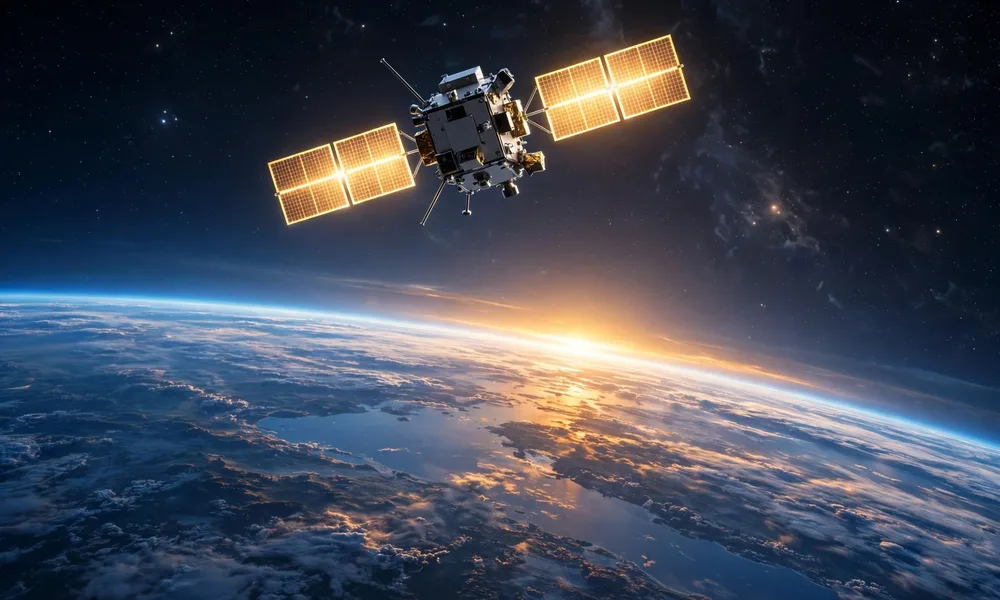
Google has taken a small but striking step toward a big idea: running artificial intelligence in space. On October 30, 2026, the company announced that it had powered up a TPU AI chip aboard a prototype satellite in orbit and successfully ran a generative AI model on it. The model then sent its AI-generated text back to Earth. It is not a working space data center, but it is a real test in real orbit, and that is why it matters.
The model used was Gemma 4, Google’s open model. The task given to it was charmingly simple: write a haiku about space. A haiku is a short poem, just a few lines long. Choosing such a small task was deliberate. The point was not to show off a long essay. The point was to prove that a data-center-class AI chip can work in space, run a model, and return a result.
Google describes the result as the first AI response in orbit from a data-center-class TPU. The test is part of Project Suncatcher, Google’s concept for AI data centers in space. In this article, we explain what a TPU is, why space is a hard place to run AI, and why this test is only a beginning.
Quick Facts
| Detail | What we know |
|---|---|
| Announcement date | October 30, 2026 |
| What was tested | A TPU AI chip aboard a prototype satellite in orbit |
| Model used | Gemma 4, Google’s open model |
| Task | Write a haiku about space, then send the text back to Earth |
| Claim | First AI response in orbit from a data-center-class TPU, according to Google |
| Project name | Project Suncatcher, Google’s concept for AI data centers in space |
| Project lead quoted | Travis Beals, in an October 1, 2026 interview |
What Is a TPU, in Plain English
TPU stands for Tensor Processing Unit. It is a type of computer chip designed by Google specifically for AI work. Think of it this way: a normal computer processor is a generalist. It can do many different jobs reasonably well. A graphics chip is better at visual and parallel tasks. A TPU is a specialist. It is built to do the math behind AI models very fast and very efficiently.
AI models work by doing huge numbers of calculations on numbers arranged in grids, called tensors. A TPU is designed to crunch those grids quickly, using less energy per calculation than a general chip might. That is why Google uses TPUs in its data centers to train models and to answer millions of user requests every day.
When Google says “data-center-class TPU,” it means this is not a tiny chip meant only for a phone or a sensor. It is the kind of serious AI hardware you would normally find in a large, air-conditioned building full of servers. Putting that kind of chip on a satellite is a different challenge altogether, which brings us to the hard part.
Gemma 4 is Google’s open model, meaning developers can download and use it under its license terms. Using an open model for this test makes sense. It is well understood, it can run in a contained way, and the result can be checked clearly. A haiku is short, so it is easy to verify that the text really was generated in orbit and sent back intact.
Why Running AI in Space Is Hard
Space sounds clean and empty, but for electronics it is hostile. The first problem is radiation. Outside Earth’s protective atmosphere and magnetic field, chips are exposed to high energy particles that can flip bits, corrupt data, or damage hardware over time. On Earth, a server sits in a shielded building. In orbit, shielding is limited by weight, and every extra kilogram costs money to launch.
The second problem is cooling. On Earth, data centers use fans, water, and air conditioning to remove heat. In space, there is no air to carry heat away. Heat can only leave by radiation, which is slower and harder to manage. A powerful AI chip generates a lot of heat when it works hard. If that heat builds up, the chip can throttle, slow down, or fail.
The third problem is power. A satellite gets power from solar panels, and it must share that power among communications, navigation, temperature control, and computing. There is no power grid in orbit to plug into. If the AI chip needs more power than the satellite can spare, the whole system suffers. Designers must balance performance against a strict energy budget.
There are other problems too. Communication with Earth is not instant or always available. A satellite may only have short windows to send data down. Repairs are almost impossible. If something breaks, you cannot send a technician with a screwdriver. Software must be robust, and hardware must be chosen to survive years without hands-on help.
That is why a successful haiku matters more than it sounds. It shows that the chip powered up, stayed stable enough to run a model, produced a coherent output, and communicated that output home. Each of those steps had to work in orbit conditions, not just in a lab.
What Is Project Suncatcher
Project Suncatcher is Google’s concept for AI data centers in space. The idea, in its simplest form, is this: instead of building ever larger data centers on Earth, which need land, water for cooling, and huge amounts of electricity, could some AI computing move to orbit, where sunlight is abundant and cooling works differently?
Supporters of the idea point to sunlight. In orbit, solar panels can collect energy almost continuously, without clouds, night cycles on the ground, or weather interruptions in the same way. They also point to cooling: space is cold, even if getting rid of heat is tricky, and there is no need for water cooling systems that strain local supplies.
Critics and skeptics point to cost, launch limits, repair problems, and the sheer scale needed. A modern AI data center holds tens of thousands of chips, with massive networking and storage. Replicating that in orbit would require many launches, complex assembly, and new ways to connect satellites together and back to Earth at high speed.
Google itself seems careful not to overpromise. The October 30 announcement is framed as a first step and a prototype test, not as a product launch. That tone is important. It signals research and exploration, not a promise that your next chatbot answer will come from space.
What the Project Lead Has Said About Cost
In an October 1, 2026 interview, Travis Beals, who leads Project Suncatcher, said he does not expect space data centers to become cheaper than terrestrial ones within the next five years. That is a strikingly honest statement for a project lead, and it helps set expectations.
In plain terms, he is saying that even if the technology works, the economics do not yet favor space. Launching hardware, building satellites that can survive radiation, and maintaining them without physical access all cost far more than building on land today. Five years is a long time in tech, but it is short for the kind of infrastructure change this would require.
That comment also reframes the haiku test. It is not a claim that space data centers are around the corner. It is a research milestone: prove the chip can run in orbit, learn what breaks, and gather data for future designs. Cost, scale, and reliability will decide whether the concept ever moves beyond research.
For readers, the lesson is to watch the next steps, not just the headline. Future tests might involve larger models, longer runs, multiple chips working together, or satellites talking to each other. Each step would answer a new question about whether space computing can grow from a demo to a system.
Why This Is Only a First Step, Not a Space Data Center
It is tempting to picture a floating data center already serving users. That is not what happened. One prototype satellite ran one small model for one short task and sent back a few lines of text. A real data center does much more: it serves many users at once, stores vast data, balances load across thousands of chips, and stays up around the clock with backups if parts fail.
A space data center would also need networking between satellites, secure links to Earth, and a way to update software safely from millions of miles away in management terms. It would need power systems that can handle peak AI loads, thermal systems that can dump heat reliably, and radiation-hardened parts that last for years.
None of that is proven by a single haiku, and Google does not claim otherwise. What is proven is narrower and still valuable: a data-center-class TPU can operate in orbit and return an AI-generated result. That de-risks one piece of a very large puzzle.
Think of it like the first time an engine was tested on a new kind of aircraft. The engine running does not mean the airline is ready. It means the core idea survived contact with the real environment, and engineers now have data to improve the next version.
FAQs
Did Google build a data center in space?
No. Google powered up a TPU aboard a prototype satellite and ran a generative AI model on it as a test. That is part of the Project Suncatcher concept, but it is not a working space data center serving users.
What did the AI actually do in orbit?
Gemma 4, Google’s open model, was asked to write a haiku about space. The AI-generated text was then sent back to Earth, showing the full chain from chip to model to downlink worked.
Why is cooling so hard in space if space is cold?
Space is cold, but there is no air to carry heat away from a chip. On Earth, fans and water move heat. In orbit, heat must be radiated away, which is slower and requires careful design, especially for a hot, hard-working AI chip.
Will space data centers be cheaper than Earth ones soon?
Not according to the project lead. Travis Beals said in an October 1, 2026 interview that he does not expect space data centers to become cheaper than terrestrial ones within the next five years.
Final Thoughts
Google’s orbit test is easy to smile at because the output was a haiku, but the engineering behind it is serious. Getting a powerful AI chip to work in radiation, manage its heat, live within a tight power budget, and phone home with its answer is a real achievement.
At the same time, honesty matters. This is a first step, not a finish line. Cost, scale, cooling, networking, and long term reliability remain unsolved at data center scale, and Google’s own project lead has said space will not beat Earth on cost within five years.
What to watch next is not poetry, but progress: larger models, longer runs, and tests that show multiple systems working together in orbit. If those arrive, Project Suncatcher will move from a clever concept to a credible research path. For now, it has earned its place as a fascinating milestone, and a reminder that the future of AI may not only be built on the ground.