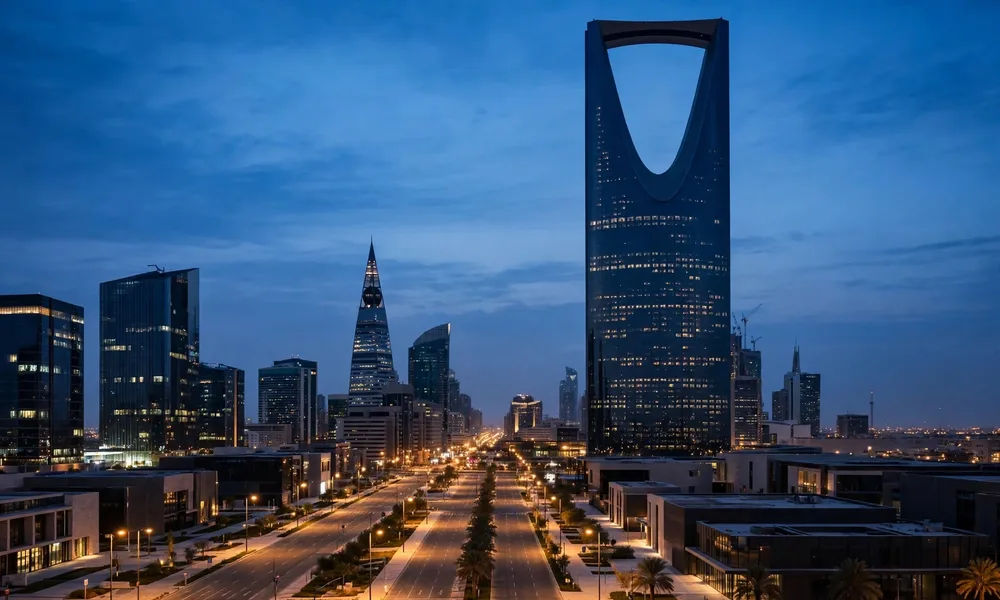
Saudi air defences intercepted a ballistic missile and a cruise missile fired toward Riyadh early on Tuesday, November 10, 2026, according to the Saudi-led coalition in Yemen. A second ballistic missile aimed at southern Saudi Arabia was also shot down, and a drone over the oil-rich Eastern Province was intercepted. No casualties were reported. The Houthis did not immediately claim the launches. The attack was the second on Riyadh in three days, and it came as both sides stepped up strikes in a conflict that has grown more intense since September.
Quick Facts
| Detail | What happened |
|---|---|
| Date | Tuesday, November 10, 2026 |
| Place | Riyadh, southern Saudi Arabia, and the Eastern Province |
| Missiles toward Riyadh | One ballistic missile and one cruise missile, both intercepted |
| Other interceptions | One ballistic missile aimed at the south, and one drone over the Eastern Province |
| Casualties | None reported |
| Who announced it | Coalition spokesman Maj. Gen. Turki al-Maliki, in posts on X |
| Houthi claim | Yahya Saree said the group hit King Khalid International Airport and an oil facility in Abqaiq |
| Saudi response | Saudi Arabia did not confirm the Houthi claim |
| Previous attack | Four missiles intercepted over Riyadh on the night of November 8 |
What Happened Early on Tuesday Morning
In posts on X on Tuesday morning, coalition spokesman Maj. Gen. Turki al-Maliki said that Saudi air defences had intercepted a ballistic missile and a cruise missile fired by Yemen’s Houthis toward Riyadh, the Saudi capital. The coalition said that a second ballistic missile, aimed at southern Saudi Arabia, was also shot down. A drone over the oil-rich Eastern Province was intercepted as well.
Two missiles were aimed at the capital itself. One more missile was aimed at the south of the country. A drone was sent toward the east, where much of Saudi Arabia’s oil industry is based. All four were stopped before they could reach their targets, according to the coalition.
For people in Riyadh, the first sign of trouble was not the announcement. It was the sound of explosions. Several explosions were heard in the capital, AFP reported. An interception in the sky can still be loud and frightening for people below, and it can leave debris falling to the ground. No casualties were reported after the attack.
Alerts in Riyadh and the South West
As the attack unfolded, Saudi Civil Defence issued alerts telling Riyadh residents to take shelter from an aerial threat. People were told to move indoors, to stay away from open areas, and to wait until the danger had passed.
Civil Defence also issued warnings for the southwestern cities of Abha and Khamis Mushait. Those two cities sit closer to Yemen, and they have been in range of Houthi fire before. A warning there does not always mean a missile is heading for that exact city. It means that the threat is active in the region and that people should be ready to take shelter if they are told to do so. Later, Civil Defence said the danger had passed, and people could return to their normal routines.
Claims From Both Sides
In a conflict like this one, the first reports often come from the two sides themselves, and their accounts do not always match. That is why it is important to keep each claim separate and to say clearly who said what.
The coalition said that the missiles and the drone were intercepted, that the targets were Riyadh, the south, and the Eastern Province, and that no one was hurt. That version was backed, in part, by the reports of explosions heard in Riyadh and by the civil defence alerts issued at the time.
The Houthi account is different. Houthi military spokesperson Yahya Saree said that the group had hit King Khalid International Airport in Riyadh and an oil facility in Abqaiq. Saudi Arabia did not confirm that claim, and there was no report of damage or casualties at either site. The Houthis did not immediately claim the launches themselves.
Readers should treat both accounts with care. The coalition says the missiles were stopped. The Houthis say they hit their targets. The facts that can be checked are these: explosions were heard in Riyadh, civil defence alerts were issued, Civil Defence later said the danger had passed, and no casualties were reported.
A Second Attack on Riyadh in Three Days
The attack on November 10 was the second attack on Riyadh in three days. On the night of November 8, four missiles were intercepted over Riyadh. Within a very short period, the capital was targeted twice, with at least six missiles aimed at it across the two attacks, plus the missile aimed at the south and the drone over the east on November 10.
Two attacks in three days changes the mood in a city. One interception can be seen as a single event. Two in quick succession looks like a campaign. It suggests that the Houthis are able and willing to fire repeatedly at the Saudi capital, and that Saudi air defences are being tested again and again.
The timing matters for the wider region. Both attacks came at a moment when the conflict was already heating up. The launches follow an escalation since September, and the pace of strikes has risen on both sides. When attacks come this close together, each one raises the chance of a strong response, and each response raises the chance of another attack. For the coalition, the message is that its defences held. For the Houthis, the message is that they can still reach the Saudi capital. The latest fighting in Yemen has already cost many lives in recent days, and the strikes on both sides show no sign of slowing down.
The Wider Escalation Since September
To understand why Riyadh was attacked again, it helps to look back to September. The launches follow an escalation since that month, when the Houthis advanced toward the Bab el-Mandeb Strait. That strait is a narrow waterway at the southern end of the Red Sea, and it is one of the most important shipping routes in the world. Ships passing through it carry oil, goods, and food between Asia, Europe, and the Middle East. Any fighting near the strait raises fears about shipping, oil prices, and trade.
Since September, the Houthis have stepped up strikes on Saudi airports, ports, and oil facilities. Those are the kinds of targets that hurt an economy and grab attention. Saudi Arabia, for its part, has carried out airstrikes on Houthi targets in Yemen, and each side says it is responding to the other.
The day before the Riyadh attack showed that cycle in action. On Monday, the Houthis said they had attacked the East-West oil pipeline in the Medina region, causing a limited fire with no injuries. The coalition said it destroyed three Houthi facilities making ballistic missile components and solid fuel. Houthi-run Saba news agency reported that coalition airstrikes hit a gas station and a state oil company building in Sanaa, the Yemeni capital. In a single day, there were claims of attacks on a pipeline, on missile-making facilities, and on buildings in Sanaa. The next morning, missiles were fired toward Riyadh.
What to Watch Next
The first question after any attack like this is whether there will be another one soon. The pattern of the last few days suggests that more launches are possible. The Houthis have shown that they can fire at Riyadh more than once in a week, and the coalition has shown that it can intercept those missiles.
The second question is about the coalition response. After the November 10 attack, the coalition is likely to carry out more airstrikes on Houthi targets in Yemen, as it has done before. The statement that it destroyed three facilities making missile components and solid fuel points to the kind of target it sees as most important.
The third question is about civilian safety and the economy. No casualties were reported on November 10, and that is a relief. But the shelter alerts in Riyadh, Abha, and Khamis Mushait show that ordinary people are caught in the middle of this conflict. The Eastern Province, Abqaiq, and the East-West pipeline are all tied to Saudi Arabia’s oil industry, and markets watch any attack on those places closely. The meeting in Washington on Iran is one sign of how many threads are tied together in the region, and the talks in Abu Dhabi on the war in Ukraine show the same pattern in a separate conflict: diplomacy and fighting running side by side, with no breakthrough yet.
FAQs
Were people hurt in the attack on Riyadh on November 10, 2026?
No casualties were reported. The coalition said that the missiles and the drone were intercepted, and Civil Defence later said the danger had passed. Several explosions were heard in Riyadh, but no deaths or injuries were reported.
What did the Houthis say they hit?
Houthi military spokesperson Yahya Saree said the group had hit King Khalid International Airport in Riyadh and an oil facility in Abqaiq. Saudi Arabia did not confirm that claim, and there was no report of damage or casualties at either site.
Was this the first attack on Riyadh in November?
No. It was the second attack on Riyadh in three days. On the night of November 8, four missiles were intercepted over Riyadh. The November 10 attack added a ballistic missile and a cruise missile aimed at the capital, plus a missile aimed at the south and a drone over the Eastern Province.
Why has the fighting grown more intense since September?
The launches follow an escalation since September, when the Houthis advanced toward the Bab el-Mandeb Strait. Since then, the Houthis have stepped up strikes on Saudi airports, ports, and oil facilities, while Saudi Arabia has carried out airstrikes on Houthi targets in Yemen.
SOURCES
Final Thoughts
The attack on Riyadh on November 10, 2026, ended without reported casualties, and that is the fact that matters most. Saudi air defences intercepted the missiles aimed at the capital, and a missile aimed at the south and a drone over the east were also stopped. Civil defence alerts told people to take shelter, and the danger later passed. But the attack was the second on Riyadh in three days, and it came in the middle of a wider escalation that began in September. The Houthi claim about the airport and the oil facility was not confirmed. What happens next will depend on whether the cycle of strikes slows down or speeds up.