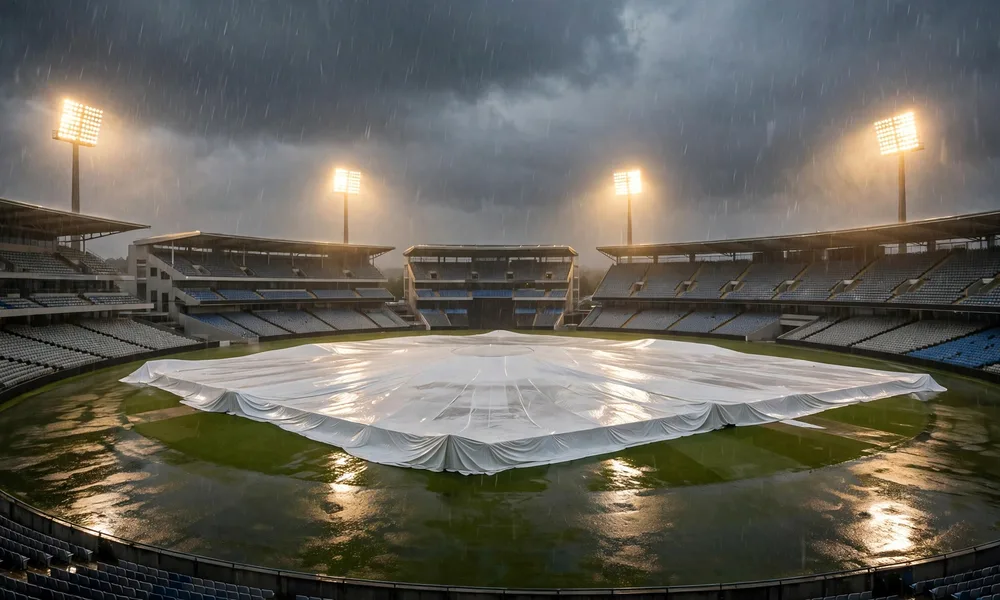
The third one day international between India and New Zealand at Seddon Park in Hamilton was abandoned without a ball being bowled on Tuesday, November 10, 2026. Persistent rain kept the players off the field all evening, and the umpires called the match off at 6:41 PM NZDT. The result leaves India with a 2-0 lead in the five match series, and India can no longer lose the series. New Zealand must now win both remaining games to draw the series level at 2-2.
Quick Facts
| Detail | Fact |
|---|---|
| Match | 3rd ODI, India tour of New Zealand |
| Venue | Seddon Park, Hamilton |
| Date | Tuesday, November 10, 2026 |
| Format | Day-night fixture, five-match series |
| Result | Match abandoned without a ball bowled |
| Toss | India captain Shubman Gill won the toss and chose to bowl |
| Overs | Match reduced to 40 overs a side before the abandonment |
| Called off | 6:41 PM NZDT, ahead of the 8:02 PM cut-off for a 20-over game |
| Series score | India lead 2-0 |
| Next matches | 4th ODI on Friday, November 13, and 5th ODI on Sunday, November 15 |
| Next venue | Bay Oval, Mount Maunganui |
What Happened at Seddon Park
Rain was the story of the day in Hamilton long before the scheduled start of play. The ground staff and the umpires waited for a break in the weather, but the rain kept returning. The toss was delayed, and when play finally looked possible the match had been reduced to 40 overs a side.
India captain Shubman Gill won the toss and chose to bowl first, a straightforward call with rain in the air and a shortened game on the cards. For New Zealand, it added to a frustrating pattern on this tour. It was Mitchell Santner seventh lost toss of the tour, a run of bad luck that has followed the home captain through the visit. The players never took the field, as rain returned before the start of play, and the umpires called the match off at 6:41 PM NZDT, well ahead of the 8:02 PM cut-off for a 20-over game.
How the Toss and the Wait Played Out
The toss itself was one of the few moments of real action on the day. Gill called correctly and chose to bowl, a decision that made sense in every way. In a rain affected match, the team bowling first can take advantage of any early help for the bowlers, and the team batting second in a shortened game knows the exact target from the start. Gill read the conditions well.
Santner, by contrast, lost yet another toss. Seven lost tosses in a row on one tour is an unusual run, and it meant New Zealand once again had to accept the decision made by the opposition captain. Umpires in these situations face a difficult balance. They want to give the match every chance to happen, but they cannot send players out in conditions that are unsafe or unfair. A wet outfield makes fielding dangerous, and a wet ball is hard for bowlers to grip. Calling the game off early spared everyone a longer and more pointless wait.
What the Washout Means for the Series
The abandonment changes the shape of the series in a clear way. India retain their 2-0 lead, and with only two matches left to play, they can no longer lose the series. The worst possible result for India from here is a 2-2 draw, and that would only happen if New Zealand win both remaining games. India have already done enough to keep the series out of reach for the home side.
For New Zealand, the task is now simple to state and hard to achieve. They must win the fourth ODI on Friday, November 13, and then win the fifth ODI on Sunday, November 15, both at Bay Oval in Mount Maunganui. Two wins would square the series at 2-2. The washout also ended a proud home record for New Zealand, their streak of eleven consecutive bilateral ODI series wins at home. India won the first two ODIs via the DLS method, and this washout has now protected that lead. Readers who want to catch up on other recent Indian cricket stories can read about Mohammed Shami retiring from Test cricket, a major moment for one of India most experienced fast bowlers.
A Familiar Story in Hamilton
Rain has disrupted all three matches of the 50-over leg so far, which makes this series one of the most weather affected visits in recent memory. Each game has had to deal with rain in some form, whether through delays, reduced overs, or results decided by the DLS method. For players, that kind of stop start rhythm is hard to manage.
Hamilton has seen this story before, and not just in this series. The ODI between New Zealand and India at the same venue on November 27, 2022, was also abandoned due to rain. The fans in Hamilton have now waited twice in four years for a full India ODI at Seddon Park and have been let down by the weather on both occasions. A full game at Bay Oval would give both sides the clean contest they have been waiting for. In American football, the Bills beat the Vikings 23-6 on Monday Night Football, a result that gave Buffalo supporters plenty to cheer about while cricket fans in New Zealand waited for the clouds to clear.
What Comes Next at Bay Oval
Attention now turns to Mount Maunganui, where the final two ODIs will be played at Bay Oval. The fourth ODI takes place on Friday, November 13, and the fifth ODI follows on Sunday, November 15. If the weather allows full matches there, the final two games could be very different from the rain shortened contests that have shaped the series so far.
For New Zealand, the plan is clear. They need two wins, and they need them in a row. They must win on Friday to keep the series alive, and then win again on Sunday to draw level. For India, one win from the two remaining games seals the series. That gives them room to play with confidence, but it does not give them room to relax. New Zealand at home, with their backs against the wall, are a dangerous side. Cricket followers who enjoy the wider game will also find plenty to read beyond this series, including the story of Pakistan beating India in the U19 Asia Cup, a result that showed how much talent is coming through at junior level.
Why This Washout Will Be Remembered
Not every abandoned match is remembered, but this one will be, for a few clear reasons. First, it was abandoned without a ball being bowled, which is always a disappointment for fans who made the trip to the ground. Second, it ended a long and proud home record for New Zealand, a streak of eleven consecutive bilateral ODI series wins at home. Third, it confirmed India position at the top of the series, making them uncatchable with two games left. A washout that changes the maths of a series is more than just a lost day. It shapes everything that follows.
The match will also be remembered as part of a rain hit series. When all three matches of the 50-over leg so far have been disrupted by rain, the series takes on a character of its own. For the players, the washout is a reminder that cricket is an outdoor game and the weather is part of it. India have adapted well so far, winning the two matches that produced results and holding their lead through a washout. New Zealand have not yet had the chance to adapt across a full game, and they will hope Bay Oval gives them that chance.
Was any cricket played in the 3rd ODI between India and New Zealand?
No. The match was abandoned without a ball being bowled because of persistent rain at Seddon Park in Hamilton. The toss took place and the match was reduced to 40 overs a side, but rain returned before the players could take the field, and the umpires called it off at 6:41 PM NZDT.
What is the series score after the washout?
India lead the five-match series 2-0. India won the first two ODIs via the DLS method, and the third ODI was abandoned. India can no longer lose the series, and the worst possible result for India is now a 2-2 draw.
What does New Zealand need to do to draw the series?
New Zealand must win both remaining games, the fourth ODI on Friday, November 13, and the fifth ODI on Sunday, November 15, both at Bay Oval in Mount Maunganui. If they win both, the series ends 2-2.
When and where are the last two ODIs?
The fourth ODI is on Friday, November 13, and the fifth ODI is on Sunday, November 15. Both matches will be played at Bay Oval in Mount Maunganui.
Sources
Final Thoughts
The third ODI in Hamilton will go down as a match that never really started, but its effect on the series is real and lasting. India leave Hamilton with their 2-0 lead intact and with the knowledge that they cannot lose the series. New Zealand leave with their long home series winning streak over and with a simple but difficult task ahead of them. They must win twice at Bay Oval to draw the series level. If the skies clear in Mount Maunganui, the final two ODIs can still be finished by cricket.