Iran has given the United States a two-day proposal to end the war. On Sunday, November 8, 2026, Iranian Foreign Minister Abbas Araghchi said the plan is still on the table. If Washington meets the conditions, Iran will reopen the Strait of Hormuz to commercial shipping within 48 hours. If Washington refuses, Araghchi warned of escalation. The two days are not a countdown to an attack. They describe how fast the deal would be carried out: the United States acts on day one, and Iran reopens the strait on day two.
Quick Facts
| Detail | What is known |
|---|---|
| Who made the offer | Foreign Minister Abbas Araghchi |
| When | Sunday, November 8, 2026, in a post on X |
| Core of the proposal | Two-day plan to end hostilities and reopen Hormuz |
| Timeline | US action on day one, Hormuz reopened on day two |
| US conditions | End hostilities, lift the blockade, ease sanctions, release frozen assets, restore oil waivers, cut military presence |
| Earlier version | Seven-day plan, shortened to 48 hours after talks with Qatari mediators |
| Mediators | Qatar led the talks; Pakistan also involved |
| US response | Marco Rubio called the demands unrealistic, with no breakthrough |
| War background | War began February 28, 2026; last ceasefire collapsed in early July |
| Strait status | The US military says the strait is open |
What Araghchi Actually Proposed
In his post on X on November 8, Araghchi wrote that American voters had made their choice and that it was time for the White House to make its own choice. He said the two-day proposal stands and that Washington should meet the requirements, including an end to war on all fronts. He added that if Washington chose war instead, it would see what he described as alert and battle-hardened warriors rain down hell.
The words were sharp, but the plan was practical: a short timetable for action once an agreement is reached, not a threat with a fixed attack date. The United States would take its steps first, and Iran would then reopen the Strait of Hormuz to commercial shipping on the second day. Araghchi had already explained the conditions in an Al Jazeera interview published November 1, 2026, where he said consultations were continuing but had produced no final result.
What the United States Would Need to Do
The proposal asks Washington to take several steps at the same time. First, the United States would need to end hostilities on all fronts, a full stop to fighting rather than a pause in one place while pressure continues elsewhere. Second, Washington would need to lift the US naval blockade of Iranian ports, which has remained in place even while talks have continued.
The plan also calls for easing economic sanctions, releasing frozen Iranian assets, restoring oil waivers, and reducing the regional US military presence. Taken together, these steps would change both the military and the economic picture. Iran is asking for a package that covers fighting, trade, money, oil, and the size of the American military footprint in the region.
Secretary of State Marco Rubio called Tehran’s demands unrealistic and said negotiations had not reached a breakthrough. Rubio confirmed on November 1 that Qatar-led negotiations were continuing, but he said he knew of no timetable.
Why the Plan Is Now Two Days Instead of Seven
The two-day version began as a seven-day plan, shortened to 48 hours after consultations with Qatari mediators, with Pakistan also involved. The change matters because it shows the proposal grew out of real talks, not a single public statement. Qatar has led indirect talks between the two sides, and the shorter timetable appears to reflect an effort to make the deal easier to carry out and harder to delay.
A seven-day plan leaves room for slow steps, new conditions, and long pauses, while a two-day plan forces both sides to act quickly once they agree. For Iran, speed may be the point: if the United States accepts, the result would be visible within 48 hours in open shipping through the strait. For Washington, the same speed may be a problem, because the steps involve sanctions, assets, oil waivers, and military deployments, and those are not simple switches to flip in a single day.
Where the Talks Stand After the Midterms
Araghchi tied his message directly to the midterm elections, framing the November 3 vote as a verdict on the war with Iran. He also said mediators had not traveled since what he called the shock of the midterm elections, and that it would take time before the atmosphere is favorable for travel to resume. That suggests even the people carrying messages between the two sides have paused.
The war began February 28, 2026, when the United States and Israel launched strikes on Iran. A ceasefire took effect April 8, was extended by a US-Iran memorandum on June 17, and then collapsed in early July. Trump declared it over on July 10, using the word OVER in capital letters. No ceasefire has been in force since. Qatar-mediated talks have continued at times, but they have produced no deal, and the US naval blockade of Iranian ports continues.
Qatar denied on Saturday, November 7, reports that the United States and Iran had failed to reach a deal. Trump was set to meet Qatar’s Prime Minister Sheikh Mohammed bin Abdulrahman Al Thani at the White House on Monday, November 9. For the latest on that meeting, read our report on Trump meeting Qatar PM at White House on Iran mediation.
What Happens If Washington Says No
His post said that if Washington chose war, it would face alert and battle-hardened warriors. That language should be read as a warning of renewed military action rather than a precise plan for a specific strike. He did not name a target, a date, or a method. He framed the choice as peace or war, with the two-day plan as the peace path and escalation as the other path.
If the proposal is rejected, several pressures could grow at the same time. Talks could stall further, the naval blockade would remain in place, sanctions and frozen assets would remain unresolved, and military forces in the region would stay on high alert. The Strait of Hormuz would remain a point of tension even if ships are passing through it now, because a formal reopening and a guarantee of safe passage are different from the current situation. A formal deal would remove that doubt, which can affect oil markets, insurance costs, and shipping choices even before any shots are fired. For more context on how Washington has spoken about escalation, see our coverage of Trump on no escalation in Iran war.
Why the Strait of Hormuz Matters So Much
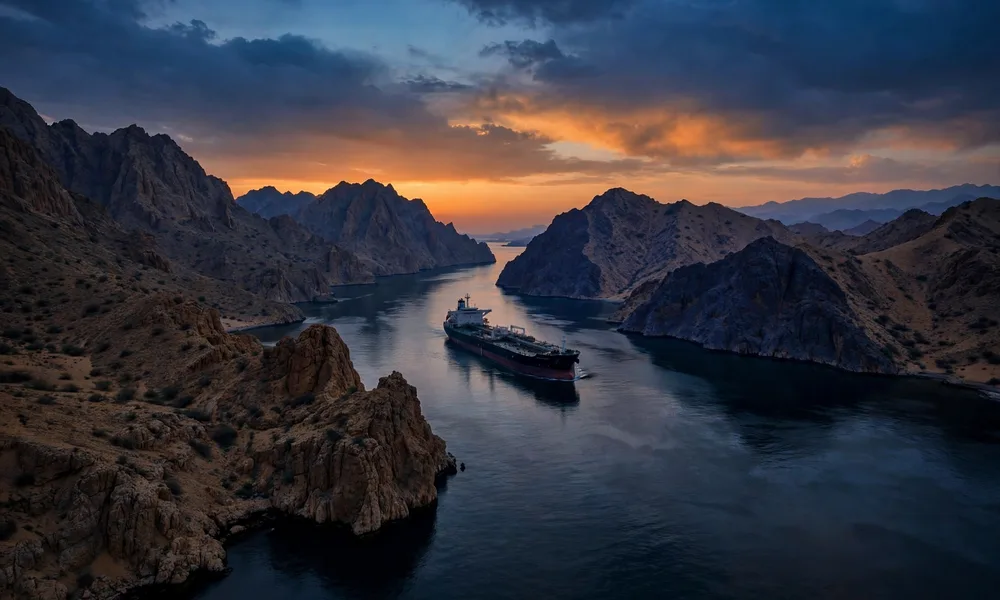
The Strait of Hormuz is a narrow waterway between Iran and Oman, and one of the most important shipping routes in the world. A large share of seaborne oil passes through it. When there is a threat to close it, or even a fear that it might be disrupted, energy markets react fast. Prices can rise, shipping insurance can rise, and companies can change routes or delay sailings. The effect is felt far beyond the Gulf, in fuel prices, transport costs, and the price of goods that depend on energy.
That is why the promise to reopen the strait within 48 hours carries weight. It is not only a military promise but an economic one. For Iran, it is a strong card, because it can offer something the world wants in a clear and measurable way. For the United States, it is a test, because accepting the offer means linking that benefit to the wider package of sanctions relief, asset release, oil waivers, and a smaller military presence.
The promise also needs careful reading. Iran said it would reopen the strait to commercial shipping on day two, while the US military says the strait is open now. Those two statements can both be true if the current passage is informal and the promised reopening is formal and guaranteed under a deal. The missile question adds another layer to the tension, and our report on Iran lifting missile range limit gives useful background on that separate development.
FAQs
What is the Iran two-day proposal?
Iranian Foreign Minister Abbas Araghchi put it forward on November 8, 2026. The United States would act on day one by meeting Iran’s conditions, and Iran would reopen the Strait of Hormuz to commercial shipping on day two. The two days describe how fast the deal would be carried out, not a countdown to an attack.
What does Iran want the United States to do?
Iran wants the United States to end hostilities on all fronts, lift the naval blockade of Iranian ports, ease economic sanctions, release frozen Iranian assets, restore oil waivers, and reduce its regional military presence. Araghchi detailed them in an Al Jazeera interview published November 1, 2026.
Has the United States accepted the proposal?
No, there is no sign that Washington has accepted it. Secretary of State Marco Rubio called Tehran’s demands unrealistic and said negotiations had not reached a breakthrough. Rubio confirmed on November 1 that Qatar-led negotiations were continuing, but he said he knew of no timetable. Qatar denied on November 7 that the talks had failed, so the door is still open.
Is the Strait of Hormuz closed now?
The US military says the Strait of Hormuz is open. The proposal is about a formal reopening and a guarantee of safe passage for commercial shipping under a deal, not a claim that every ship is stopped today. Its value is the certainty it would give shipping, energy markets, and insurers if both sides agree.
Sources
Final Thoughts
The two-day proposal is simple to state and hard to accept. Iran has offered a fast path: American action on day one, Hormuz open on day two. The United States has called the demands unrealistic and has not agreed to a timetable. Qatar is still trying to keep the talks alive, and the meeting in Washington on November 9 shows mediation has not ended. A deal could end the fighting and calm shipping and energy markets. A rejection could leave the war without a ceasefire, the blockade in place, and the region on alert for the next escalation. The clock in the proposal is not a threat of attack in two days. It is a measure of how quickly peace could arrive if both sides decide they want it.