On Monday, Nov 9, 2026, the US Food and Drug Administration issued a Drug Safety Communication that requires makers of GLP-1 receptor agonist drugs to add a warning about a potential increased risk of non-arteritic anterior ischemic optic neuropathy, known as NAION, to the Warnings and Precautions section of every product label. The warning covers a dozen drugs, including Ozempic, Wegovy, Mounjaro and Zepbound. NAION is rare, but it can cause sudden, painless loss of vision in one eye, and that loss can be permanent. This is a labeling change only, not a recall, withdrawal or restriction.
Quick Facts
| Question | Answer |
|---|---|
| What happened | On Nov 9, 2026, the FDA required a NAION warning on GLP-1 drug labels |
| What is NAION | A rare condition that can cause sudden, painless vision loss in one eye |
| Which drugs are covered | Twelve GLP-1 drugs approved since 2005, including Ozempic, Wegovy, Mounjaro and Zepbound |
| How rare is the risk | In the FDA meta-analysis, the rate was 6.4 events per 100,000 person-years on a GLP-1 drug versus 3.8 in comparison groups |
| What is the background rate | NAION occurs in 2.3 to 10.2 cases per 100,000 people per year in adults older than 50 |
| Is this a recall | No, this is a labeling change only, not a recall, withdrawal or restriction |
| What should patients do | Report sudden, painless vision loss in one eye at once and talk to their own doctor |
What Is NAION and Why It Matters
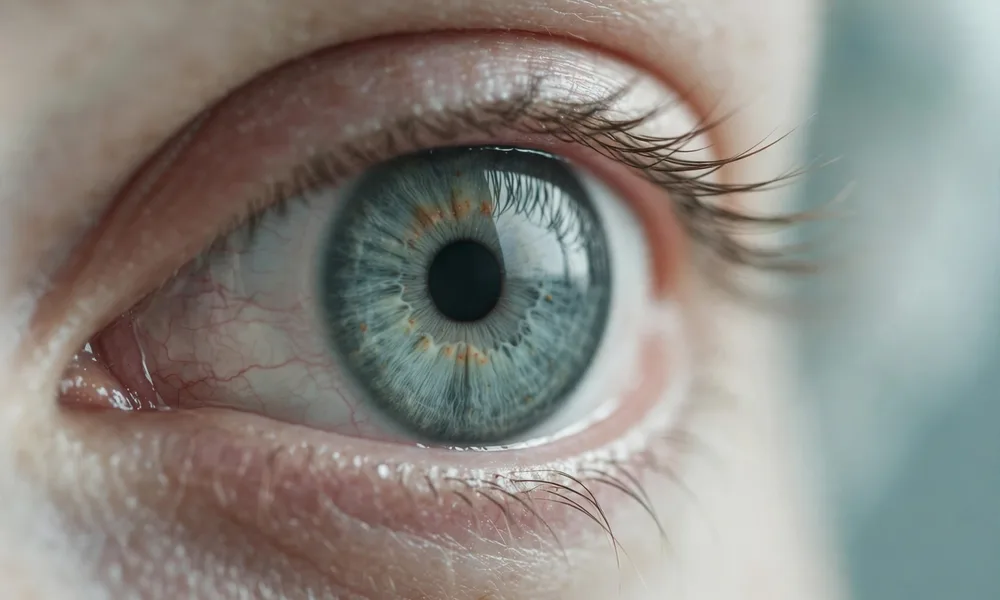
NAION stands for non-arteritic anterior ischemic optic neuropathy. The optic nerve carries visual signals from the eye to the brain. When blood flow to the front part of that nerve is reduced, the nerve can be damaged. That damage can lead to vision loss that arrives suddenly and without pain, most often in one eye. In some cases the loss can be permanent, which is why the condition receives serious attention even though it is rare.
The underlying cause of NAION is not completely understood. Doctors know that reduced blood flow plays a central role, but they do not have a full picture of why it happens in one person and not in another. A warning label does not mean that every person who takes a GLP-1 drug will face this problem. It means that a possible link has been seen in the data, and that patients and doctors should know about it so they can act fast if symptoms appear.
Vision loss is frightening, and any news that links a widely used medicine to the eyes will draw attention. Millions of people take GLP-1 drugs for type 2 diabetes or for weight management. The FDA action gives patients a clear signal to watch for, and it gives doctors a clear instruction to refer a patient promptly to an ophthalmologist if NAION is suspected.
What the FDA Found in the Data
The FDA review pulled together several kinds of evidence. It looked at clinical trial data, animal data and post-marketing data, including observational studies and case reports. The center of the review was a meta-analysis that pooled 126 randomized controlled trials, covering 134,253 patients and 288,879 person-years of exposure. A person-year counts one person followed for one year, so the total grows as more people are followed for longer.
Across that large pool, the FDA found 15 probable NAION events. Ten were in patients treated with a GLP-1 drug, five in patients who received a placebo, and none in patients receiving other glucose-lowering drugs. The rate was 6.4 events per 100,000 person-years on a GLP-1 drug versus 3.8 in comparison groups.
To put those figures in context, the background incidence of NAION in the general population is 2.3 to 10.2 cases per 100,000 people per year in adults older than 50. That range overlaps with the rates seen in the FDA analysis. It does not prove that the drugs cause the condition, and it does not prove that they do not. A large study published in 2025 tracked nearly 175,000 diabetic patients treated with semaglutide and an equal number taking non-GLP-1 medications. As of September 2026, at least 4,000 consolidated legal claims alleged GLP-1 drugs caused vision loss. Legal claims are not the same as proven medical findings.
Which Drugs Are Covered by the Warning
The FDA requirement covers a dozen GLP-1 drugs approved since 2005. The list is broad because the warning applies to the class as a whole, not to one brand alone. The drugs are Byetta, known as exenatide and approved in 2005, Victoza, known as liraglutide and approved in 2010, Trulicity, known as dulaglutide and approved in 2014, Saxenda, known as liraglutide and approved in 2014, Xultophy, known as liraglutide plus insulin degludec and approved in 2016, Soliqua, known as lixisenatide plus insulin glargine and approved in 2016, Ozempic, known as semaglutide and approved in 2017, Rybelsus, known as semaglutide and approved in 2019, Wegovy, known as semaglutide and approved in 2021, Mounjaro, known as tirzepatide and approved in 2022, Zepbound, known as tirzepatide and approved in 2023, and Foundayo, known as orforglipron and approved in 2026.
Two details deserve attention. Byetta was voluntarily withdrawn in 2025 because it was no longer marketed, not for safety reasons. Ozempic and Wegovy are Novo Nordisk drugs, while Mounjaro and Zepbound are Eli Lilly drugs. Those names are the ones most patients will recognize, but the label change reaches far beyond them. For readers following the business side, you can read more in our report on Novo Nordisk raising its 2026 outlook as Wegovy pill sales surge.
The United States is not the first place where regulators have acted. Last year the European Medicines Agency safety committee said NAION may affect up to 1 in 10,000 people taking semaglutide for at least one year. Novo Nordisk added a NAION warning to European labels for Wegovy and Ozempic in June 2026. The warning also appears on labels in the UK, EU, Denmark and Australia. It had been absent from US labels until Nov 9, 2026. The American Academy of Ophthalmology had said available evidence did not support a blanket US warning. The FDA, after its own review, reached a different conclusion.
Who May Face Higher Risk and What to Watch For
The FDA lists several risk factors for NAION. They include smoking, diabetes, high blood pressure, sleep apnea, anemia and kidney disease. Many people who take GLP-1 drugs already have diabetes, and some may also have high blood pressure or other conditions on that list.
The symptom to watch for is clear. The FDA advises patients to report immediately any sudden, painless loss of vision, visual field deficit or other visual disturbance in one eye. Sudden is the key word, and painless is also important, because many people expect a serious eye problem to hurt. NAION can arrive without pain, which is why patients should not wait to see if it gets better on its own. If NAION is suspected, the FDA advises prompt referral to an ophthalmologist, a doctor who specializes in eye care.
This is general information only. Talk to your own doctor before changing or stopping any medication. Never stop taking a prescribed drug on your own because of a news report or a label change. Your doctor knows your full health history and your reasons for taking a GLP-1 drug. If you notice a vision change, seek care at once and tell the doctor which medicine you take. For a different angle on the health food sector, see our coverage of CAVA earnings missing estimates as a cyclospora outbreak hits sales. For a look at how health brands grow, read about the Poppi founders launching a new hydration brand.
What This Change Does Not Mean
The most important fact about this FDA action is what it is not. This is a labeling change only. It is not a recall, withdrawal or restriction of any product. No GLP-1 drug has been pulled from the market because of NAION, and no new limit has been placed on who can receive these drugs. The medicines remain available, and doctors can still prescribe them as before, with the new warning added to the label.
That point needs repeating because safety news can be misread. A warning can sound like a ban, and a headline about vision loss can sound like a reason to stop a medicine at once. The FDA action is narrower than that. It adds information to the label so that patients and doctors can spot a rare problem early. It does not say that the drugs are unsafe for everyone. Patients who feel worried should use that worry as a reason to ask questions, not as a reason to act alone.
Frequently Asked Questions
What is NAION?
NAION is a rare condition in which reduced blood flow to the front part of the optic nerve can cause sudden, painless loss of vision in one eye. The loss can be permanent, and the underlying cause is not completely understood.
Which GLP-1 drugs does the new FDA warning cover?
The warning covers twelve GLP-1 drugs approved since 2005, including Ozempic, Wegovy, Rybelsus, Mounjaro, Zepbound, Trulicity, Victoza, Saxenda, Byetta, Xultophy, Soliqua and Foundayo. Ozempic and Wegovy are Novo Nordisk drugs, and Mounjaro and Zepbound are Eli Lilly drugs.
How common is NAION in people taking GLP-1 drugs?
In the FDA meta-analysis, the rate was 6.4 events per 100,000 person-years on a GLP-1 drug versus 3.8 in comparison groups. The background rate in adults older than 50 is 2.3 to 10.2 cases per 100,000 people per year.
What should I do if I notice sudden vision loss in one eye?
Report it immediately and seek prompt care, including referral to an ophthalmologist if NAION is suspected. Talk to your own doctor before changing or stopping any medication, and never stop a prescribed drug on your own.
Sources
Final Thoughts
The FDA warning on GLP-1 drugs and NAION is a reminder that even widely used medicines need fresh safety information as more data arrives. The risk is rare, the evidence rests on a small number of events across a very large pool of trial data, and the action is a label change rather than a recall or restriction. Sudden, painless vision loss in one eye should never be ignored. Patients should keep taking these drugs as prescribed unless their own doctor advises a change, and they should talk to that doctor about any concern this news raises.